


Your covered patio probably already has ambient lighting, string lights, lanterns, maybe a nearby fixture. So why add the weight, cost, and wiring complexity of a light kit you won’t use?
The trick is picking a ceiling fan that does one thing brilliantly: move air reliably. Focus on airflow, weather resistance, and proper sizing for your space; get those right, and you’ll have a fan that performs for years without unnecessary clutter.
Features to Look for in a Patio Ceiling Fan Without Light
A light-free airflow ceiling fan does one thing: move air. Without a light kit to design around, manufacturers can focus entirely on the motor and blades, and that usually means smoother, quieter performance. Before you buy, know what makes a fan built for outdoor use different from one that won’t last a full season.
Motor Power and Airflow Capacity for Outdoor Spaces
Motor power tops the list of specs that matter most, yet people overlook it constantly in favor of how the fan looks. Here’s what’s different about outdoor air: it doesn’t circulate as indoor air does. Your covered patio has open edges, cross-breezes, and no walls to contain the moving air. You need a fan that delivers serious cubic feet per minute (CFM) to make an actual difference on warm days.
Aim for at least 4,000 to 5,000 CFM if your patio sits around 150 to 300 square feet. Spaces over 400 square feet demand fans rated at 6,000 CFM or higher. But CFM alone won’t guarantee comfort; the motor has to maintain consistent revolutions per minute (RPM) under load.
When an outdoor breeze pushes back, the fan shouldn’t slow noticeably. DC motors beat AC motors here; they draw less power while delivering stronger, steadier torque. And they’re quieter at low and mid speeds, which matters if your patio doubles as an actual living or dining space.
Weather-Resistant Materials and Wet-Rated Certification
Outdoor ceiling fans fall into two categories: damp-rated and wet-rated. Damp-rated handles humidity and indirect moisture, fine for most covered patios. Wet-rated handles direct water exposure, think rain blown sideways through open sides. A fully covered patio with solid overhead protection works with damp-rated; if rain can blow in at angles, choose wet-rated instead.
The materials themselves matter just as much. Blades made from ABS plastic, aluminum, or treated composite resist moisture and UV damage far better than untreated wood or MDF. Motor housings of powder-coated steel or rust-resistant aluminum don’t flake or seize in humid climates.
Check the finish on exposed metal, canopy, blade brackets, and motor housing. Anodized or powder-coated surfaces outlast bare or painted metals through repeated humidity cycles. Missing a clear wet or damp rating in the product listing? No clear blade material description either? Move on.
Sizing and Mounting Considerations for Covered Patios
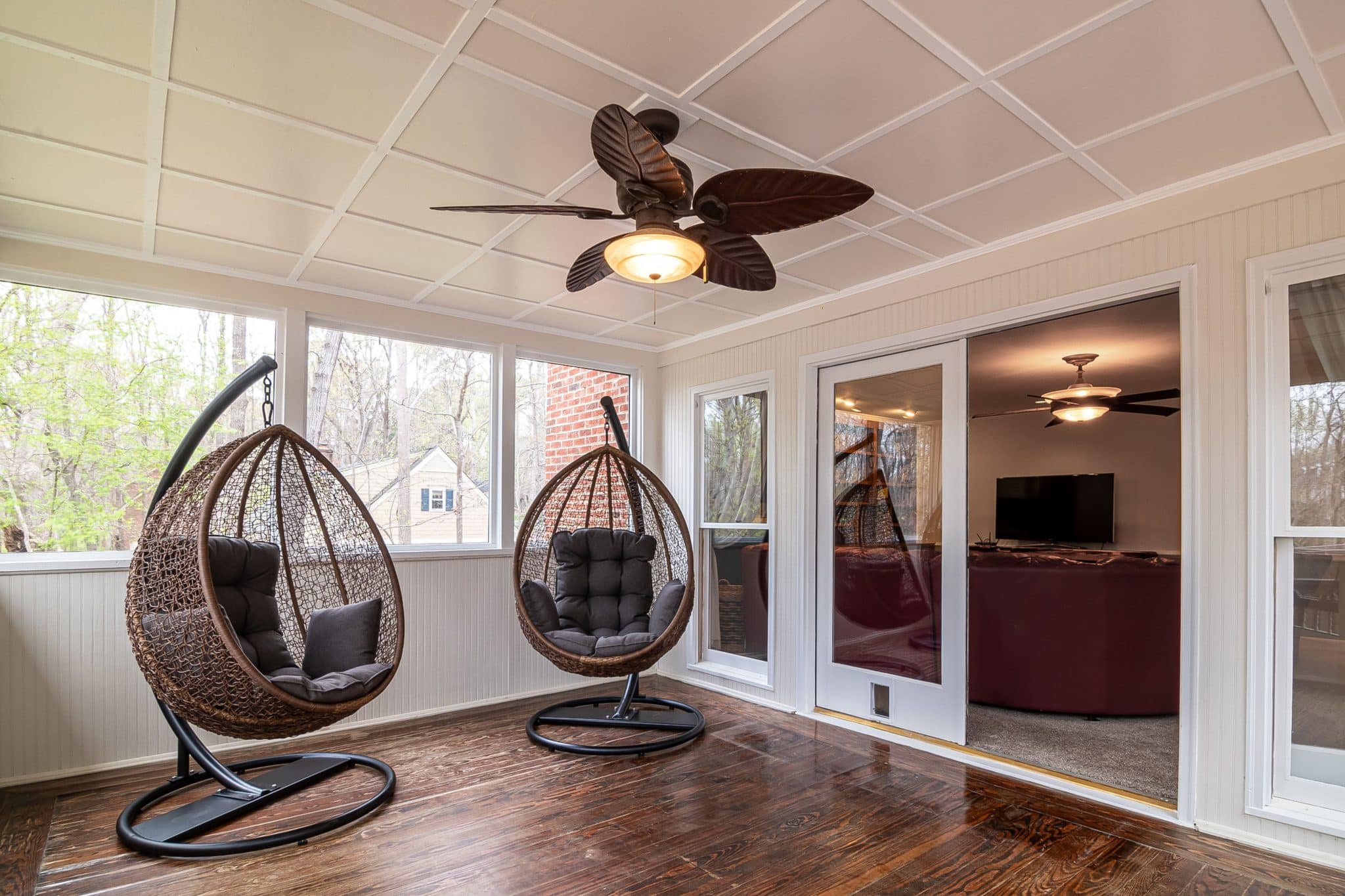
The most common mistake people make is getting the size wrong, and it’s preventable by measuring first. A fan too small won’t move enough air to feel it. One too large overwhelms the space or looks absurd. Getting your measurements straight before comparing models beats second-guessing later.
Choosing the Right Blade Diameter for Your Patio Layout
Blade diameter should match your patio’s square footage, though the relationship isn’t perfectly linear because outdoor spaces work differently than enclosed rooms. Use this as a starting point:
- Patios up to 75 square feet: 29 to 36-inch blade span
- Patios between 76 and 150 square feet: 36 to 44-inch blade span
- Patios between 150 and 300 square feet: 44 to 54-inch blade span
- Patios over 300 square feet: 54 to 72-inch blade span, or consider two fans
Think about the actual shape too. A long, narrow covered porch often works better with two smaller fans spread evenly along its length than one giant fan stuck at one end. Even airflow across the space beats raw power in one spot.
And look at your furniture layout. A fan over your seating area creates more comfort benefit than one stuck in a corner. Measure the space where people actually sit, not just total covered footage, and size accordingly.
Installation Height and Ceiling Clearance Requirements
Standard guidelines say blade tips should sit at least 7 feet above the floor for safe clearance. Most covered patios run 8 to 10 feet high, which means you’ve got room for a flush-mount (hugger) fan or one with a short downrod. Drop ceilings or pergola-style beams may call for a special mounting bracket or angled canopy adapter to keep things level and secure.
Between 8 and 9 feet? A flush mount or 3-inch downrod keeps blades safe. At 9 to 10 feet, a standard 6 to 12-inch downrod works without dropping blades too low. Ceilings above 10 feet benefit from longer downrods, 18 to 24 inches typically, to bring the fan into the effective cooling zone for seated people. Never mount a fan closer than 18 inches from a ceiling beam or soffit. That clearance stops the motor from recirculating dead air and cuts vibration noise during operation.
Performance and Durability Factors That Matter Most
Two things that almost never appear in headline specs often decide if your patio fan becomes a long-term asset or a seasonal annoyance: noise level and corrosion resistance. A fan that hums loudly at low speeds kills conversation. One showing rust or wobble after one humid summer? That costs time and money to replace.
Noise Level and Energy Use for Year-Round Use
DC motors run noticeably quieter than AC motors, especially at lower speeds where most people run their patio fan during relaxed outdoor time. Hunt for fans rated below 40 dB; read user reviews for noise feedback at low and medium speeds. Speed settings matter too. Three speeds work okay, but six or more gives you finer control and lets you dial in a sweet spot without jumping between too-slow and too-fast.
Energy use adds up if you’re running the fan through spring, summer, and fall. The U.S. Environmental Protection Agency’s Energy Star certification means a fan uses at least 20 percent less energy than standard models. Over a season of regular use, that difference shows up on your electricity bill. Look for a CFM-per-watt ratio above 75 as a baseline for outdoor use. Some DC fans hit 100 or beyond, delivering the same airflow on a fraction of the power compared to older AC designs.
Rust Prevention and Maintenance Needs in Humid Climates
Humidity attacks outdoor ceiling fans relentlessly. In coastal areas, high-humidity regions, or climates with frequent rain, corrosion can hit blade brackets, motor screws, and housing joints within one or two seasons if materials aren’t treated properly. Stainless steel hardware, sealed motor bearings, and powder-coated or galvanized housings extend service life considerably.
Maintenance stays simple if you pick a fan designed for outdoor use from day one. Wipe blades once a month during peak season with a damp cloth; this prevents pollen and debris buildup that throws off blade balance and causes wobble. At the start of each season, check all mounting screws and blade bracket connections; temperature swings make metal fasteners expand and contract, gradually loosening them over time.
A little silicone-based lubricant on motor housing seams keeps moisture out in particularly humid environments. Fans with sealed motor compartments need far less maintenance than those with exposed bearings; sealed construction deserves priority when you’re comparing models.
Conclusion
Picking the best ceiling fan for a covered patio with no light needed boils down to matching the fan’s specs to your actual space and climate.
Start with the right CFM rating and wet or damp certification for your exposure level; size the blade diameter to your seating area; confirm your ceiling height before selecting a mounting style. From there, DC motor performance, quiet operation, and corrosion-resistant materials separate fans that last from those needing replacement in a season or two.
Take those specs seriously, and your patio stays comfortable through every warm month without extra wiring or maintenance headaches.