

Standing at the gate with a bag you are not sure will pass? That moment of doubt ends right here, with real answers instead of guesswork or airline confusion.
So, is a duffel bag a carry on? Yes, in most cases, as long as it fits your airline’s size and weight rules for cabin bags.
Duffel bags save weight, pack flexibly, and skip the bulk of hard suitcases. They also fold flat, making them easy to store between trips.
But they come with real trade-offs, like less structure and less protection for fragile items packed inside.
Is a Duffel Bag a Carry On?
Yes, if it fits within your airline’s cabin baggage limit for that flight. Airlines look at size and weight, not bag style. So, is a duffel bag a carry-on?
Most carriers allow close to 22 x 14 x 9 inches for cabin bags. This limit shifts slightly by airline, so always check the exact rule before you fly.
Always measure your duffel after packing it, not before. An empty bag looks small, but folded clothes and shoes can quickly push it past the allowed limit.
Smaller duffels can work as personal items under the seat, while bigger ones need overhead space as full carry-ons. Budget airlines often enforce these size rules more strictly.
What Size Duffle Bag For Carry On?
Picking the right size matters for smooth air travel. A 35- to 40-liter duffel bag usually fits carry-on rules well, holding enough gear without risking gate-side fees or delays.
Size Guidelines:
- Carry-on bag: Standard dimensions are around 22 x 14 x 9 inches (56 x 36 x 23 cm), or roughly 35 to 40 liters. It goes in the overhead bin.
- Personal item: Smaller sizes around 17 x 10 x 9 inches (43 x 25 x 23 cm), or 20 to 25 liters, fit completely under the seat in front of you.
- Oversized duffels: Large duffel bags (55 liters or more) exceed standard cabin allowances and must be checked.
Size limits matter most, but the right features make daily use easier. Match comfort, storage, and durability needs before packing your duffel bag for the next trip.
Community Discussions on Disadvantages of Using a Duffel as a Carry-On
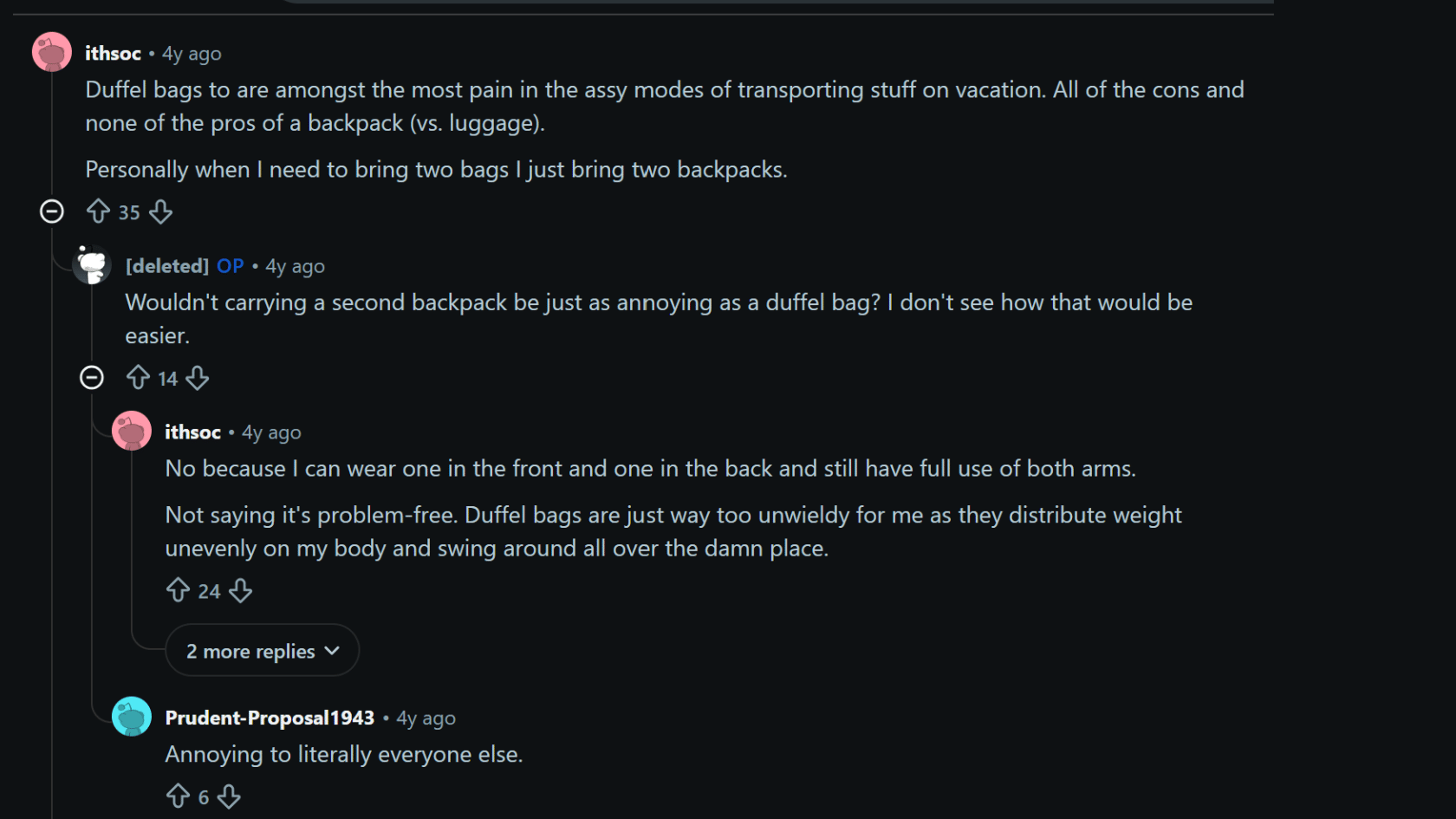
Travelers online often debate whether a duffel bag holds up as a real carry-on option. Many threads compare it against backpacks and wheeled suitcases for daily airport use.
On Reddit, frequent flyers discuss the lack of back support and shoulder strain during long layovers as a common downside. Some mention that soft sides make it harder to protect fragile items compared with hard suitcases.
Official sources like Travelpro also point out similar concerns, noting that duffel bags lack the rigid structure of traditional suitcases, which can make handling more difficult once packed heavy.
These Reddit conversations reflect real experiences from travelers who use duffel bags often, giving a practical, ground-level view beyond airline size charts alone.
Why Do Travelers Use Duffel Bags as Carry-Ons?
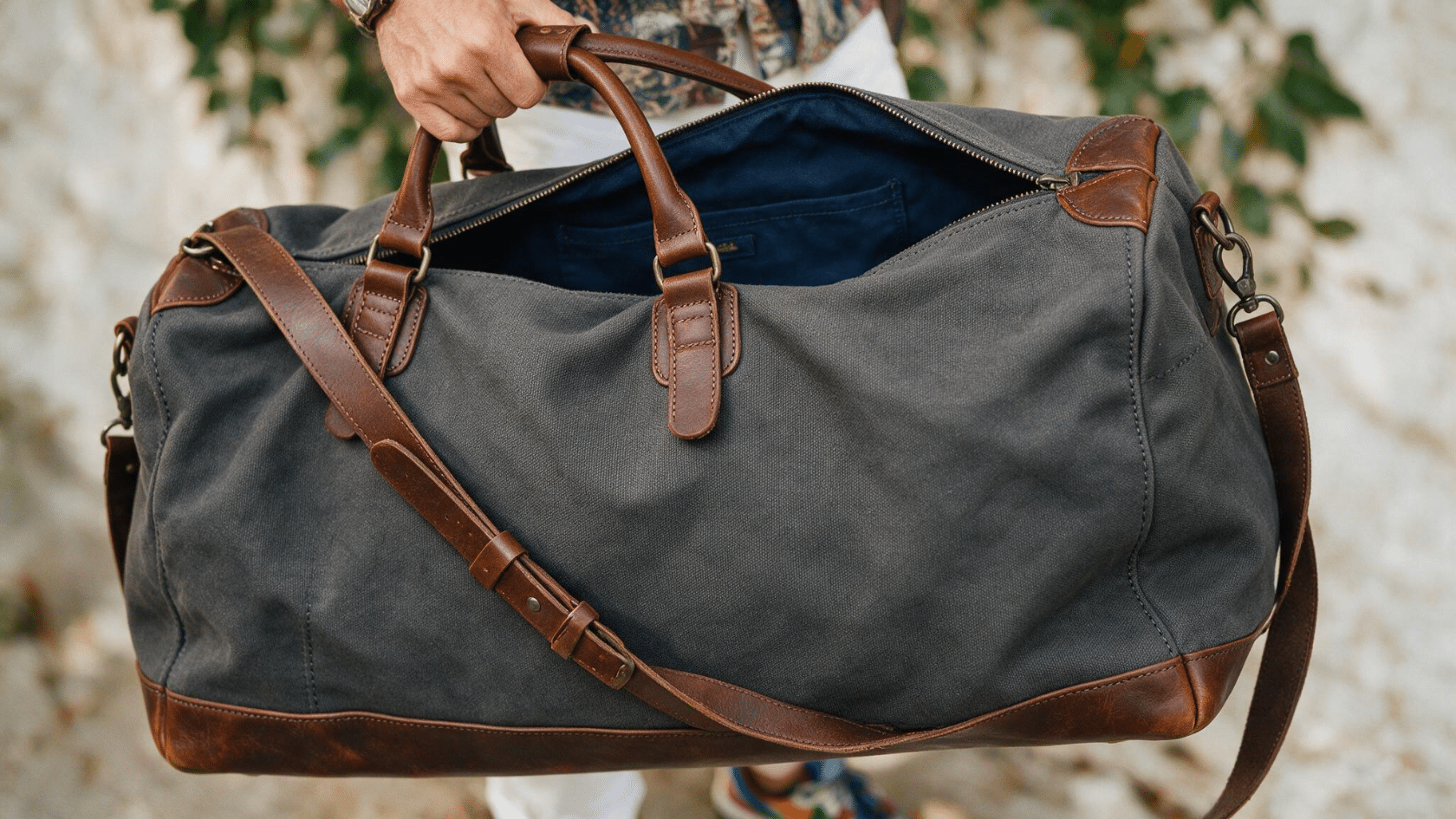
Frequent flyers often pick duffel bags over hard suitcases. The main reasons come down to flexibility, lighter weight, and easy storage when the trip is short.
1. Duffel Bags Are Lightweight and Easy to Carry
Most duffel bags skip wheels and hard frames, which keeps the base weight low from the start. This makes a real difference once you add clothes, shoes, and other items inside.
- No wheels or hard frame, so base weight stays low
- Easier to lift into overhead bins or onto luggage racks
- Simple to carry through busy airports, train platforms, or streets
- Good pick for travelers who prefer one strap over rolling
2. Duffel Bags Offer Flexible Packing Space
Soft sides give a duffel bag an edge that hard suitcases cannot match. The fabric bends and adjusts around oddly shaped items instead of leaving wasted space in stiff corners.
- Soft sides bend around shoes, luxury outerwear, or bulky items
- Fits clothes without wasted corner space like hard suitcases
- Works well for weekend getaways or short work trips
- Handy for gym clothes, swim gear, or extra shoes
3. Duffel Bags Take Up Less Storage Space
An empty duffel bag folds flat in seconds, unlike a hard suitcase that keeps its shape no matter what. This makes it simple to tuck away when not in use.
- Folds flat and slides under a bed or shelf
- Makes a great backup bag for extra room on trips
- Useful in small hotel rooms with limited closet space
- Easy to pack inside a larger suitcase when empty
What Are the Downsides of Using a Duffel Bag as a Carry-On?
Duffel bags work well for many trips, but they are not perfect for every traveler. Frequent flyers often point out a few common complaints worth knowing before you pack one for a flight.
- Uncomfortable when heavy: Carrying all the weight on one shoulder can strain your back and arm during long airport walks compared with wheeled luggage.
- Less organization: Most duffel bags have fewer compartments than suitcases, though packing cubes and small organizers can help sort items inside.
- No built-in protection: Soft fabric offers zero defense if you accidentally drop the bag or pack fragile items.
- Zipper access: Rummaging through a top-zip duffel while it sits in a cramped space is hard.
- Harder to carry on longer walks: Without wheels, moving through large terminals or during long layovers becomes more tiring over time.
These downsides do not rule out duffel bags for cabin travel, but knowing them helps you plan better and choose the right bag for your specific trip.
Duffel Bag Carry-On Rules by Airline
Carry-on rules shift from one airline to the next, even when a duffel bag fits standard size charts. This table breaks down what major U.S. carriers actually allow at the gate.
| Airline | Carry-On Size Limit | Duffel Bags Allowed? | Notes |
| American Airlines | 22 x 14 x 9 in | Yes | Must fit in the gate sizer; soft sides help it squeeze into tight bins |
| Southwest Airlines | 24 x 16 x 10 in | Yes | Slightly more generous limit than most major carriers |
| Delta Air Lines | 22 x 14 x 9 in | Yes | Personal item must fit under the seat separately |
| United Airlines | 22 x 14 x 9 in | Yes | Basic Economy fares often allow only a personal item |
| JetBlue | 22 x 14 x 9 in | Yes | Weight isn’t usually checked, but size is enforced at the gate |
| Spirit Airlines | 22 x 14 x 9 in | Yes, fee applies | Charges a carry-on fee unless it’s bundled into the fare |
Advise: Rules can change without notice, so checking the airline’s official baggage page before departure remains the safest step, especially on budget carriers that enforce size limits strictly.
Can a Carry-On Duffel Bag Have Wheels?
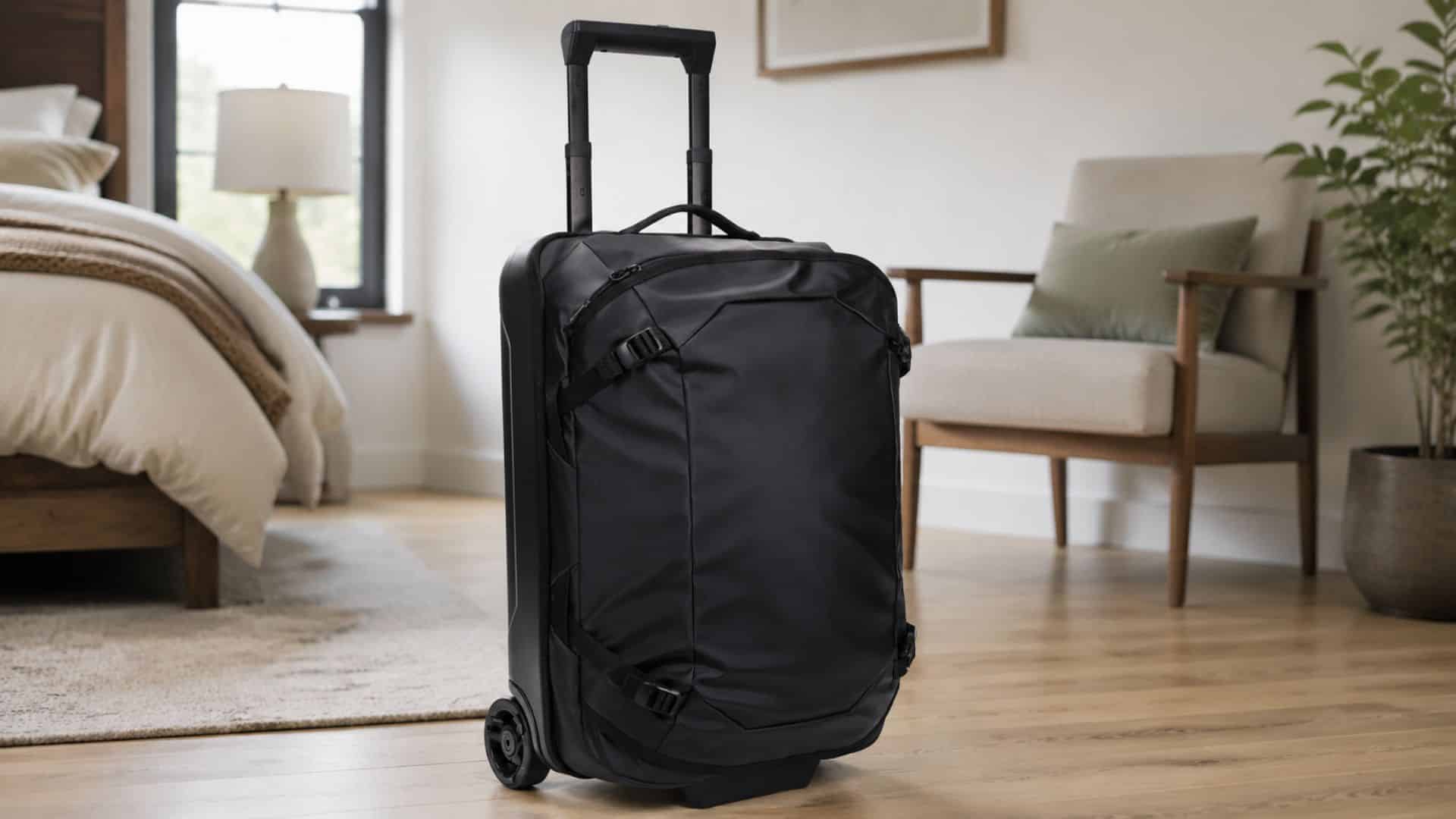
Yes, a carry-on duffel bag can have wheels, and many travelers prefer this hybrid style for long airport walks. Wheeled duffel bags still count as a standard carry-on as long as the total dimensions, including wheels and handles, stay within the airline’s limit, usually around 22 x 14 x 9 inches.
The wheels add a small amount of weight and rigidity, which slightly reduces the flexible packing space that makes duffels appealing in the first place.
Retractable handles also take up interior room, so a wheeled duffel typically holds a bit less than a soft, wheel-free version of the same size.
For travelers who want easy rolling through terminals but still want a compact profile, a wheeled duffel offers a solid middle ground between a suitcase and a soft bag.
How to Pack Your Duffel Bag So Airlines Accept It
Packing a duffel bag the right way makes the difference between breezing through the gate and getting stopped at the sizer. A few simple habits keep your bag within limits every time.
- Measure after packing, not before: An empty duffel looks compact, but folded clothes and shoes add thickness fast. Lay the bag flat once packed and check it against the airline’s stated dimensions before you leave for the airport.
- Pack heavy items first, near the base: Placing shoes and toiletries at the bottom keeps the bag’s shape even and stops it from bulging at the top, which is often what pushes it past the sizer.
- Roll clothes instead of folding: Roll your everyday essential clothes instead of folding. Rolling reduces bulk and lets soft fabric flex around gaps, which keeps the overall shape narrower than stacked, folded layers.
- Use the outer pockets for flat items: Chargers, documents, and thin layers belong in external pockets, freeing up the main compartment for bulkier gear without adding extra width.
- Leave a little slack: A bag packed to its absolute limit tends to expand at the seams. Leaving some give keeps the shape closer to the airline’s listed dimensions.
Travel Tip: Check duffel measurements before packing, use backpack straps for comfort, and add packing cubes to organize clothes and maximize space inside the main compartment.
Final Thoughts
Picking the right bag for a flight does not have to feel complicated. Size and weight matter more than style, so a soft-sided bag works fine once it fits cabin rules properly.
If you were wondering is a duffel bag a carry on, the answer depends mostly on how it gets packed, not the bag style itself, brand, or price tag.
Keep it under the size limit, pack smart with cubes and outer pockets, and leave a little room to spare. That one habit saves most travelers from last-minute stress.
Drop your packing tips or questions in the comments below; your thoughts might help another traveler pack smarter too.
Frequently Asked Questions
Can I Bring a 60 L Duffel Bag on a Plane?
A 60L duffel bag is usually too large for most cabin size rules. Airlines will likely ask you to check it at the counter or gate.
Do Airlines Charge Extra for Oversized Duffel Bags?
Yes, many carriers charge a fee at the gate if your bag exceeds their listed size limit. Budget airlines tend to enforce this strictly.
Can One Duffel Bag Work as Both Carry-on and Personal Item?
No, airlines count only one bag per category per flight. A duffel bag can serve as either option, but never both together.