A polo shirt can work as office wear in some workplaces but may feel too casual in others. If you are wondering is a polo business casual, the answer depends on the fabric, fit, collar style, and how it is styled.
Business casual isn’t just about wearing a collared shirt. A structured polo with different bottoms chinos, tailored trousers, or smart layers can create a polished outfit, while loose fits and sporty details may appear more relaxed.
The workplace dress code also plays an important role when choosing a polo for work.
The right styling choices can help create a professional look without losing comfort. This covers when polos fit business casual settings, how to style them, and common mistakes to avoid.
Are Polo Shirts Business Casual or Not?
Yes, polo shirts are business casual in many workplaces, but not in all. It depends on the dress code, industry, and how the polo is worn.
Business casual sits between formal shirts and casual tees, placing polos in the middle. They look professional when structured and clean, but fall short when styling is too relaxed.
Key factors like fabric quality, collar structure, and fit decide how formal a polo appears. These signals determine whether it fits a business casual setting.
Because of this, polos are not universally accepted. The same shirt can work in one workplace and fail in another.
Why Do Polos Look Professional in Some Workplaces?

The answer often lies in office culture rather than the shirt itself. A tech startup and a law firm can view the same garment through completely different lenses: one treats it as standard attire, the other as too relaxed for client meetings.
Region and industry norms shape this further; a polo accepted in a creative agency might raise eyebrows in finance or legal circles.
Company hierarchy matters too, since client-facing roles typically demand a sharper look than back-office positions.
Ultimately, perception comes down to unspoken workplace signals: what leadership wears, what clients expect, and how formal the surrounding dress culture already is.
What Should You Wear with A Polo for Business Casual?
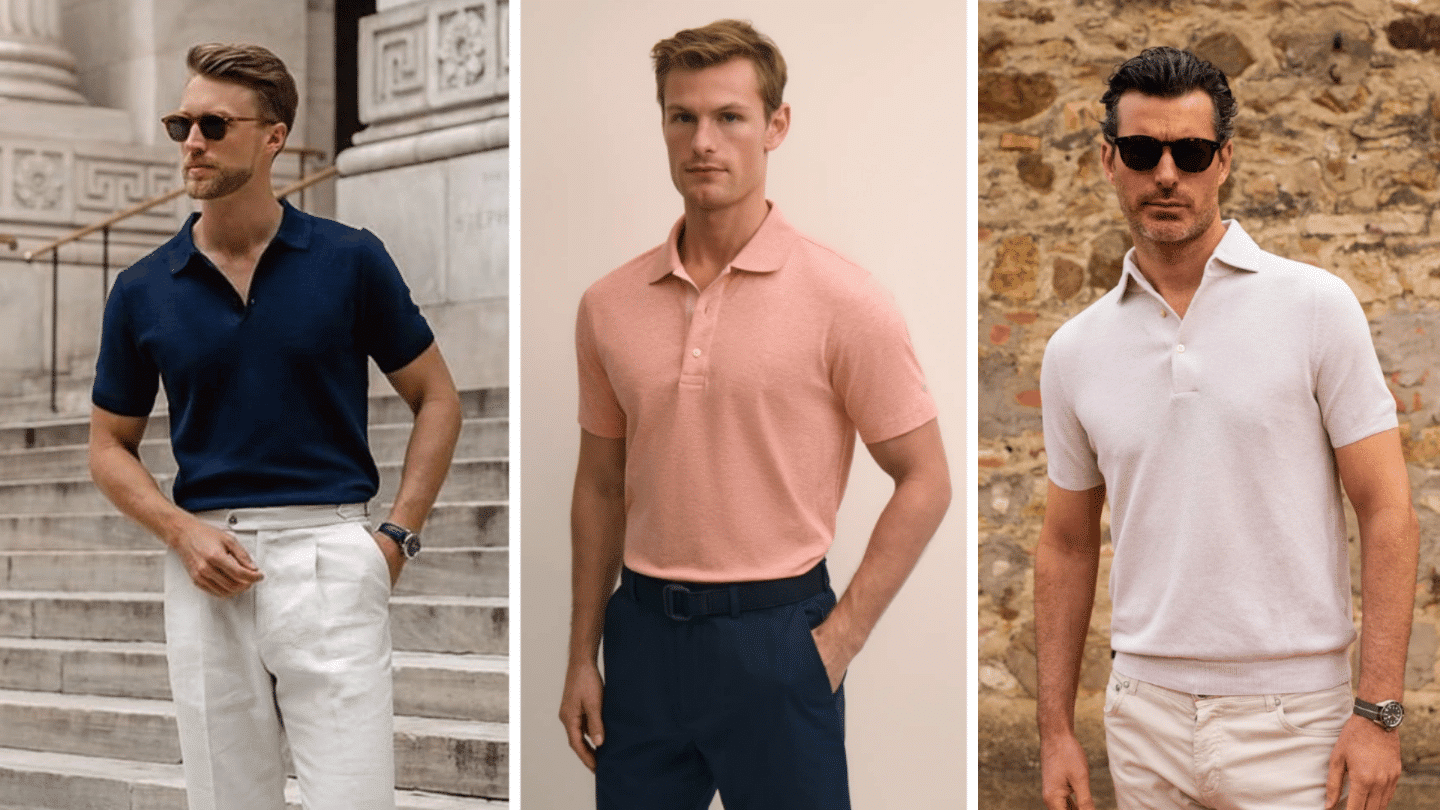
A polo looks more business casual when paired with structured trousers in simple, office-friendly colors.
Chinos work well for everyday office wear, while tailored trousers and dress pants create a slightly sharper look.
Good combinations include:
- Navy polo + beige chinos for a balanced everyday office outfit
- White polo + navy trousers for a cleaner, more polished look
- Black polo + grey tailored trousers for a sharper business casual combination
- Light blue polo + khaki chinos for a relaxed but professional style
Slim or straight-fit trousers usually work best because they keep the outfit neat without looking too formal.
When Jeans Can Still Work
Jeans can work with a polo in relaxed offices, but the wash and fit matter.
Choose dark-wash or black jeans with a slim or straight fit. Pair them with a plain polo and loafers, Chelsea boots, or clean leather sneakers.
Avoid ripped, faded, distressed, or very loose jeans because they make the outfit look more casual.
Layering with Blazers and Outerwear
A blazer can make a polo look noticeably more professional, especially for meetings or offices with a slightly dressier standard.
Sports coats, lightweight sweaters, and cardigans also work when you want structure without wearing a full suit.
Shoes that Complete the Look
Shoes should match the level of formality created by the polo and trousers.
- Loafers: Work well with chinos and tailored trousers
- Oxford or Derby shoes: Better for more formal business casual settings
- Chelsea boots: Pair well with dark trousers or jeans
- Minimal leather sneakers: Suitable for modern or relaxed offices
Avoid running shoes, bulky sneakers, flip-flops, or worn footwear because they can make an otherwise polished polo outfit look too casual.
Polo Fabric Types

The fabric of a polo shirt decides how professional it looks in a business casual setting. Material choice affects structure, shape, and overall appearance.
Choosing the right fabric helps the polo maintain its form and stay suitable for office wear throughout the day.
- Cotton: Gives a clean, simple, and reliable finish that works well for most office settings.
- Piqué: Adds texture and structure, helping the polo look more refined and suitable for professional outfits.
- Merino wool: Provides a smooth finish that works well for cooler environments and slightly formal settings.
- Structured fabrics: Help the collar and body maintain shape for a sharper and more put-together look.
- Moisture-wicking or sporty fabrics: Often create a casual, athletic feel that may not suit business casual workplaces.
A suitable fabric keeps the polo aligned with workplace expectations. Poor material choice can make even a well-fitted polo appear too relaxed for office settings.
What is Not Acceptable for Business Casual?
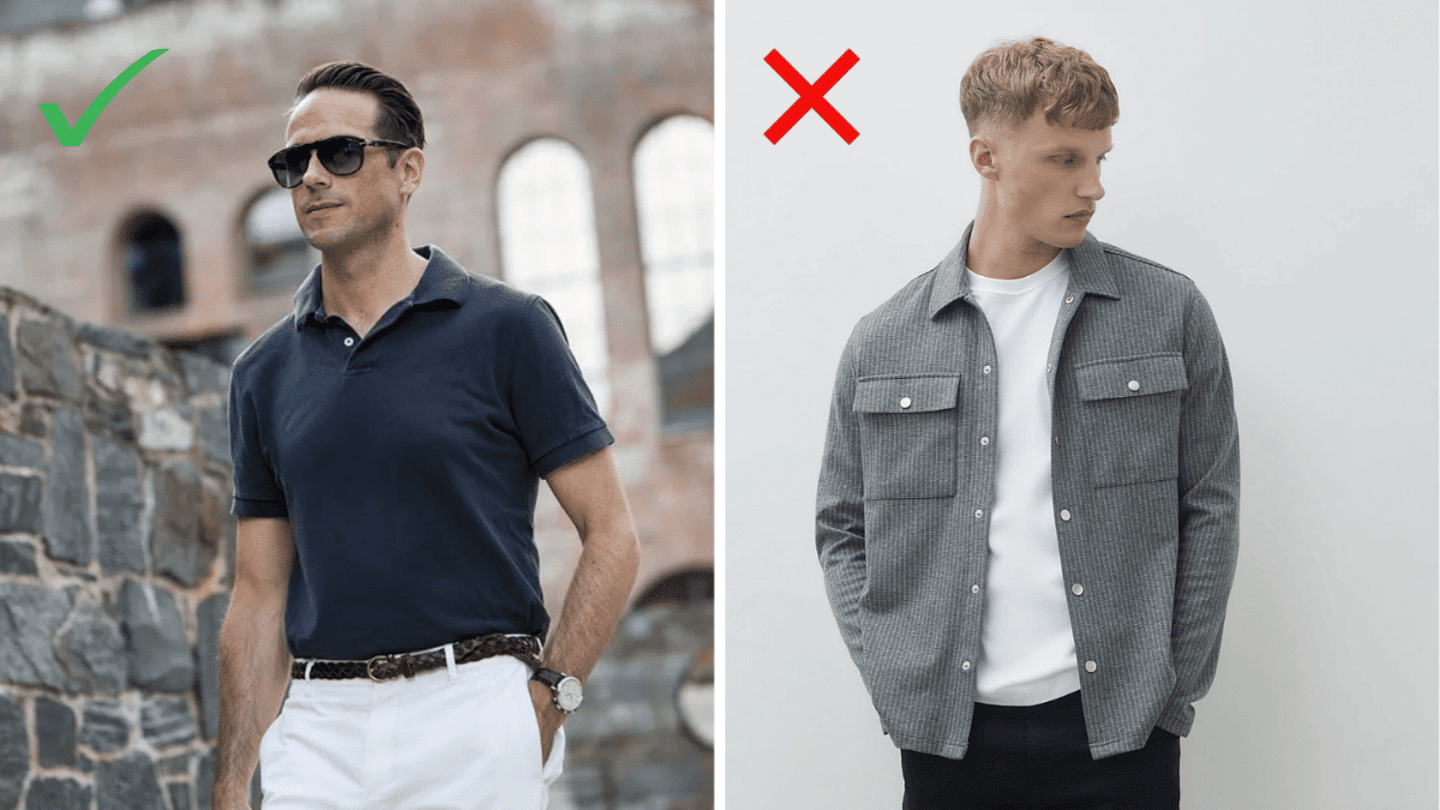
Not every polo automatically passes as business casual, and certain choices push an outfit firmly into casual territory.
Tank tops, hoodies, or anything sleeveless breaks the professional baseline regardless of how it’s paired. Novelty prints, cartoon graphics, or oversized branding read as leisurewear rather than office attire.
Sandals, flip-flops, and open-toe footwear are typically off-limits in most corporate settings, even in warmer climates. Stained, faded, or heavily wrinkled fabric signals carelessness rather than intention.
Cargo shorts, athletic shorts, or anything above the knee also fall outside acceptable boundaries.
Essentially, anything resembling weekend or gym wear undermines the polished, put-together standard business casual environments expect.
Common Mistakes that Make Polos Look Unprofessional
Small styling choices can affect how polished a polo looks at work. Avoiding these mistakes helps maintain a cleaner and more professional appearance.
- An oversized fit looks loose, untidy, and less suitable for office wear
- Loud logos can make the outfit feel more casual than professional.
- Wrinkled fabric can create a careless and unfinished appearance.
- Sporty materials often give a gym-inspired look instead of an office-ready style.
- Wrong pairings with casual bottoms or shoes can reduce the professional feel.
Simple improvements in fit, fabric choice, and styling combinations help create a more refined and office-appropriate appearance.
Conclusion
Polos can fit into business casual settings when the fabric, fit, and workplace expectations are considered. Their flexibility makes them suitable for many offices, but the right styling matters.
A clean polo with proper structure, a good fit, and simple pairing choices can create a polished appearance. Avoiding overly casual details helps maintain a professional look.
Knowing is a polo business casual in your workplace depends on office culture, the occasion, and how the rest of the outfit is styled. Consider your office culture, the occasion, and how you style the rest of your outfit.
The best approach is to keep things balanced with quality basics and thoughtful combinations. Small choices can make a polo feel appropriate across different workplace environments.
Share your thoughts and experiences with business casual polos in the comments below.
Frequently Asked Questions
Can Polo Shirts Be Worn in Summer and Winter Offices?
Summer: Lightweight Cotton or Piqué Keeps Airflow Good. Winter: Add a Sweater or Blazer for Warmth and Structure. Layering Keeps the Outfit Suitable for Office Settings Across Seasons.
Should a Polo Shirt Be Tucked in For Business Casual?
Tucking Depends on Office Formality and Trouser Style. Tuck in With Dress Pants for a neat look; Leave Untucked with Chinos in Relaxed Settings.
Which Colors of Polo Shirts Are Best for Office Settings?
Neutral Shades Like Navy, Black, White, and Grey Suit Most Office Environments. Avoid loud patterns or bright neon tones in formal workspaces.