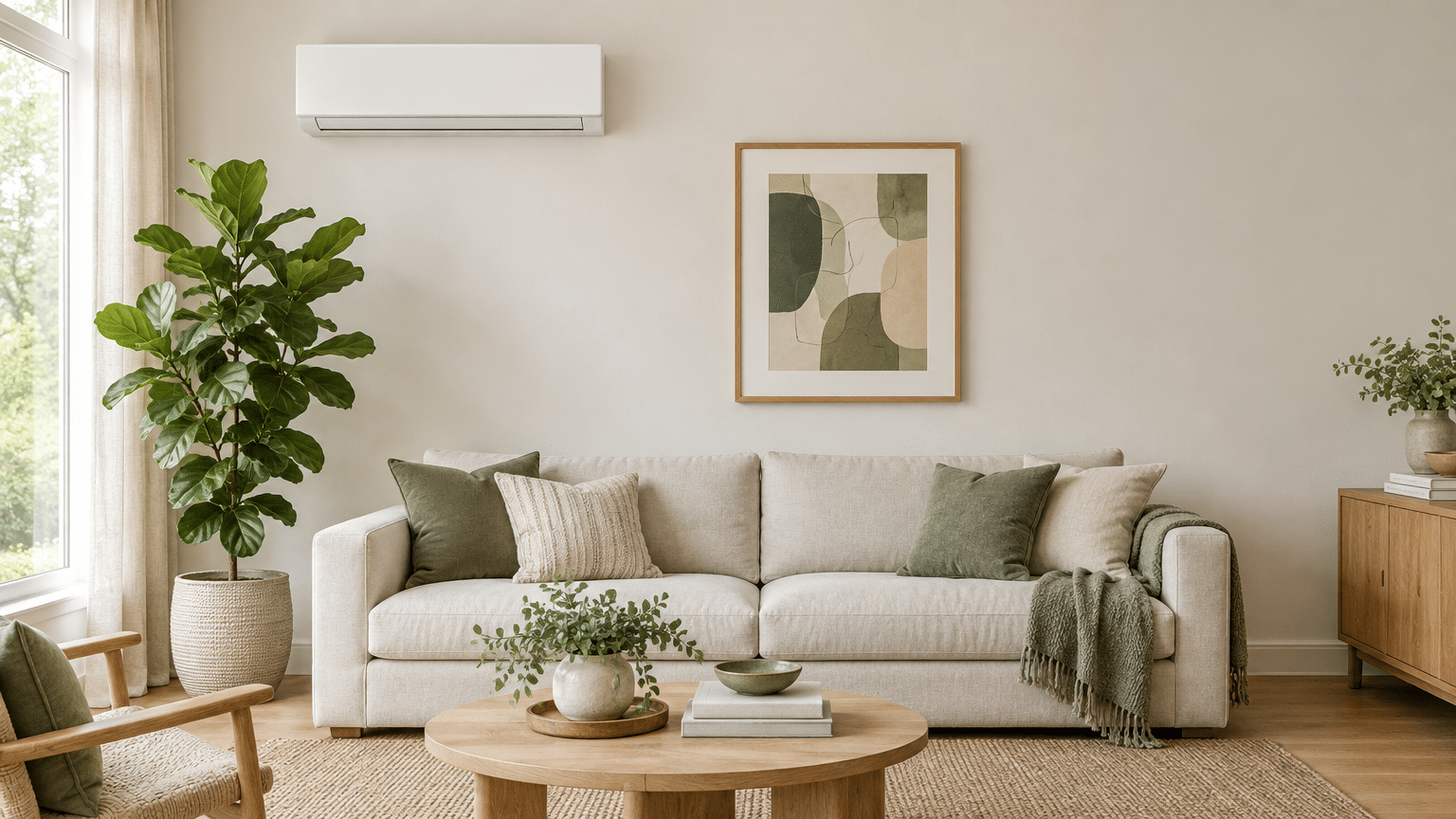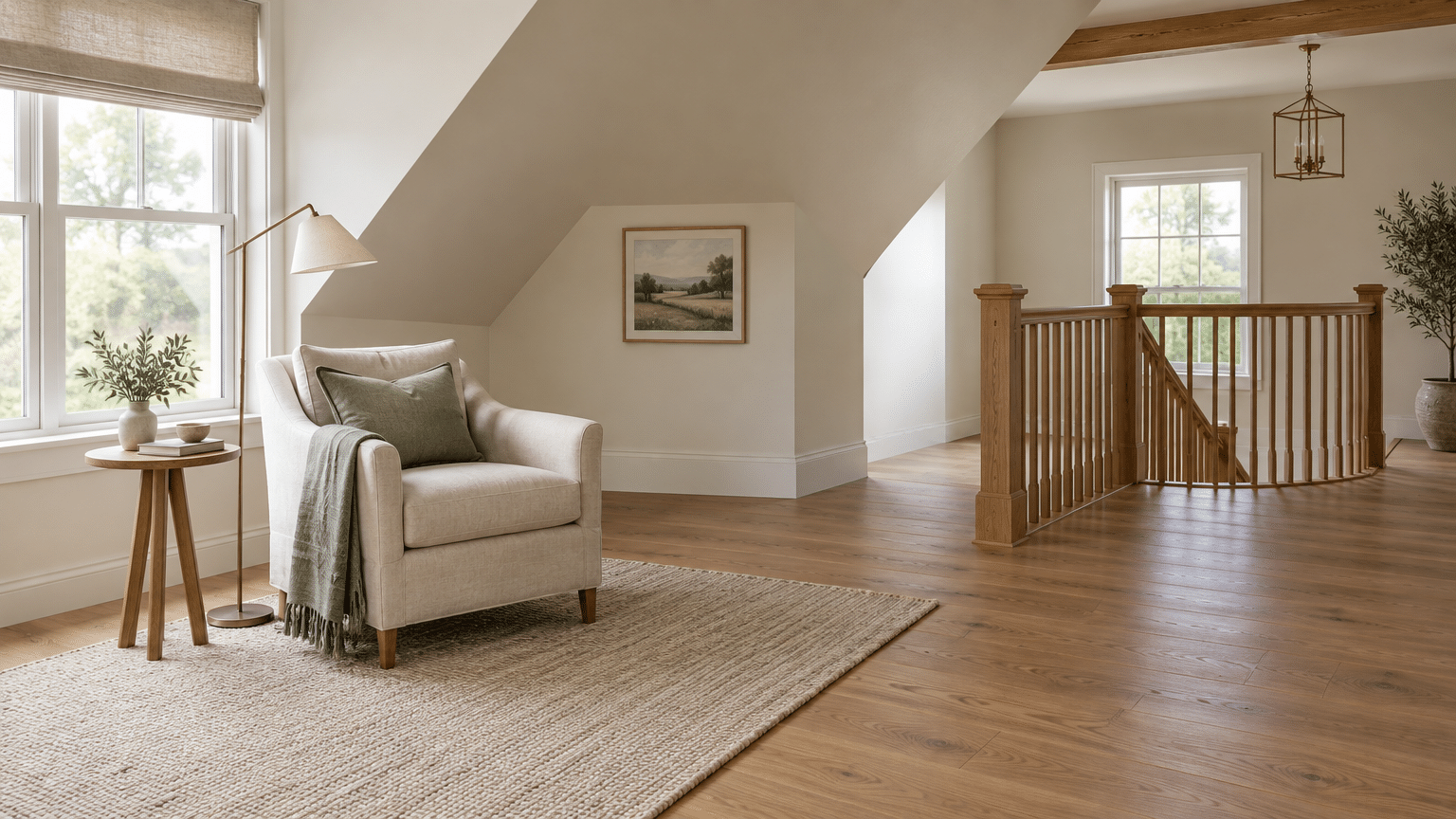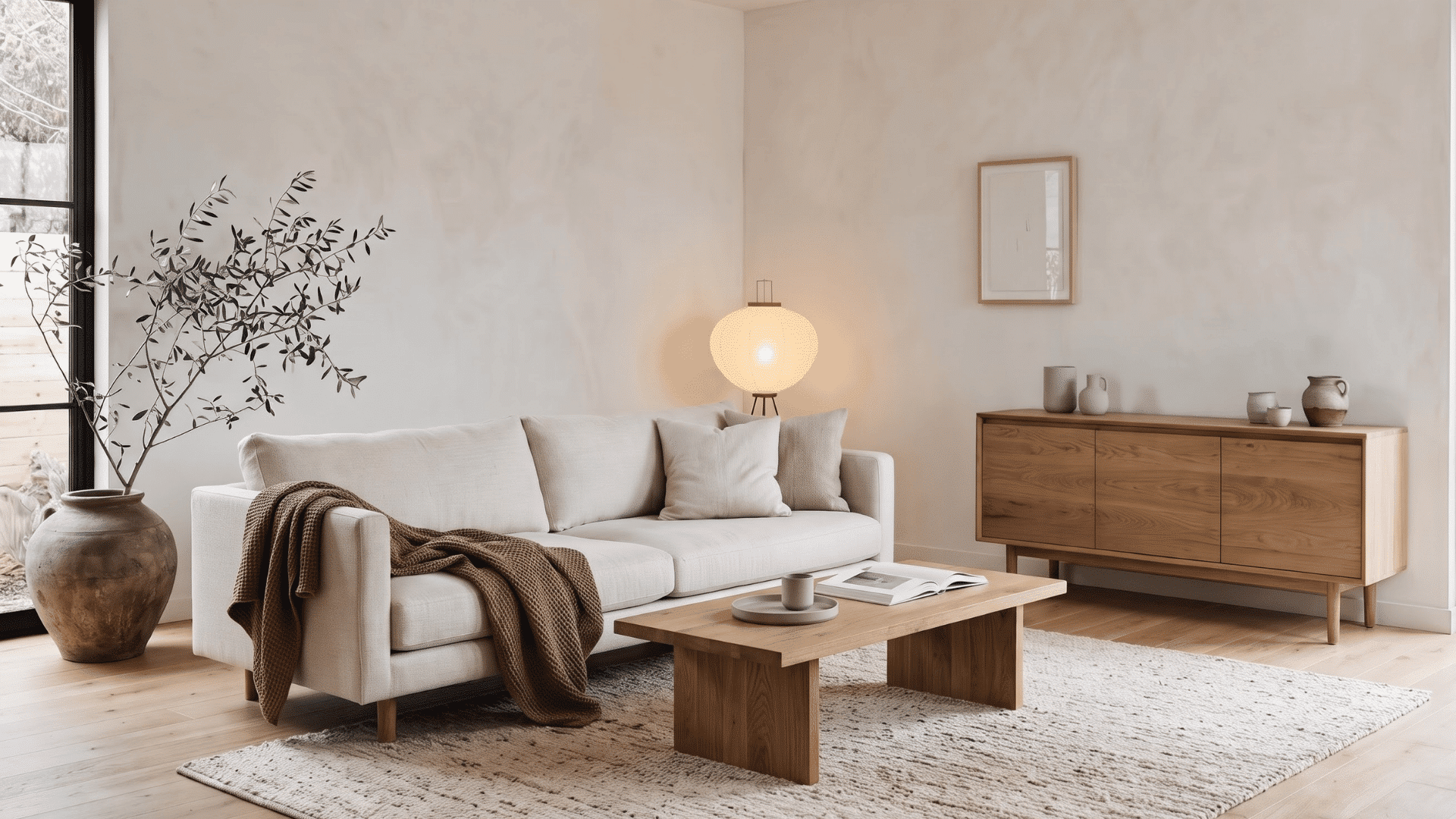

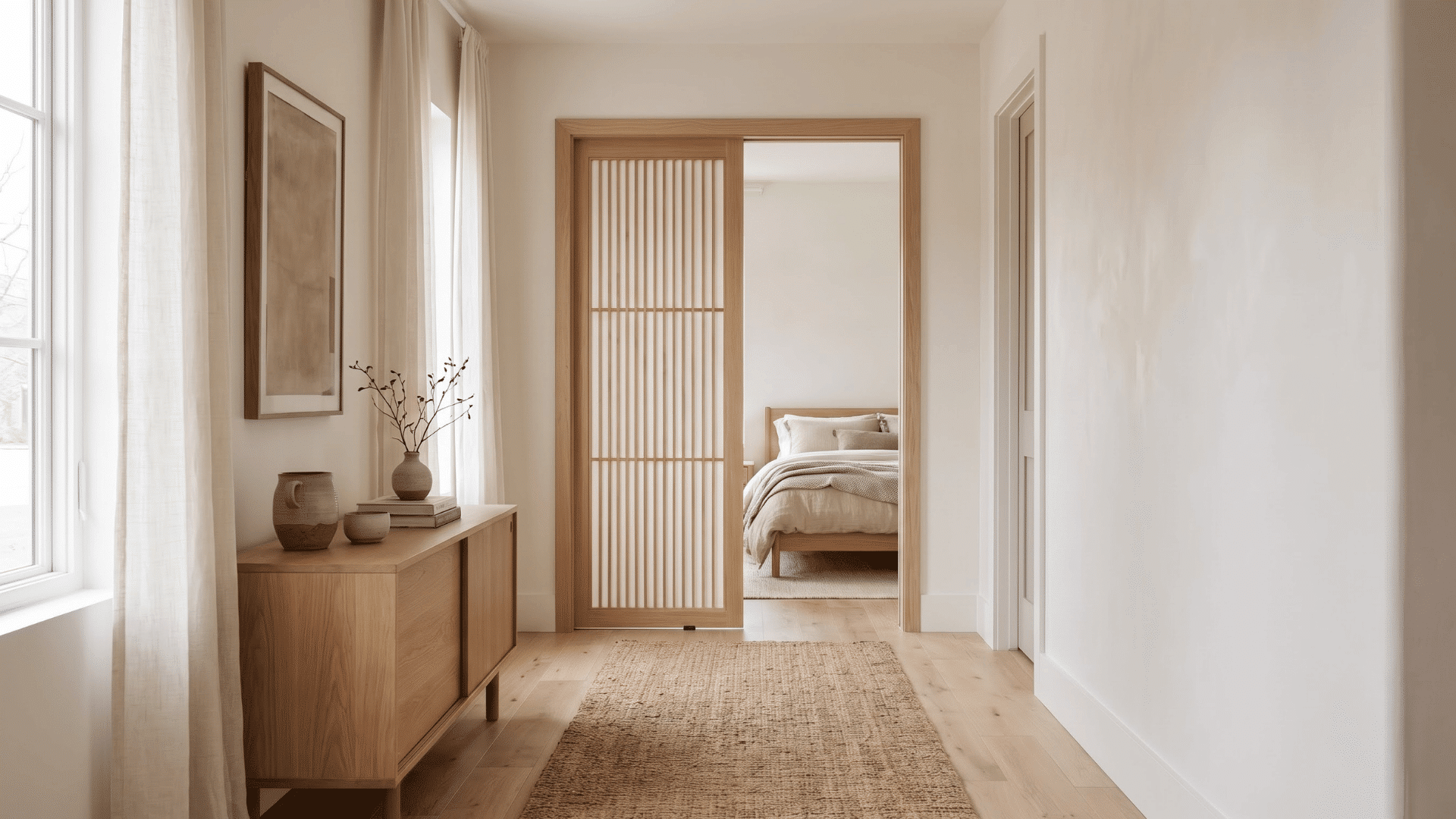
Japandi style combines Japanese simplicity with Scandinavian comfort through natural materials, warm neutral colors, low wooden furniture, and very little clutter.
It sits between two extremes. Some rooms look beautiful in photos but feel cold or uncomfortable in real life. Others feel cozy but seem crowded with furniture and decor.
I’ve always loved spaces that feel peaceful without losing their warmth or personality.
That’s what first caught my attention about Japandi style. There’s something inviting about a room that feels simple yet complete.
What Is Japandi Style?
Japandi style is an interior design approach that combines Japanese simplicity with Scandinavian comfort and functionality.
The name blends “Japanese” and “Scandinavian,” reflecting shared values of both cultures.
The term “Japandi” emerged around 2016, but the two traditions met long before the name did. Earlier examples of the blend show up in ceramics, architecture, and Danish furniture.
The style draws from wabi-sabi, the Japanese philosophy valuing natural imperfections and aging, and hygge, the Danish idea of creating a warm atmosphere and enjoying the good things in life with good people.
In practice, a Japandi style room might pair a low oak bench, a linen sofa, and one handmade vase, with plenty of open floor space between them.
Where Did Japandi Style Come From?
Japandi style feels recent, but its roots go back to the 1850s. The U.S. Office of the Historian notes that Japan limited trade to Dutch and Chinese ships for about two centuries. The 1854 Treaty of Kanagawa opened just two ports, Shimoda and Hakodate, to American ships for fuel and supplies, and the first true commercial treaty came in 1858.
Denmark followed with its own treaty of friendship and commerce in January 1867, according to the Embassy of Japan in Denmark.
Around the turn of the 20th century, fine Japanese applied art gave Danish arts and crafts a real boost. That shared respect for natural materials and careful workmanship later shaped mid-century Danish furniture.
Why Is Japandi Style So Popular?
Japandi style has stayed popular because it solves everyday problems at home. Closed storage hides clutter, low furniture makes small rooms feel larger, and warm neutrals age well.
The style also suits people who want to buy less and keep things longer. The U.S. Environmental Protection Agency reports that furniture and furnishings made up about 12.1 million tons of municipal waste in 2018, and most of it went to landfills.
Choosing one solid wood table over several cheap replacements is a practical way to cut that waste.
What Are the Rules of Japandi Design?
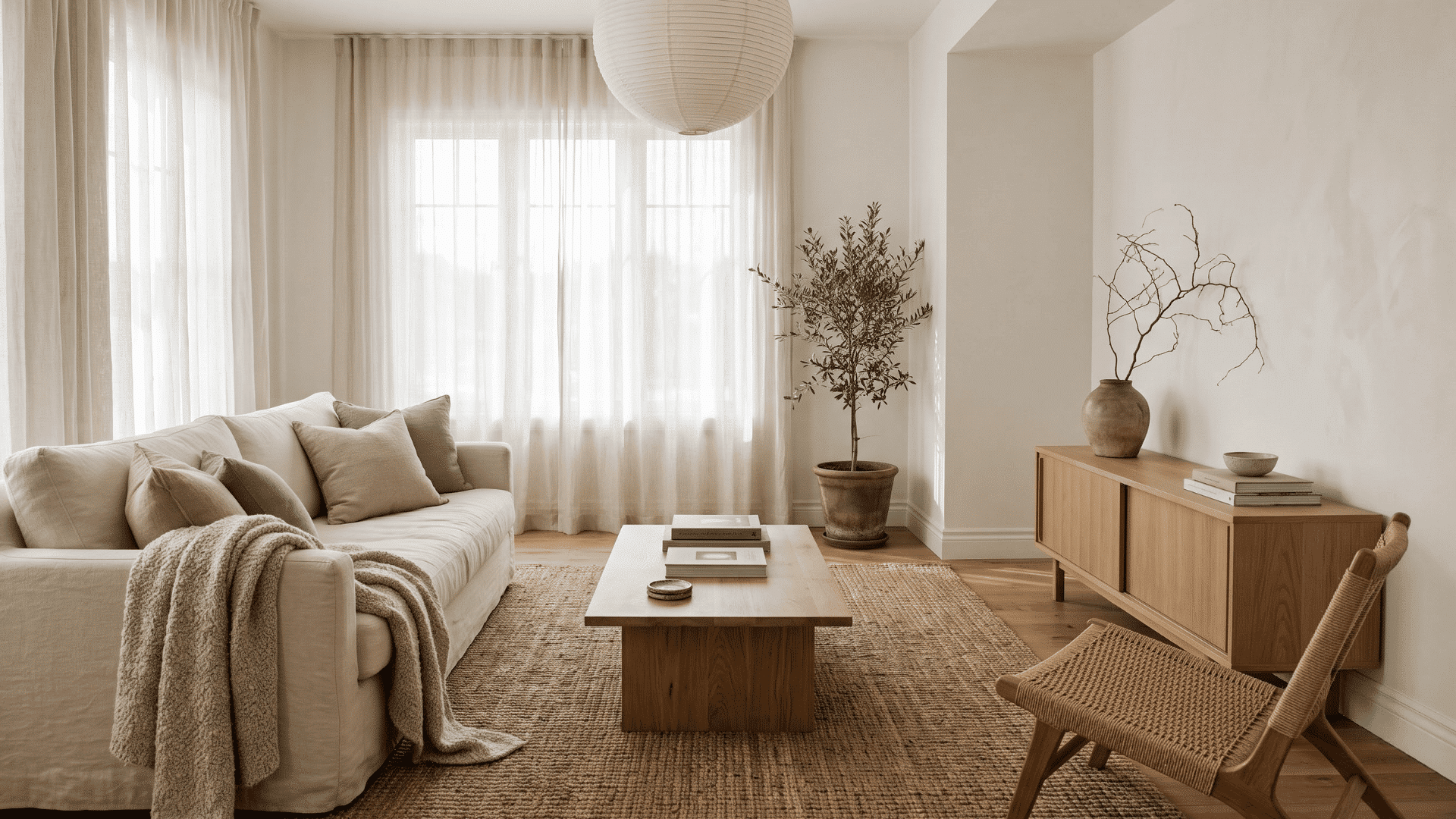
Japandi has no official rulebook, but a handful of principles appear in nearly every room that works. These five are worth following first:
-
Keep Most Things Out of Sight: Store most belongings behind closed doors and display only a few pieces you truly love.
-
Treat Empty Space as Part of the Design: Japanese design calls this ma, a word that roughly means a pause, gap, or negative space, so leave bare wall sections and clear floor around key pieces.
-
Keep Furniture Low and Grounded: Low sofas, platform beds, and low coffee tables keep sightlines open and help ceilings feel taller in modest rooms.
-
Buy Fewer, Better Pieces: A solid wood table or a well-made linen sofa will outlast several cheaper buys and suits the style’s slow, considered pace.
-
Bring Nature Indoors: One or two potted plants, a single branch in a ceramic vase, or a clear view of the garden connects the room to the outdoors.
Japandi vs. Wabi-Sabi vs. Scandinavian Style
All three styles favor simplicity and natural materials. Japandi and Scandinavian design both lean on clean, functional pieces, while wabi-sabi prizes handmade objects that show their age.
|
Feature |
Japandi Style |
Wabi-Sabi |
Scandinavian Style |
|---|---|---|---|
|
Main Focus |
Simplicity, comfort, and functionality |
Beauty in imperfection and aging |
Practicality, comfort, and simplicity |
|
Color Palette |
Beige, taupe, brown, muted green, and charcoal |
Earthy browns, clay, gray, and faded tones |
White, cream, light gray, and soft pastels |
|
Furniture |
Clean-lined, often low-profile wooden pieces |
Handmade, weathered, or irregular pieces |
Functional furniture with simple, clean shapes |
|
Decor |
Few carefully selected decorative pieces |
Handmade objects with natural imperfections |
Cozy textiles, plants, and simple artwork |
Japandi Color Palette: Best Colors for a Calm Interior
A Japandi color palette pairs warm neutrals with earthy accents to create subtle contrast without making a room feel busy. Start with off-white, cream, or taupe walls, then build a balanced color scheme using these combinations:
-
Cream + Light Oak + Sage Green: A fresh, airy combination for living rooms and bedrooms.
-
Warm Beige + Walnut + Charcoal: Adds depth to larger rooms without making them feel too dark.
-
Soft White + Taupe + Terracotta: Brings gentle warmth to bedrooms and sitting areas.
-
Greige + Dark Brown + Olive Green: Creates a richer look for cozy spaces.
Japandi Room Ideas for Every Part of the Home
1. Japandi Living Room
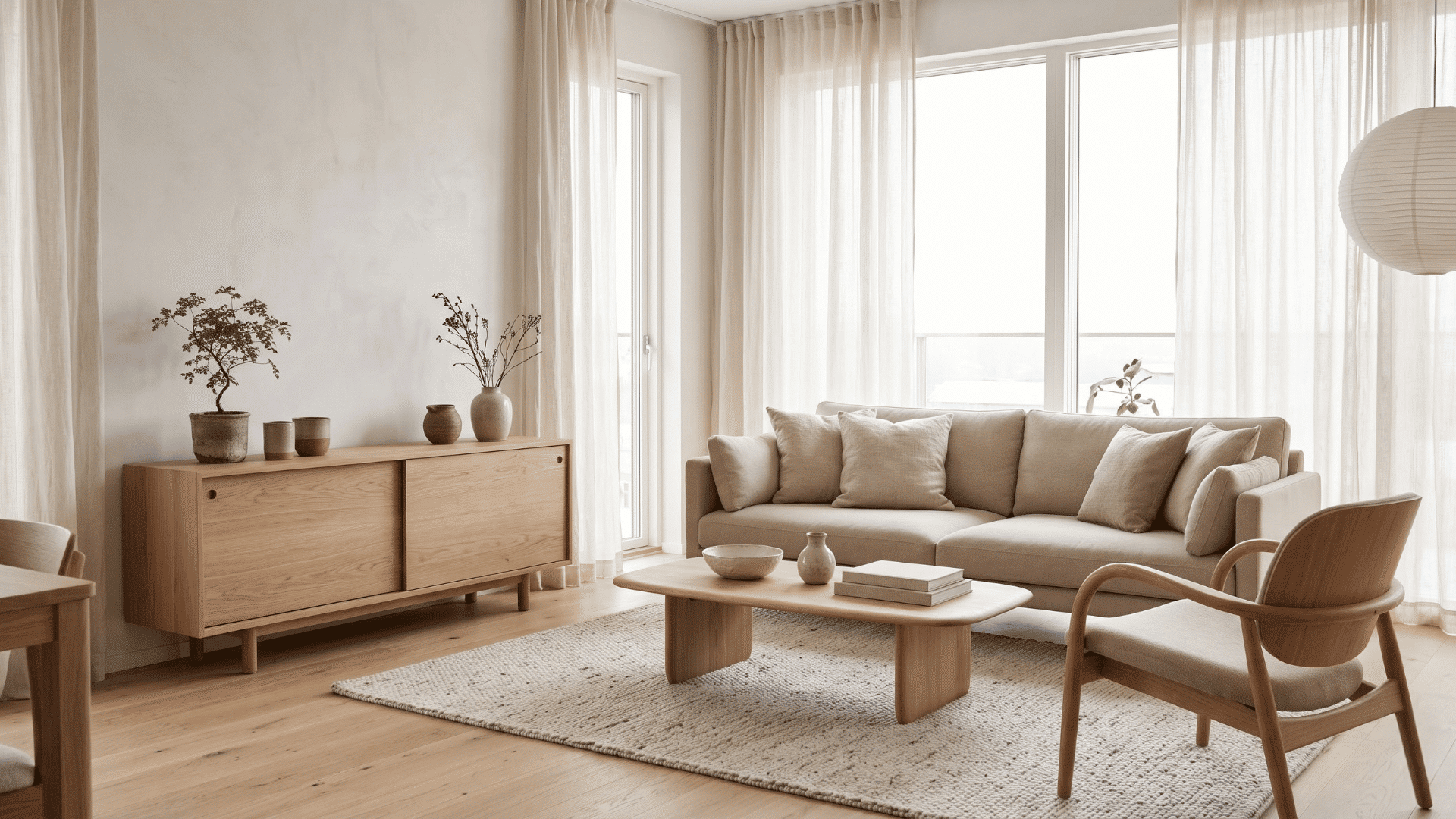
A Japandi living room feels open and welcoming with furniture arranged for comfort and conversation. Place a low-profile sofa opposite a simple coffee table, leaving enough room to move around.
Add an armchair with a curved wooden frame to soften straight furniture lines.
A large rug can define the seating area, while a single framed artwork above the sofa creates a focal point without overwhelming the wall.
Leave 12 to 18 inches between the sofa and coffee table, the range furniture makers commonly suggest, so people can pass easily and still reach a cup.
2. Japandi Bedroom
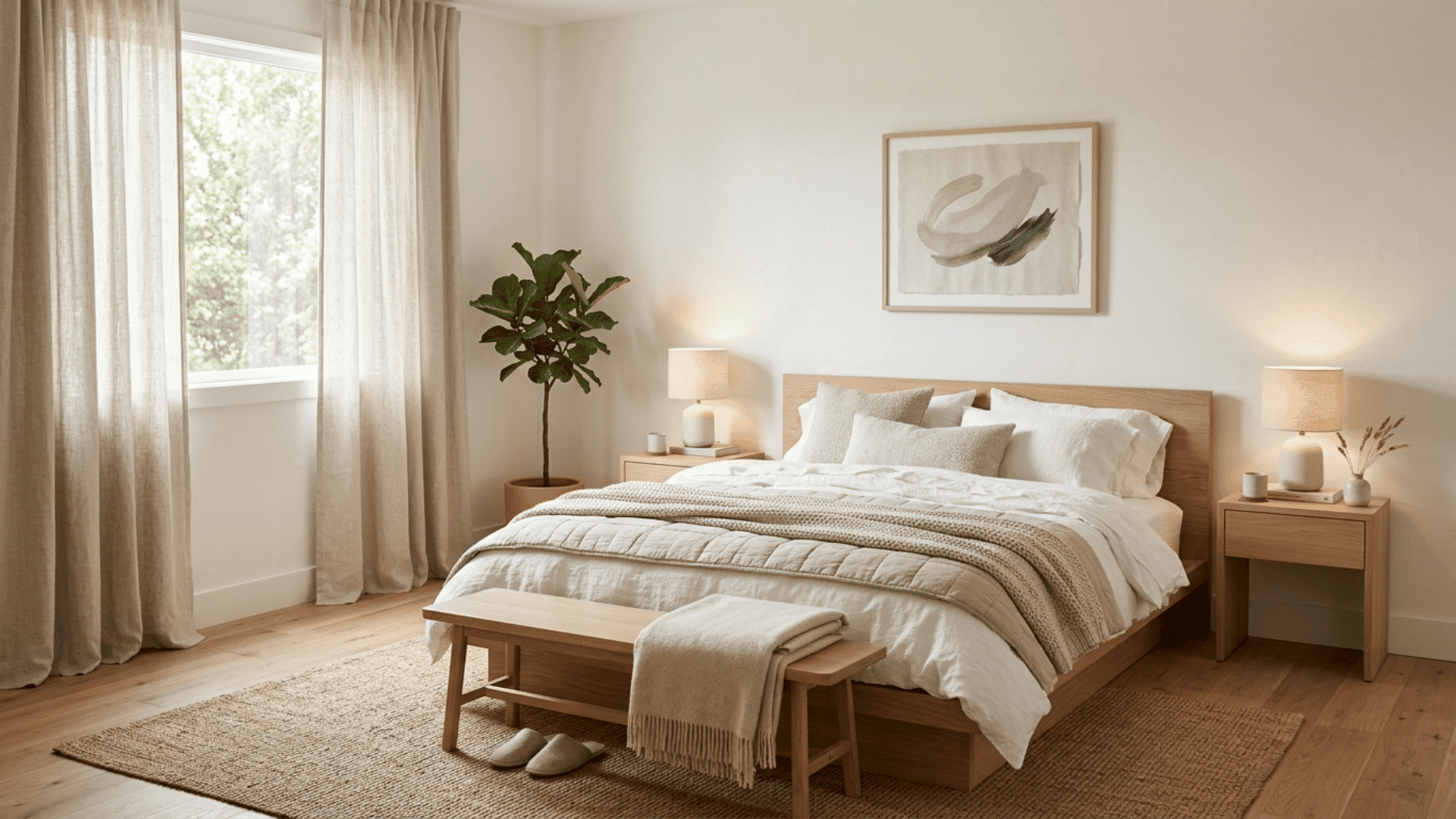
A Japandi bedroom focuses on restful surroundings and a simple sleeping arrangement. Choose a platform bed with a wooden headboard and keep bedding neatly layered with a lightweight duvet.
Place matching bedside tables with drawers to store books, chargers, and other essentials.
Floor-length curtains help control daylight, while a small reading lamp beside the bed provides focused light without disturbing the room’s peaceful atmosphere. Keep the wall behind the bed mostly bare or hang one calm print so the headboard stays the focal point.
3. Japandi Kitchen
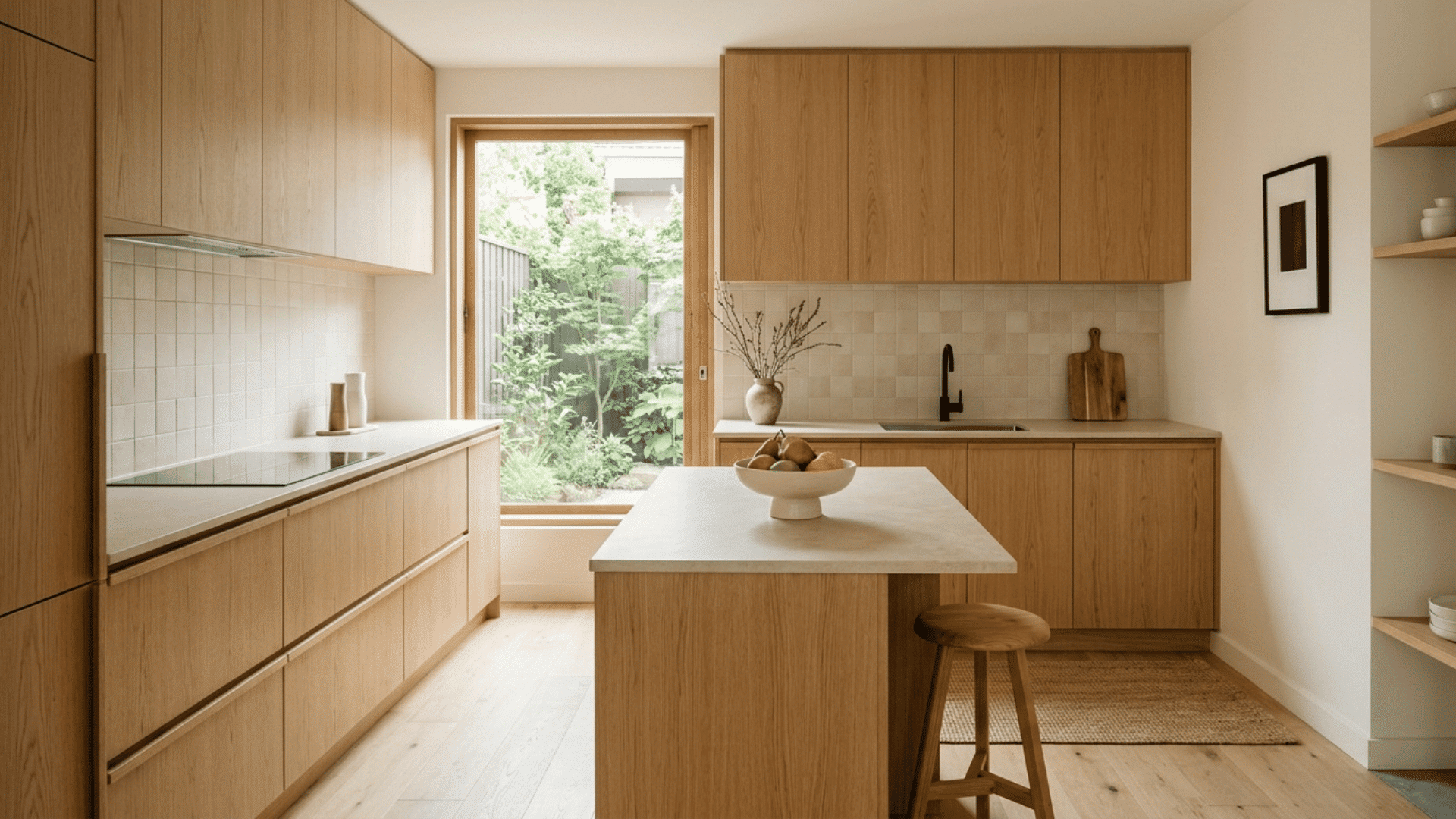
A Japandi kitchen combines efficient storage with simple cabinet designs and easy-to-maintain surfaces. Flat-panel oak cabinets pair well with a light stone countertop and an understated tile backsplash.
Use handle-free drawers or slim cabinet pulls for a clean appearance.
Keep frequently used utensils near cooking areas and store small appliances inside cabinets. A wooden breakfast stool or ceramic fruit bowl can add character without taking up valuable workspace.
4. Japandi Bathroom
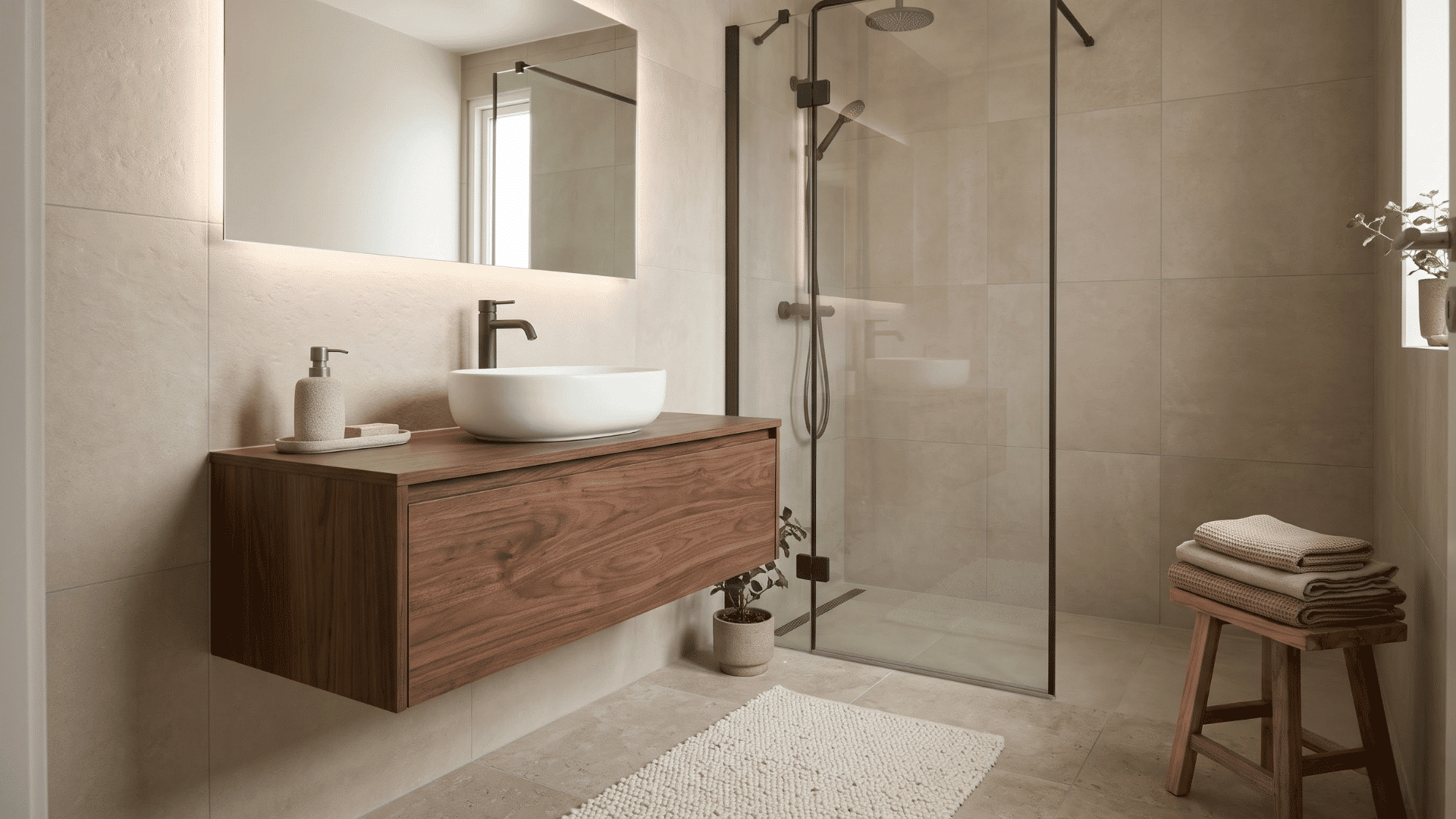
A Japandi bathroom benefits from simple fixtures and surfaces that are easy to clean. Pair a floating wooden vanity with a white vessel sink and large, neutral-toned wall tiles.
Choose a frameless mirror to keep the area visually open.
A recessed shower niche provides space for toiletries without adding bulky shelves. Complete the arrangement with a cotton bath mat and a small ceramic soap dispenser.
5. Japandi Small Apartment
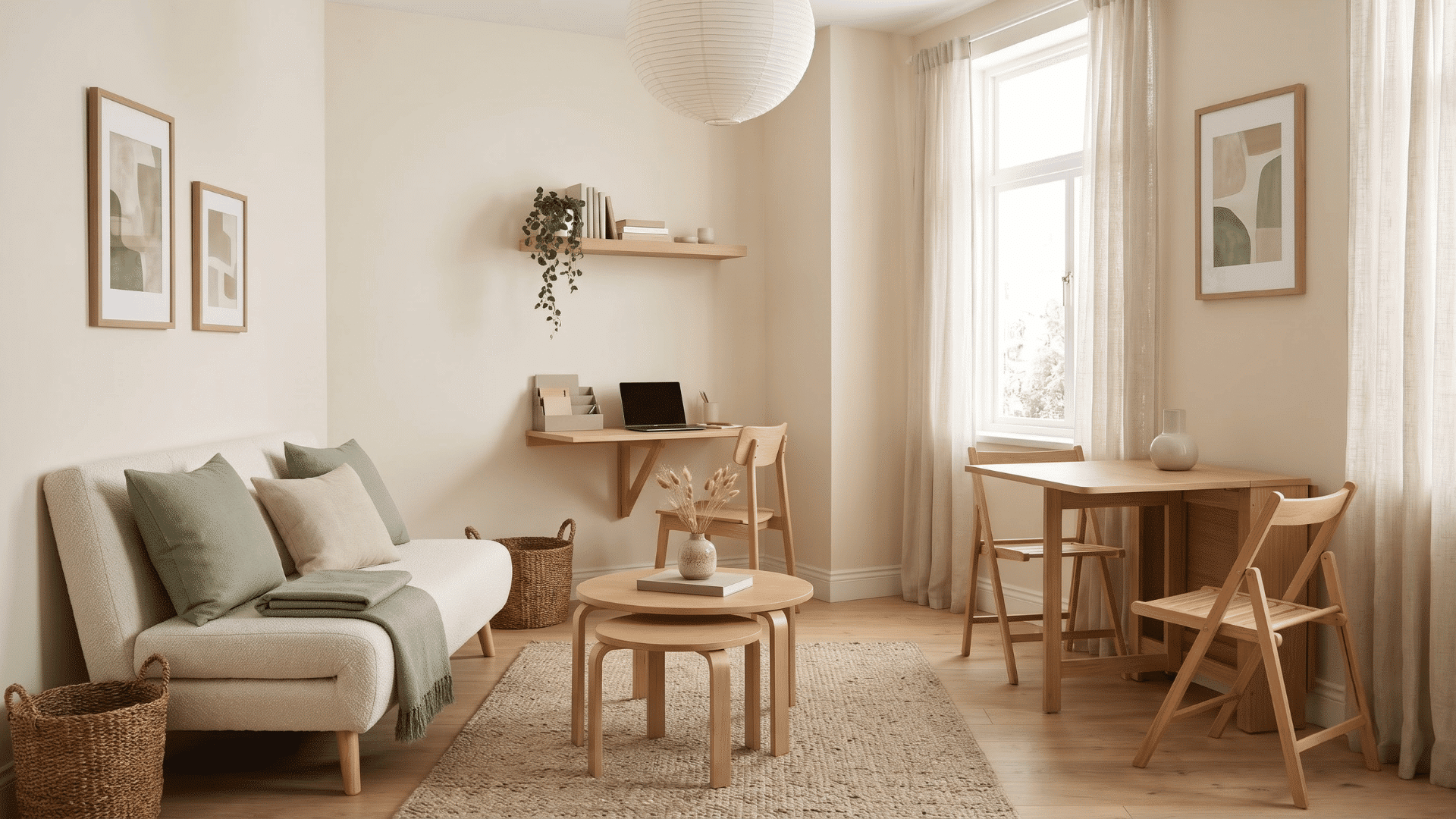
A Japandi small apartment needs furniture that serves multiple purposes without taking up unnecessary floor space. Choose a compact sofa with raised legs and a nesting coffee table that can be moved when needed.
Use a narrow wall-mounted desk for occasional work and a storage bench near the entrance.
Keep window areas clear to maximize daylight. A folding dining table can provide extra room during meals without permanently occupying the living area.
Materials and Textures That Define Japandi Style
Materials do as much work as color in a Japandi room. This table shows where each common material fits, the finish to look for, and what it adds.
|
Material |
Common Uses |
Recommended Finish |
What It Adds |
|---|---|---|---|
|
Wood (oak, walnut, ash) |
Tables, chairs, shelves, flooring |
Natural or matte |
Visible wood grain and warmth |
|
Stone and Ceramic |
Countertops, planters, vases |
Matte or lightly textured |
Subtle variations in color and shape |
|
Linen and Cotton |
Bedding, curtains, cushions |
Soft, natural fabrics |
Comfort and softness |
|
Wool and Jute |
Rugs, throws, baskets |
Simple woven patterns |
Warmth and texture |
|
Rattan and Bamboo |
Chairs, baskets, light fixtures |
Natural or lightly stained |
Light, woven details |
|
Metal (iron, brass, bronze) |
Lamp bases, handles, furniture legs |
Brushed or matte |
Gentle contrast with wood and fabric |
|
Paper (Shoji-style) |
Lampshades, room dividers |
Thin, slightly textured |
Softer light and a light, airy look |
How to Decorate in Japandi Style
Decorating in Japandi style starts with choosing furniture that suits your space and daily needs. Focus on practical arrangements that make each room comfortable without filling every corner.
-
Choose the Right Furniture: Pick a sofa, bed, or dining table that fits the room without blocking walkways.
-
Plan the Layout: Leave enough space between furniture pieces for easy movement.
-
Add Practical Storage: Use closed cabinets, drawers, or storage benches to keep everyday essentials organized.
-
Personalize the Space: Display a favorite artwork, handmade vase, or meaningful object without overcrowding shelves.
Before buying anything new, rearrange what you already own. Small layout changes can make a room feel more spacious and comfortable.
Japandi Lighting Tips for Every Room
Lighting in a Japandi interior should feel warm and comfortable while supporting everyday activities. Instead of relying on one bright ceiling light, combine different light sources to create a balanced atmosphere.
|
Light Layer |
Where to Use It |
Japandi Tip |
|---|---|---|
|
Ambient Lighting |
Ceilings in every room |
Use dimmable ceiling lights to provide even brightness without harsh glare. |
|
Task Lighting |
Sofas, beds, kitchen worktops |
Place reading lamps beside sofas or beds and focused lights above kitchen worktops. |
|
Accent Lighting |
Darker corners, shelves |
Add paper lanterns or small table lamps to softly illuminate darker corners. |
|
Warm Light Bulbs |
All fixtures |
Choose bulbs between 2700K and 3000K for a soft, warm-white glow that complements natural wood and neutral tones. |
Use separate switches or dimmers to adjust each light source throughout the day. ENERGY STAR measures brightness in lumens and lists about 800 lumens as the match for an old 60-watt bulb, so compare lumens when choosing bulbs for each space.
If you use a genuine Isamu Noguchi Akari paper lamp, go warmer still with a bulb rated 2700K or lower. That’s the rating the Noguchi Museum suggests for its shades, and it also advises keeping Akari away from strong heat and outdoor spots.
Where to Find Japandi Pieces Without Overspending
Creating a Japandi home doesn’t have to be expensive. Thrift stores and estate sales offer affordable solid wood furniture and ceramic decor.
Facebook Marketplace offers secondhand furniture, but check measurements, condition, and joints before buying. Dovetail joints and continuous wood grain may indicate solid wood, while thin edge layers often suggest veneer.
Last spring, I found a mid-century oak coffee table on Facebook Marketplace for just $45.
It had a few scratches and water stains, but the solid wood legs and simple, clean design caught my attention. I spent an afternoon gently sanding away the marks and finishing it with a coat of matte clear wax.
The result was a beautiful coffee table that looked like a $600 designer piece and became the centerpiece of my living room.
Retailers such as IKEA and Target also offer simple furniture, linen cushions, and woven baskets at affordable prices.
For handmade pieces, visit local craft fairs or pottery shops. Focus your budget on durable furniture and save on smaller decorative items.
Common Japandi Decorating Mistakes to Avoid
-
Making the Room Feel Bare: Too few furnishings can make a space feel unfinished. Add personal touches without filling every corner.
-
Choosing Style Over Comfort: Attractive furniture isn’t always comfortable. Check seat depth, cushioning, and back support before purchasing.
-
Ignoring Maintenance Needs: Fine fabrics and untreated surfaces may require extra care. Choose finishes that suit daily use.
-
Matching Every Item: Identical furniture sets can look overly uniform. Combine different shapes and complementary finishes for a natural appearance.
-
Mixing Too Many Wood Finishes: Several contrasting wood tones can make a room feel disconnected. Repeat a dominant tone to maintain consistency.
If a room already feels too bare, these ideas for adding warmth to a minimalist interior can help without bringing clutter back.
Conclusion
What I appreciate most about this design approach is its flexibility. Small changes, such as rearranging furniture, choosing softer lighting, or adding meaningful decor, can make a noticeable difference without a large budget.
Start with one room. Clear every surface, keep three objects you love, and swap the brightest bulb for a warm-white one.
Which Japandi decorating idea would you try first? Share your thoughts and experiences in the comments below!
Frequently Asked Questions
Can You Create a Japandi Room Using Furniture You Already Own?
Yes, you can create a Japandi room by rearranging existing furniture, removing unnecessary decor, and adding natural textures like linen, wood, or woven accessories.
What Kind of Wall Art Suits a Japandi Interior?
Nature-led or abstract organic prints work best: ink-wash landscapes, botanical line drawings. Use thin natural-wood or plain black frames and leave generous wall space around each piece.
Can You Use a Dark or Moody Color Scheme in Japandi?
Yes. Charcoal, warm slate, bark, and aged indigo work if you keep saturation low and vary texture. Matte dark walls with low furniture read as intentional rather than oppressive.
What Is the Difference Between Japandi and Minimalism?
Minimalism focuses on owning and displaying less, and it can feel stark. Japandi keeps that restraint and adds warmth through wood, linen, wool, plants, and soft lighting, so rooms feel calm and comfortable.