
Checking a clothing label and spotting polyamide next to elastane or polyester is a common moment of confusion, especially when the garment feels nothing like what the tag suggests.
Polyamide fabric is not some rare specialty material. In most clothing, it is simply another name for nylon, and once that connection clicks, reading fiber blends stops feeling like guesswork.
Designers reach for it constantly because it stretches well, resists abrasion, and feels smooth against skin, which is exactly why it shows up in leggings, swimwear, and hosiery so often.
The real decision most shoppers face is not polyamide versus nylon, since they are effectively the same thing, but how polyamide performs against polyester and elastane for stretch, drying speed, and everyday comfort.
What Is Polyamide Fabric, and Is It Toxic?
Polyamide fabric is a manufactured fiber, and in most clothing it is simply another name for nylon. It is not considered inherently toxic, and standard everyday wear does not expose you to harmful chemical risk from the fiber itself.
Polyamide is a chemical family defined by repeating amide bonds. Nylon is the best-known member of that family, which is why the two names get used almost interchangeably on garment tags. European and international labels often print “polyamide,” while US labels typically use “nylon,” but the fiber inside the garment is usually the same.
After several years of experimentation, Carothers created an early form of nylon on 28 February 1935. It was made by combining carbon-based chemicals that formed a solid material where they met. This material could then be stretched into thin, strong threads.
Note: A fiber content label tells you what a garment contains, not whether it will suit your skin. Reactions people report with synthetic fabrics more often trace back to dyes, finishes, tight construction or heat buildup rather than the fiber name alone.
Also Read: What Is Viscose Fabric?
Key Properties of Polyamide
These are the properties that explain why designers reach for polyamide in fitted, high-movement, and skin-contact garments so often.
-
Strength: Handles repeated pulling, stretching, and rough wear without giving out quickly.
-
Elasticity: Stretches under movement and recovers its shape well, which is why it pairs so naturally with elastane.
-
Abrasion resistance: Holds up better than most fibers under constant friction, making it useful for gym wear and hosiery.
-
Moisture handling: Absorbs a small amount of moisture, which keeps it from feeling clammy, though it dries slower than polyester.
-
Lightweight feel: Adds structure and durability without bulk, which is exactly what close-fitting garments need.
Polyamide vs Nylon vs Polyester vs Elastane
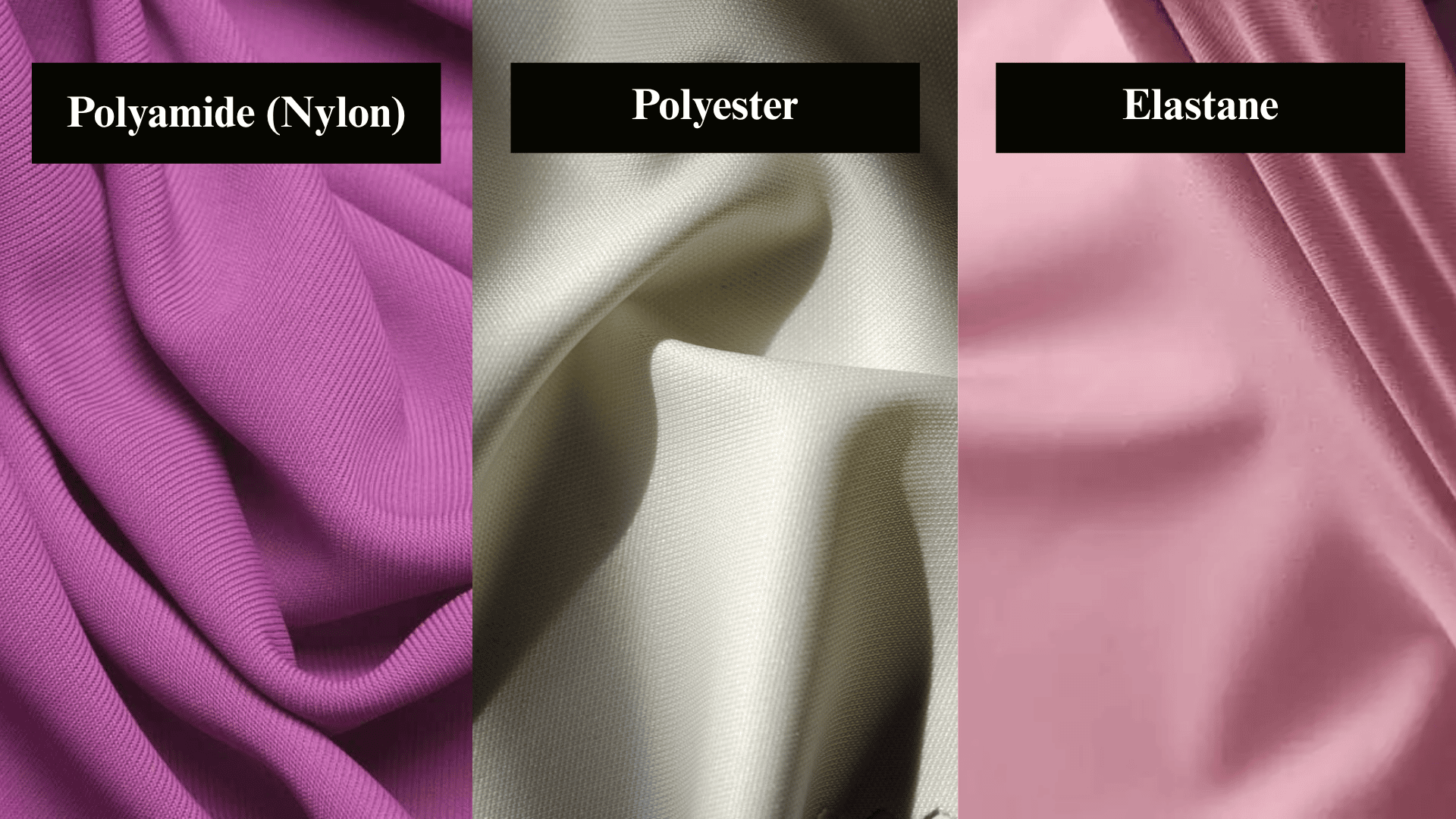
The comparison people search for most is not really four separate materials competing against each other. Nylon is a type of polyamide, so this table treats “polyamide/nylon” as one column and separates out polyester and elastane, which are chemically different fibers with different jobs in a garment.
|
Feature |
Polyamide (Nylon) |
Polyester |
Elastane |
|---|---|---|---|
|
What it is |
A polymer family; clothing labels usually mean nylon |
A separate synthetic polymer fiber |
A highly stretchable synthetic fiber, rarely used alone |
|
Feel |
Smooth, soft, slightly silky |
Ranges from soft to crisp |
Used in blends for stretch, not for feel |
|
Moisture absorption |
Around 4%, holds a little moisture |
Under 0.4%, dries very fast |
Depends on the fiber it’s blended with |
|
Stretch |
Moderate natural stretch |
Low on its own |
Extremely high |
|
Recovery |
Good shape recovery |
Strong shape retention |
Excellent, this is its main job |
|
Abrasion resistance |
High |
Good |
Not selected for this on its own |
|
Sun and color |
Can fade faster in strong sun |
Holds color and resists UV fading well |
Blend dependent |
|
Best suited for |
Leggings, hosiery, underwear, wind shells |
Running gear, swimwear liners, bright prints |
Adding stretch to leggings, swimwear, hosiery |
Recommendation: When you’re comparing polyamide vs polyester on a label, judge them by what the garment needs to do. A polyamide vs nylon question usually isn’t a real choice at all since they’re the same fiber family under different names, so the more useful comparison is polyamide (or nylon) against polyester and elastane.
What Do Wearers Say About Polyamide vs Other Fabrics
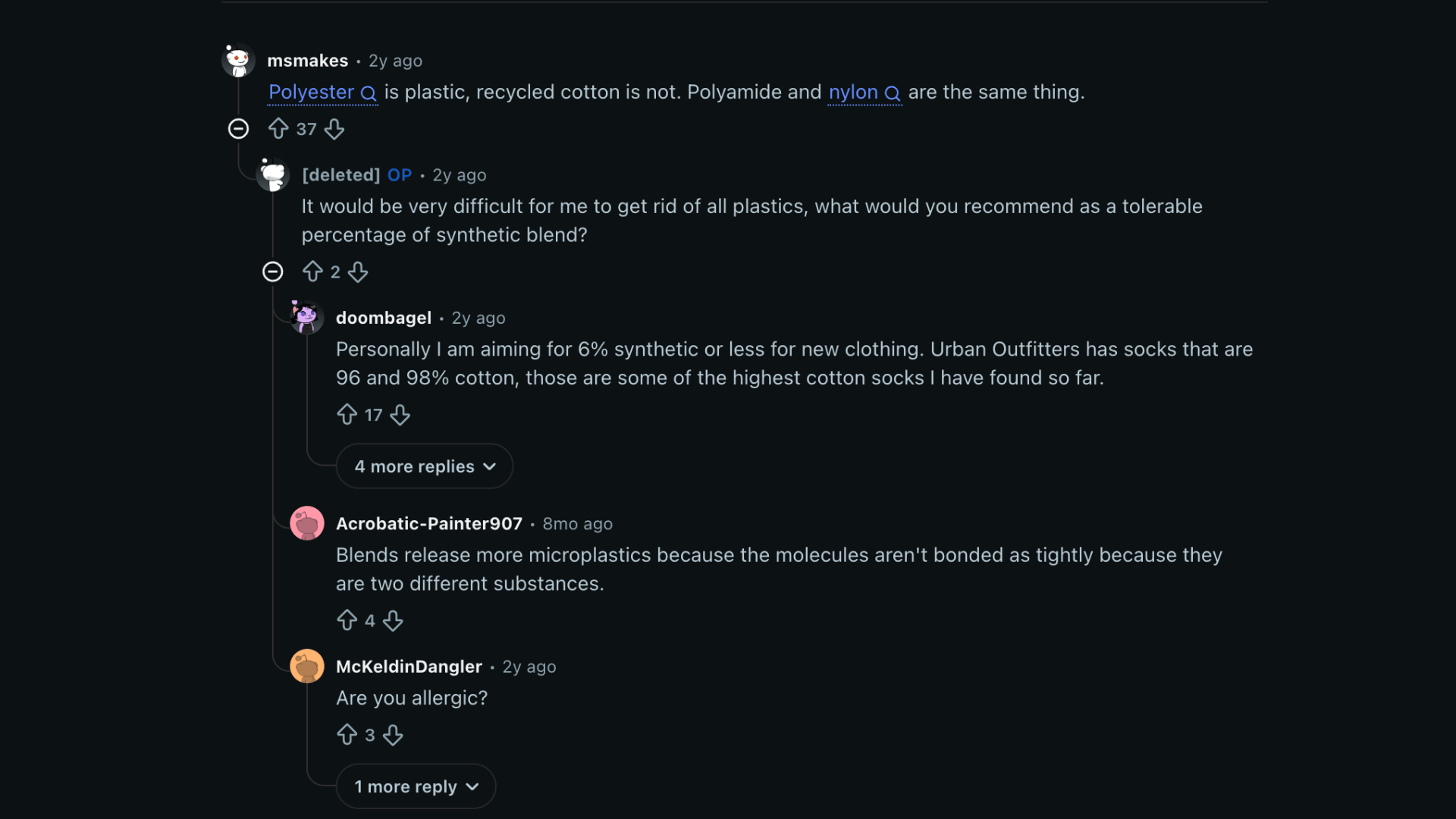
A detailed Redditdiscussion captures how differently people weigh polyamide against other synthetics when trying to cut down on plastic. One commenter pointed out that polyester is plastic while recycled cotton is not, and clarified that polyamide and nylon are simply the same fiber.
Others pushed back on treating fibers as universally good or bad, noting nylon often resists odor better than polyester and can even strengthen natural-fiber blends in small amounts.
Elastane drew the most criticism, with several users avoiding it over microplastic shedding and garments wearing out faster. Alternatives like lyocell and merino wool blends came up repeatedly as lower-plastic options for activewear.
The original poster admitted the labeling confusion firsthand, only realizing mid-thread that polyamide and nylon were not separate materials at all.
Common Uses of Polyamide Fabric
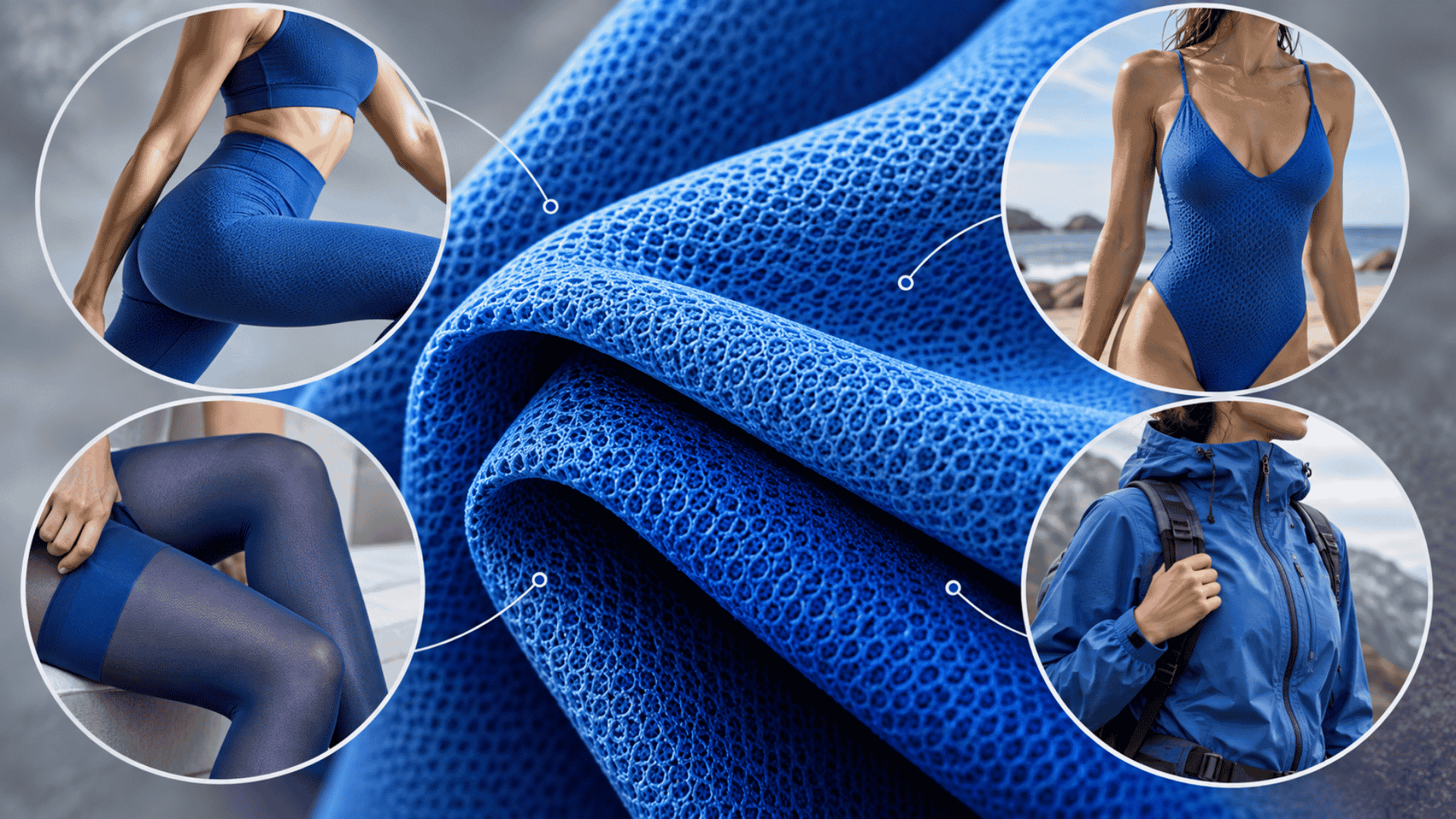
Its blend of low weight, strength, and smoothness explains why polyamide shows up wherever a garment needs to move with the body.
-
Activewear: Leggings, cycling shorts, sports bras, and other fitted performance pieces.
-
Swimwear: Commonly blended with elastane for stretch and quick drying after water exposure.
-
Underwear and hosiery: Tights, stockings, and seamless underwear rely heavily on smooth polyamide construction.
-
Outerwear: Lightweight windbreakers and rain shells, though weather resistance depends on added coatings.
Is Polyamide Fabric Good or Bad?
Polyamide is not inherently good or bad. Its value depends entirely on whether its strengths match what the garment is being asked to do.
Pros
-
Durable against abrasion and repeated wear
-
Smooth and comfortable in fitted garments
-
Stretches well and pairs naturally with elastane
-
Lightweight without sacrificing strength
Cons
-
Made from petrochemical-based synthetic feedstock
-
Can shed microfibers during washing, a concern shared with polyester
-
Less breathable than natural fibers for casual, hot-weather wear
-
Some nylon fabrics fade faster under prolonged sun exposure
Sustainability note: Recycled polyamide reduces reliance on new petrochemical feedstock, which is a genuine improvement, but it does not make the fabric biodegradable or stop microfiber shedding during laundering. If that matters to you, a washing bag designed to catch microfibers is a more useful step than relying on the recycled label alone.
Is Polyamide Fabric Waterproof?
No, untreated polyamide fabric is not waterproof on its own. It resists brief wetting better than absorbent natural fibers and dries quickly, but water can still pass through it during sustained rain.
True waterproofing comes from what gets added to the fabric, not the fiber itself:
-
Polyurethane, PVC, or silicone coatings applied to the surface
-
Laminated waterproof membranes built into the fabric structure
-
Durable water repellent (DWR) finishes that bead off light rain
-
Taped or sealed seams, since stitching creates tiny holes water can enter
A nylon rain shell and nylon hosiery can perform completely differently even though both list polyamide, because the coating, weave density, and seam construction decide weather resistance far more than the fiber name alone.
How to Read Polyamide Blends on Clothing Labels
Polyamide almost never shows up alone on a label. It usually appears as a percentage next to another fiber, and that percentage tells you more than the fiber name does.
-
90% polyamide, 10% elastane: A durable base with noticeable stretch, common in fitted leggings.
-
Polyamide with cotton: Synthetic strength and shape support combined with cotton’s softer, more breathable feel.
-
Polyamide with wool: Added durability that helps delicate knit constructions last through more wear.
-
Polyamide with polyester: Performance shifts depending on which fiber makes up the larger share.
Under FTC labeling rules, manufacturers must disclose fiber names and their percentages by weight, which is exactly why checking the full breakdown, not just the first fiber listed, gives a clearer picture of how a garment will actually behave.
Final Takeaway
Choosing between polyamide fabric, polyester, and elastane comes down to what the garment actually needs to do, not which name sounds more premium or familiar on a tag.
Polyamide earns its place in leggings, hosiery, and underwear because it stretches, recovers its shape, and feels smooth against skin, while polyester tends to win where fast drying and color retention matter more, and elastane simply adds the stretch neither fiber offers alone.
The percentage listed next to polyamide on a label tells you far more than the fiber name alone, so it is worth checking the full blend before assuming how a piece will fit or feel.
Found a fiber blend on a label you’re unsure about? Share the percentages in the comments, and we can talk through what each one is likely contributing.
Frequently Asked Questions
Is Polyamide the Same as Polyester?
No. Polyamide (usually nylon) and polyester are different synthetic fibers. Polyamide absorbs more moisture and stretches more naturally, while polyester dries faster and resists UV fading better.
Is Polyamide Safe on Skin?
Yes, polyamide is generally considered safe for standard clothing use. When irritation happens, it usually comes from dyes, finishes, a tight fit, or friction rather than the fiber itself.
Is Polyamide Fabric Good for Summer?
It works well for swimwear, activewear, and technical pieces that need to dry quickly, but it can feel less breathable than natural fibers for casual daily wear in humid heat.