

Garden gazebos are a valuable addition to any home, transforming an ordinary outdoor space into a beautiful and practical area. These freestanding or attached structures provide valuable shade and shelter, taking your outdoor living space to the next level.
Often octagonal or round with a solid roof, a garden gazebo creates a dedicated outdoor room for relaxing, dining, or entertaining, making your garden feel like a natural extension of your home. It also creates a versatile outdoor space that can enhance both your lifestyle and your property’s value.
This guide covers everything you need to know about choosing the right type and size, installation, maintenance, and the benefits a gazebo can bring to your outdoor space.
Types of Garden Gazebos: Finding Your Perfect Match
Choosing the ideal gazebo requires understanding the various types, each with distinct construction, longevity, and aesthetic appeal. Gazebos range from temporary setups to permanent architectural features.
The primary distinction lies between permanent and temporary structures.
Permanent Gazebos: Made from more robust materials like wood, metal or vinyl. They have a strong foundation and solid roof. Although they require a higher initial investment, they are highly durable, weather-resistant, and built to last.
Temporary Gazebos: Typically lightweight structures characterised by having a metal frame and fabric cover. These structures are ideal for seasonal use or special occasions. They are lightweight and easy to assemble and dismantle, but they are less durable and offer limited protection from harsh weather.
Gazebos are available in a wide range of styles, including traditional timber designs, modern metal structures, and convenient pop-up models. Some designs combine elements, such as pergola-gazebo hybrids that provide partial shade while maintaining a more open feel.
Another factor to consider is size. There are different options available. An 8×8 foot gazebo is ideal for a small seating area. A larger 12×16 foot gazebo is better suited to entertaining larger groups.
Different roof types influence performance as well – a solid hardtop roof provides the maximum level of weather protection. On the other hand, a slatted roof or one with a fabric canopy will provide a degree of shade and protection from light rain only.
Key Benefits of Adding a Gazebo to Your Garden
Adding a gazebo can make your garden more practical, functional, and enjoyable to use. These structures create a unique outdoor space.
A gazebo creates a dedicated space that can be used as an outdoor dining area, a peaceful spot for relaxation or meditation, or even a sheltered area for a hot tub.
Creates Defined Outdoor Living Space: A gazebo helps define outdoor areas for dining, relaxing, or entertaining, making your garden feel like a natural extension of your home. It also creates a greater sense of privacy and comfort in an open garden.
Provides Weather Protection: Having a solid roof helps to protect from the sun and light rain. This allows you to enjoy your outdoor space for longer throughout the year. Hardtop roofs, often made from steel or polycarbonate, block 100% of UV rays.
Increases Property Value and Kerb Appeal: A high-quality gazebo enhances a home’s kerb appeal and increases property value by 7.25%, which is roughly €20,000–€25,000 in the average Irish market. They add architectural interest and make your property more appealing to prospective buyers.
Serves Multiple Functions: A gazebo can serve many purposes beyond dining or relaxing. They can shelter outdoor kitchens, provide a shaded space for kids and even improve the landscape design. This versatility can also increase the overall appeal and value of your property.
Choosing the Right Location and Size for Your Gazebo
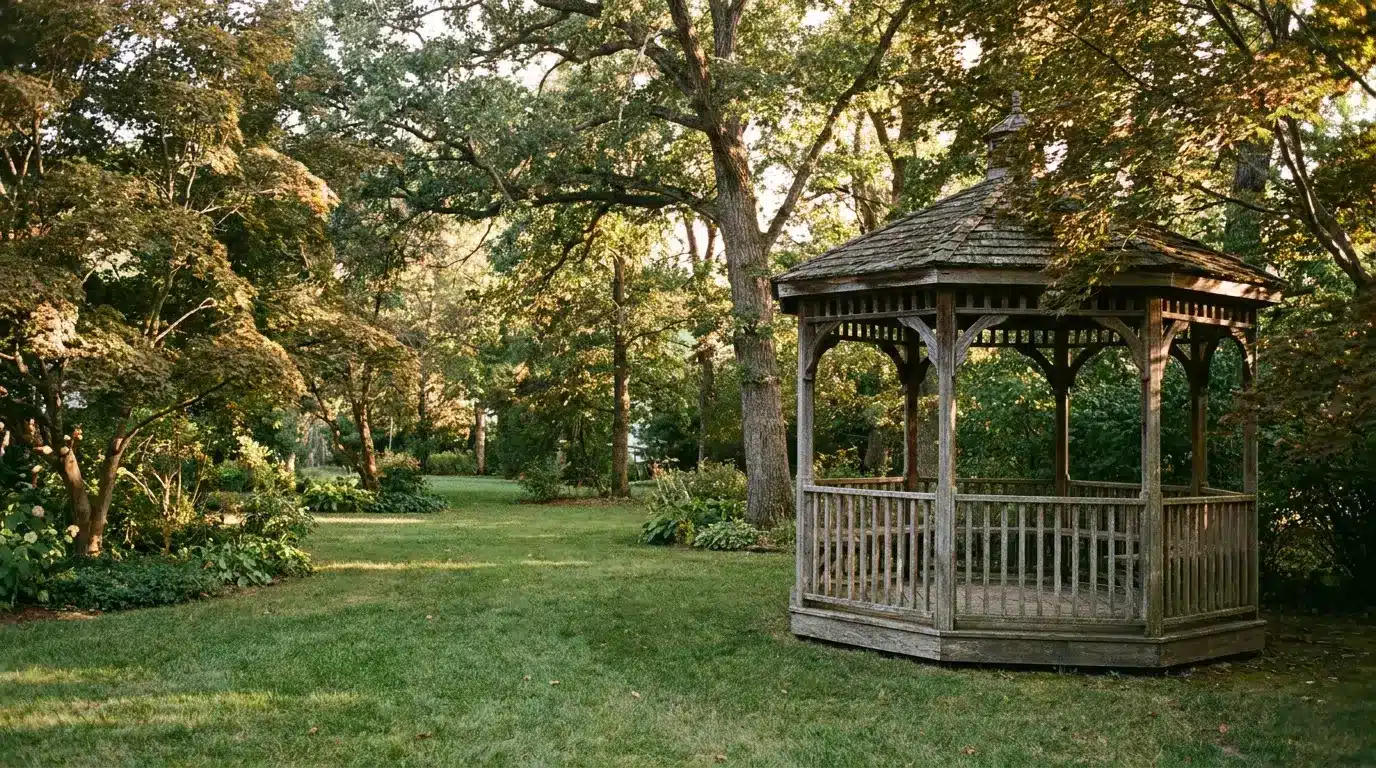
Choosing the right location and size for your gazebo will help you get the most from it while ensuring it blends naturally into your garden. A well-chosen location will ensure your gazebo is practical to use and complies with local planning requirements.
Choose a level area with good drainage, and consider how the sun moves throughout the day so you can enjoy both sunshine and shade when needed. It’s also worth considering the views and the level of privacy you want, so your gazebo feels both welcoming and secluded.
Measure Your Space Accurately: Use a laser measuring device or tape to measure the length and width of a site that you’re interested in. This helps you visualise how much space the gazebo will occupy.
Consider Intended Use and Capacity: For dining, work on the assumption of 15 sq. ft. per person for a table and chair arrangement. A good rule of thumb for standing events is 10 square feet per person.
Account for Furniture and Circulation: Measure your outdoor furniture and ensure at least 2 metres (6.5 ft) of clearance around dining tables for easy movement.
Check Planning and Permit Requirements: Check local setback requirements, homeowners’ association restrictions (if applicable), and building regulations. Many places require permits for anything over 120 square feet or with a permanent foundation.
Orient for Views and Sun Path: Position the gazebo to make the most of your garden views while providing shade during the hottest part of the day. Do not put it in low spots that pool water.
The distance of the house is also important; while it is convenient to have easy access to your garden, placing it a little further from the house can create a peaceful garden retreat. As a general guide, a gazebo should occupy no more than 15–20% of the visible garden space.
Gazebo Features and Customisation Options
Modern gazebos offer a wide range of features and customisation options that can considerably enhance comfort, functionality, and aesthetics. These features can transform a simple structure into a comfortable outdoor retreat.
Built-in seating, railings, and decorative features create a more finished and inviting space. In addition to safety, railings can be customised with spindles or latticework to complement your home’s style.
Screening and Mosquito Netting: An essential feature for keeping insects away during the warmer months. They can either retract or be permanently installed.
Lighting Options: Solar lighting offers an eco-friendly option, while hardwired lighting provides brighter, more reliable illumination for evenings outdoors.
Heating and Cooling Additions: Ceiling fans improve airflow in hot weather, while outdoor heaters (gas or electric) extend the usability of the gazebo into cooler seasons. Misting systems can provide relief during hot, dry weather.
Integrated Technology: Some modern gazebos include built-in sound systems, USB charging ports, or even smart home compatibility for lighting and climate control.
Conclusion: Your Gazebo Journey Starts Here
A garden gazebo is an excellent investment in both your lifestyle and your property’s value. By creating a dedicated, weather-protected space, a gazebo transforms your back garden into a comfortable outdoor room. You can use this space to relax, eat and entertain.
Choosing the perfect gazebo involves considering its style, materials, size, and location, materials, size, and positioning, while considering local rules and regulations as well as personal preferences. Whether you choose a traditional timber gazebo or a low-maintenance metal design, the right gazebo can transform your outdoor space.
First, consider your personal requirements, budget, and the ever-important size of your space. When you know how you want to use the area, you’ll be able to choose a gazebo that transforms your garden into a natural extension of your home.