
When you plan a new wardrobe, it is tempting to focus on the size of the unit and forget about what goes inside it. Yet the internal layout often matters more than the overall dimensions. Two wardrobes of exactly the same width can hold very different amounts of clothing depending on how the space is split between drawers, shelves and hanging rails.
If you are comparing wardrobe storage solutions for a new home or renovation, understanding how each option performs will help you get far more from every centimetre. Below, we compare the three main configurations based on clothing types, available width, accessibility and everyday use, along with some practical wardrobe layout ideas to try.
Hanging Space: Best for Garments That Crease
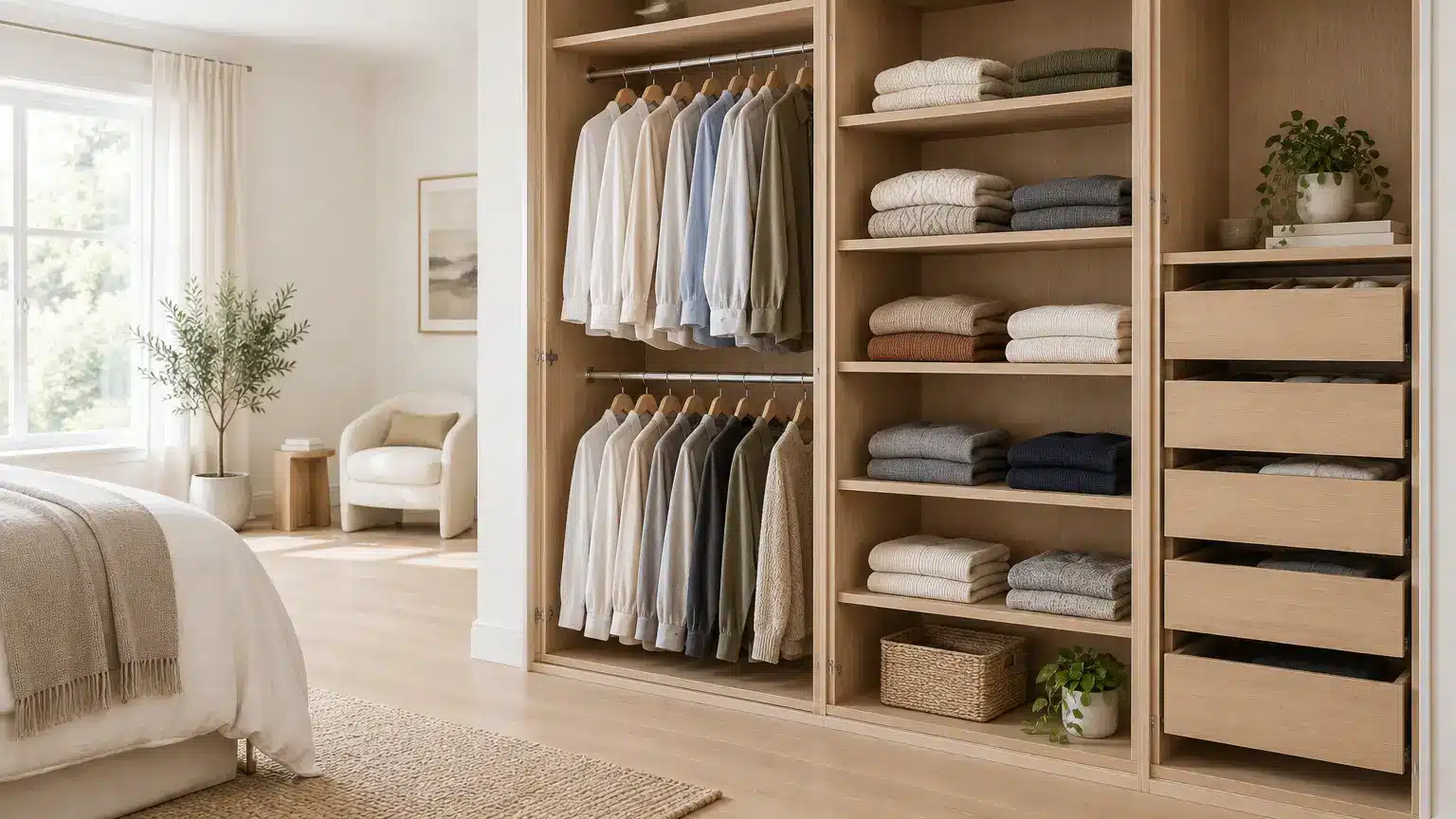
Hanging rails are the backbone of most wardrobes, and for good reason. Shirts, blouses, dresses, suits, coats and tailored trousers all keep their shape best when hung. A single long-hang section of around 1600mm to 1700mm suits dresses and coats, while a double-hang arrangement with two stacked rails can almost double your capacity for shorter items like shirts and folded trousers.
The main limitation is depth. Hanging clothes side-on usually needs a wardrobe around 600mm deep, which can be a challenge in narrow bedrooms. Hanging space can also become inefficient if it is filled with items that do not need it, such as T-shirts or knitwear, which take up more room on a hanger than they would folded.
Drawers: Best for Small and Folded Items
Drawers shine when it comes to underwear, socks, activewear, T-shirts and accessories. They keep small items contained, hide visual clutter and protect delicate pieces from dust. Soft-close drawers also add a feeling of quality and make daily use quieter and smoother.
In terms of pure storage density, drawers are very efficient for folded clothing because they use the full depth of the unit. Stacking items vertically, often called file folding, lets you see everything at a glance. The trade-offs are cost and flexibility. Drawers are generally more expensive to build than open shelving, and once installed their heights are fixed.
Shelves: Best for Bulky and Flexible Storage
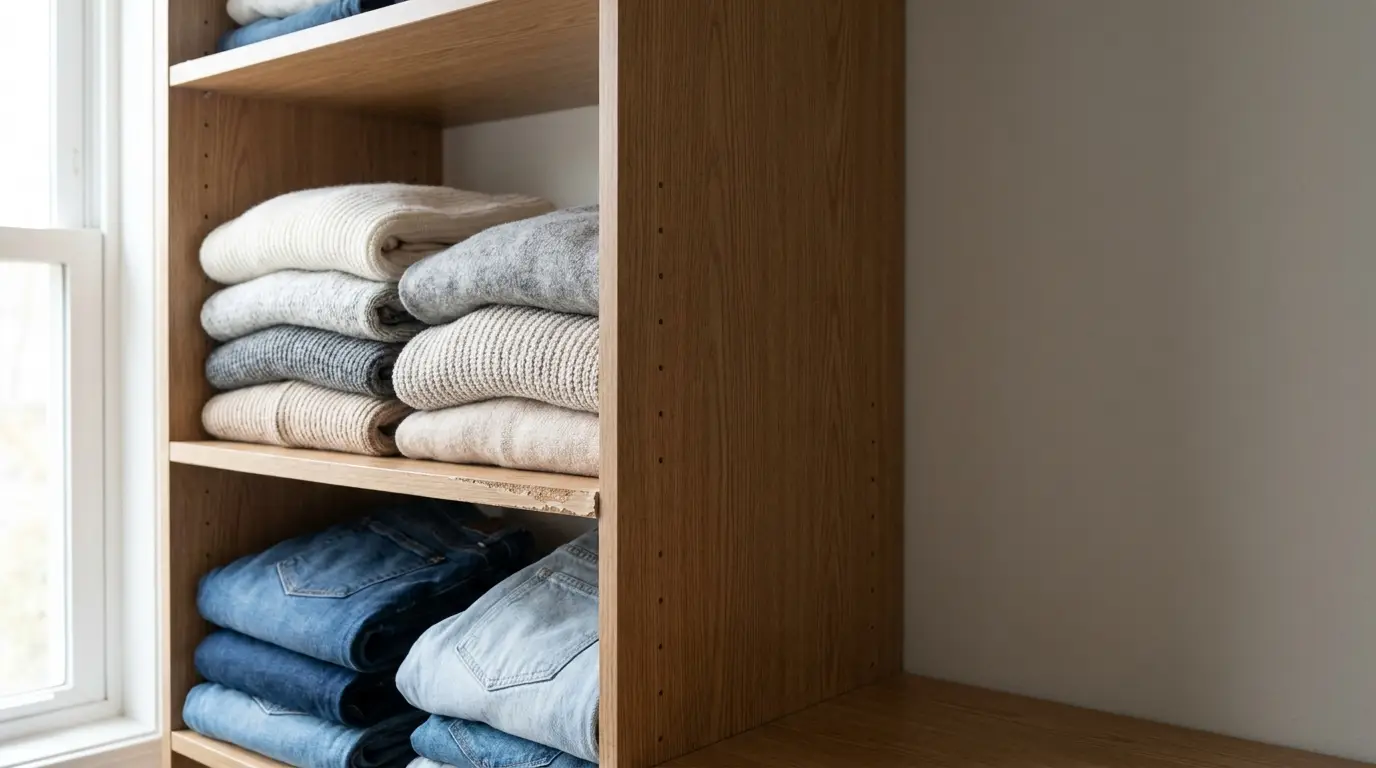
Open shelves are the most adaptable option. They work well for jumpers, jeans, handbags, shoes, folded linen and storage boxes. Adjustable shelves can be moved as your needs change, which makes them a smart choice for growing families or anyone whose wardrobe changes with the seasons.
Shelves are easy to access and quick to scan, but they can become untidy if stacks get too tall. Spacing shelves around 300mm to 350mm apart usually keeps folded piles neat and stable. High shelves are ideal for items you only need occasionally, such as luggage, winter blankets or keepsakes.
Comparing the Three Options
Each configuration has clear strengths. Here is a quick summary of how they compare in everyday use:
- Hanging space works best for crease-prone garments and gives fast outfit selection, but it needs depth and can waste room if used for the wrong items.
- Drawers offer the highest density for small folded items and keep things hidden and dust-free, but they cost more and cannot be easily reconfigured.
- Shelves provide flexible, budget-friendly storage for bulky items, but they require regular tidying to stay organised.
- Narrow wardrobes under about 1200mm wide often benefit from double hanging plus a slim drawer stack rather than splitting the width three ways.
- Wider wardrobes over about 2400mm can comfortably fit dedicated zones for long hanging, double hanging, drawers and shelves.
- Accessibility matters, so place everyday items between waist and shoulder height and keep rarely used items up high.
Which Configuration Gives You the Most Storage?
The honest answer is that no single option wins on its own. The most efficient wardrobes combine all three, matched to what you actually own. Before choosing your wardrobe, take a quick inventory. Count how many items you hang, how many you fold and how many small accessories you need to store. That simple exercise will show you roughly how much rail length, drawer space and shelving you need.
Thinking about who uses the wardrobe also helps. A child’s room may need low shelves and drawers they can reach themselves. A shared main bedroom might need separate zones for each person. A guest room can often manage with a short hanging rail and a few shelves.
Practical Layout Tips
When exploring wardrobe layout ideas, consider placing drawers in the centre of the unit where they are easiest to use, with double hanging on one side and long hanging on the other. Run shelving up to the ceiling to capture space that would otherwise go to waste. Add pull-out shoe racks or jewellery inserts if those items tend to end up scattered around the bedroom. Leaving one adjustable section gives you room to adapt as your needs change over time.
About Boston Wardrobes
Boston Wardrobes has been supplying wardrobe products to New Zealand homes since 1987. Based in Auckland, the team designs and installs custom wardrobe systems for homes from Pukekohe to Orewa, with every unit made to fit the client’s space and storage needs.
Their range includes the premium floor-mounted Luxe, the freestanding Viva, the aluminium Innova, the versatile Flex and the cost-effective Select. Systems are built using melamine panels on sustainably sourced, New Zealand-made MDF, with Hettich or Blum soft-close drawers and hanger bars in white, black or silver.