

For most people, a chef’s coat is simply part of a uniform. For Chef Narendra Panwar, it represents something much deeper.
Every time he puts on his white jacket, he is reminded of a journey that began far from the fine dining kitchens where he works today. It is a journey that started in the hills of Uttarakhand, where his grandmother and mother first introduced him to the values that continue to shape his career—patience, humility, and respect for food.
Today, as the Head Chef at Kavita Restaurant in Vancouver, Chef Narendra Panwar has spent more than two decades working in some of the world’s most respected kitchens. His career has taken him from the iconic Moti Mahal in New Delhi to renowned restaurants in Bahrain, Dubai, New York, Toronto, and Canada. Along the way, he worked alongside Michelin-starred Chef Vineet Bhatia. He later led Adrak Yorkville in Toronto, where the restaurant earned recognition from the Michelin Guide for two consecutive years under his leadership.
Yet despite these achievements, the meaning of his chef’s coat has never changed.
More Than a Uniform
To many young culinary students, receiving their first chef’s coat is an exciting milestone.
For professionals, however, the jacket carries a responsibility that grows heavier with every passing year.
“A chef’s coat reminds you that every guest trusts you with their meal,” says Chef Panwar. “That trust should never be taken lightly.”
Behind every perfectly plated dish are long hours of preparation, constant learning, physical endurance, and an unwavering commitment to consistency. The uniform becomes a symbol of those invisible efforts.
It is earned every single day.
A Symbol of Discipline
Professional kitchens are built on discipline.
Recipes can be learned, and techniques can be perfected, but discipline is what allows chefs to perform under pressure, day after day.
For Chef Panwar, discipline has been one of the defining lessons throughout his international career.
Whether working in luxury hotels, Michelin-recognized restaurants, or leading modern Indian kitchens abroad, he believes success comes from respecting the basics.
Arriving prepared.
Keeping standards high.
Treating every ingredient with care.
Those habits eventually become part of the person wearing the coat.
Respect the Uniform: Chef Narendra Panwar’s Advice for Young Chefs
For Chef Narendra Panwar, professionalism is reflected not only in the food served but also in the way a chef presents themselves. A clean, well-maintained chef’s coat is a sign of discipline, self-respect, and respect for the guests.
Over the years, working in professional kitchens across India, the Middle East, and North America, he has developed a few habits that every aspiring chef can follow:
- Wash your chef’s coat after every service. Kitchens are filled with oil, smoke, sauces, and food stains. Wearing a fresh coat every day reflects professionalism.
- Treat stains immediately. Ingredients like turmeric, tomato, beetroot, and curry can leave permanent marks if they are not cleaned promptly.
- Always keep multiple chef’s coats. Professional chefs rotate between uniforms so they always have a clean, pressed coat ready for service.
- Iron your coat before every shift. A crisp uniform creates a positive first impression and demonstrates attention to detail.
- Wear an apron whenever possible. It protects the chef’s coat during busy service and helps extend the life of the uniform.
- Store the coat separately from everyday clothes. This helps maintain hygiene and prevents kitchen odors from transferring to other garments.
According to Chef Panwar, guests may not consciously notice every detail of a chef’s uniform, but cleanliness, discipline, and professionalism are reflected in everything a chef does. “If you respect your uniform,” he believes, “you are more likely to respect your craft.”
Why a Chef’s Coat Is More Than Just a Uniform
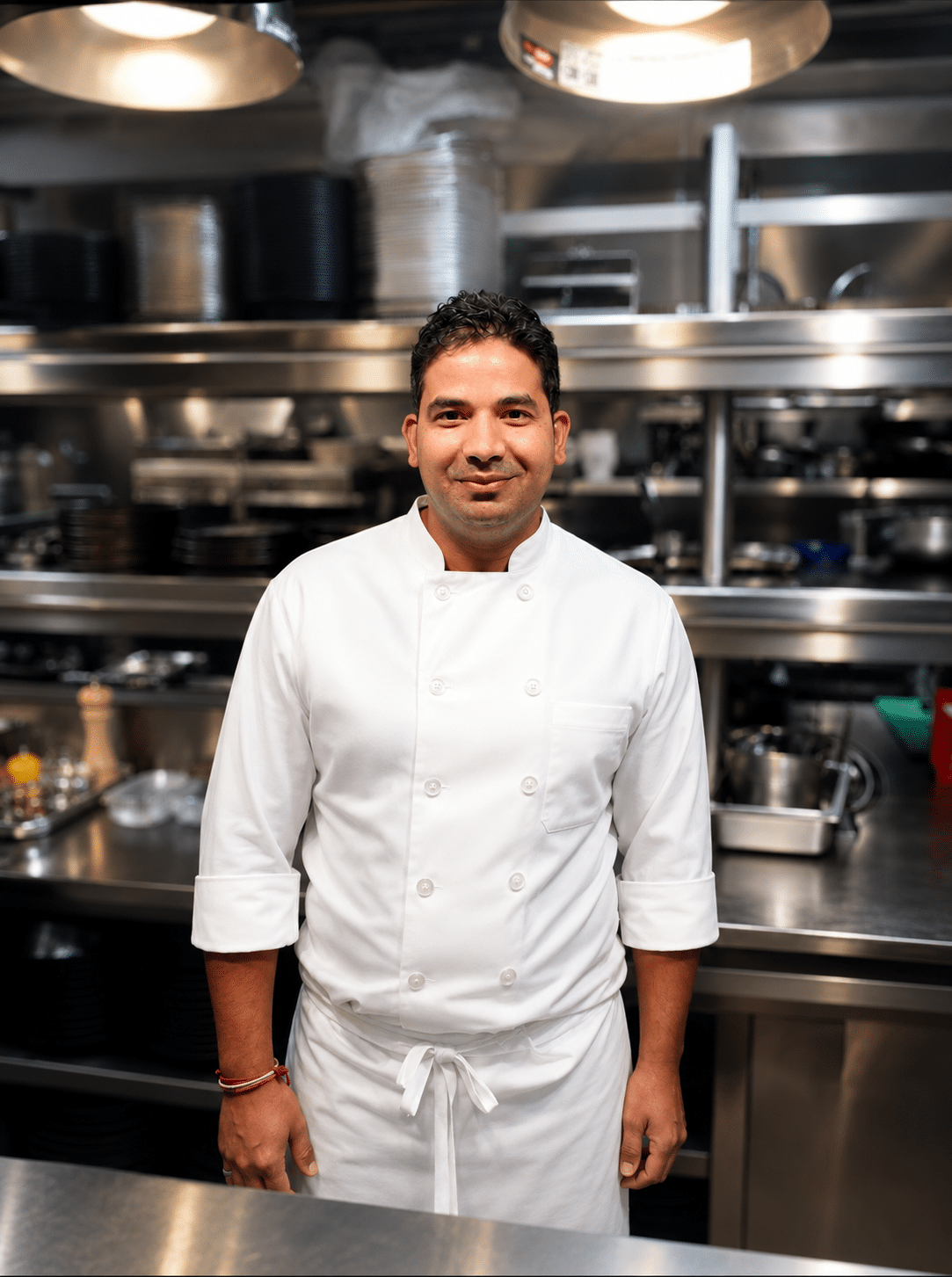
Chef Narendra Panwar believes that a chef’s coat is far more than a dress code—it is a piece of professional equipment designed to support chefs throughout long hours in demanding kitchens. Every detail serves a purpose.
- A Symbol of Professional Identity – The chef’s coat instantly identifies its wearer as a culinary professional. It represents discipline, leadership, and a commitment to maintaining high standards in the kitchen.
- Designed for Safety – Traditional chef’s coats are made from thick cotton or poly-cotton fabrics that provide an extra layer of protection against hot oil splashes, steam, and minor burns during busy service.
- The Purpose Behind the Double-Breasted Design – One of the most practical features of a classic chef’s coat is its double-breasted front. If one side becomes stained during service, the coat can be buttoned the opposite way to maintain a neat and professional appearance.
- Long Sleeves for Protection – Long sleeves help shield the arms from hot pans, ovens, grills, and accidental splashes, reducing the risk of burns while working in a fast-paced kitchen.
- Comfort During Long Hours – Modern chef’s coats often incorporate lightweight fabrics or breathable mesh panels that improve airflow, helping chefs stay cooler during extended shifts.
- Supporting Food Hygiene – Wearing a clean chef’s coat is not only about appearance; it is an essential part of maintaining hygiene standards and reducing the risk of food contamination.
- Practical Storage – Many professional chef’s coats include a small sleeve pocket that allows chefs to keep essential tools such as thermometers, pens, or tasting spoons within easy reach.
Carrying Home Into Every Kitchen
Although Chef Panwar has worked across several countries, the values stitched into his chef’s coat were formed much earlier.
Growing up in Uttarakhand, he watched his grandmother and mother prepare meals with ingredients sourced from the surrounding hills. Their cooking wasn’t about presentation or trends. It was about feeding people with honesty and care.
Those lessons continue to influence his philosophy today.
His modern Indian cuisine may evolve with new techniques and international experience, but its foundation remains rooted in authenticity.
For him, wearing the chef’s coat is also about representing the traditions that shaped him.
Every Service Begins Again
One of the biggest misconceptions about professional cooking is that experience makes the job easier.
In reality, every service is a new test.
Yesterday’s success guarantees nothing today.
Guests expect excellence every time they visit.
That is why Chef Panwar believes humility is one of the most important qualities a chef can possess.
Awards, recognition, and international experience may open doors, but consistency is what earns lasting respect.
A Message to Future Chefs
Many aspiring chefs dream of Michelin stars, television appearances, or leading prestigious restaurants.
Chef Panwar encourages them to dream big—but to begin with the fundamentals.
Master the basics. Respect regional cuisines. Stay curious. Never stop learning.
“The chef’s coat is not something you wear to impress people,” he says. “It is something you wear to remind yourself of the responsibility you carry.”
The Dream Never Ends
For Chef Narendra Panwar, the white chef’s coat is more than professional attire.
It is a symbol of every lesson learned, every challenge overcome, every mentor respected, and every guest served.
It represents a young boy inspired by his family’s kitchen in Uttarakhand, a professional who embraced opportunities across the world, and a chef who continues to believe that the finest dishes are created with honesty, discipline, and heart.
Some people see a uniform.
Chef Narendra Panwar sees a promise—a promise to honour his craft, his heritage, and every plate that leaves his kitchen.
“People often see a white jacket. I see every lesson I’ve learned, every kitchen that shaped me, and every guest who trusts me with their meal. A chef’s coat isn’t just something you wear—it’s something you earn every single day.” — Chef Narendra Panwar