
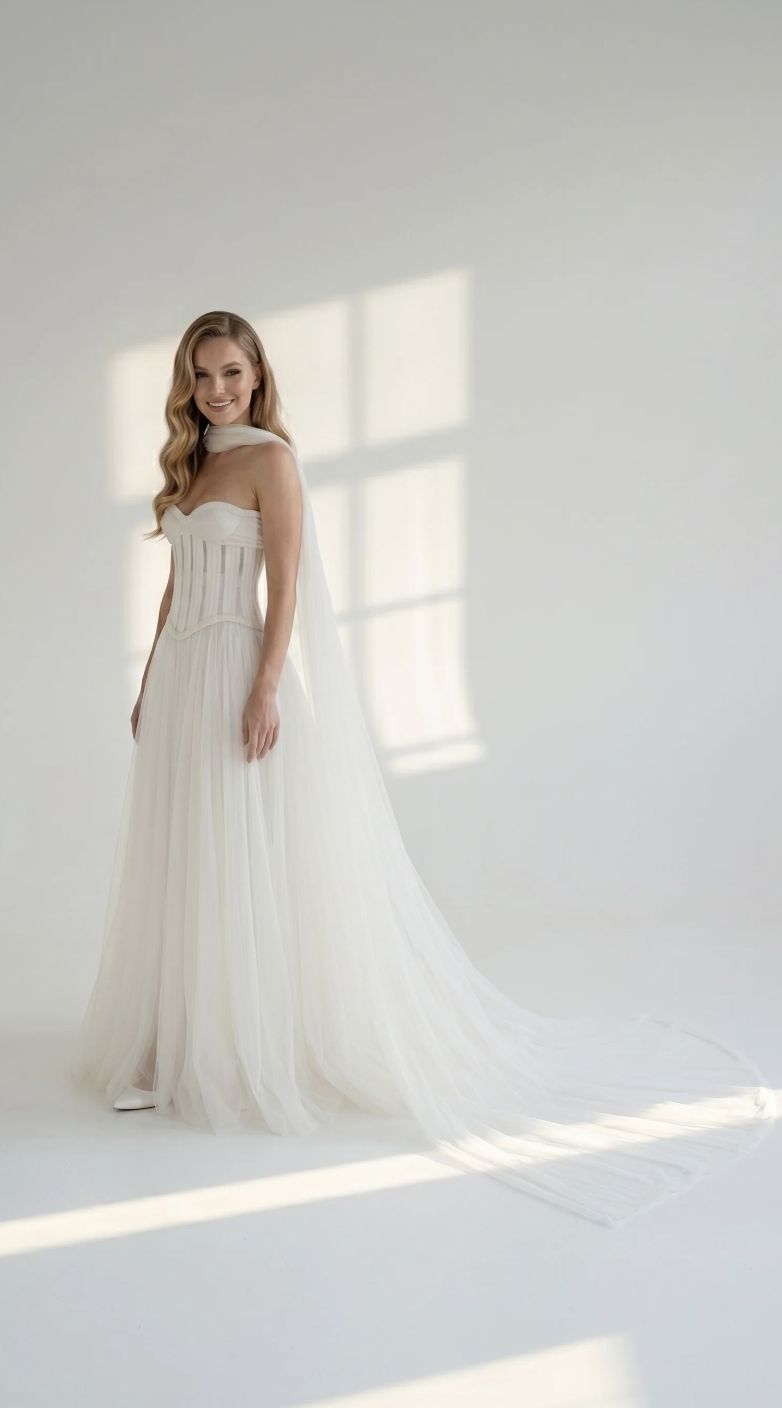
There is a scene that once defined every wedding movie. The curtains part. The bride steps out. Everyone weeps. One dress, one moment, one snapshot destined to hang in a frame on the wall for a lifetime.
That scene still exists. But it no longer reflects how brides actually dress. The singular “hero” dress—a term worth using deliberately here—is losing its sway in wedding culture. By “hero dress,” we mean a gown a woman wears just once, never to be worn again: expensive, unused, and heavy with emotional baggage.
So, is it worth it? Just ask Caribis! It’s a bridal fashion brand and online store specializing in wedding dresses, corsets, corset tops, and bridal accessories. But honestly? The huge selection isn’t even the best part. The real highlight is the philosophy behind it. Essentially, you buy a single outfit and transform it into completely different looks. Plus, you can actually wear the pieces separately later on—some of them even in your everyday life.
The “Heroic” Dress Has Always Been a Marketing Story
Let’s be honest about where the idea of the “one dress” actually came from. It isn’t a tradition; it’s retail. Mid-century bridal advertising needed a single, high-priced, non-consumable product. A dress meant to be worn only once justified a price point unattainable for any other garment. The narrative wrote itself: it’s your day, it’s your dress, it’s your moment.
That narrative worked for decades. And it spawned a set of expectations that most brides today secretly loathe. The pressure to find “the one.” The fear of buying something you’ll never wear again. The strange sense of guilt when, six months after the wedding, you find yourself wondering why you bought it in the first place.
What Happens to Those “Heroic” Wedding Dresses With Trains After the Wedding?
Let’s talk about the sad, dusty afterlife of that giant “dream dress.” It hangs in your main closet for a year. Then, it gets banished to the guest room. A year later, it’s shoved under the bed in a plastic garment bag. Some people even shell out a fortune for professional preservation—acid-free boxes, strict climate control—all just to obsess over a dress they will literally never wear again.
Trying to resell it? It’s a nightmare. You drop thousands on the outfit, only to haggle for pennies online. Why? Because the fit is incredibly specific—you had it tailored to *you*—and finding a buyer with the exact same measurements is practically impossible. In the end, most women just give up and let it rot in the attic.
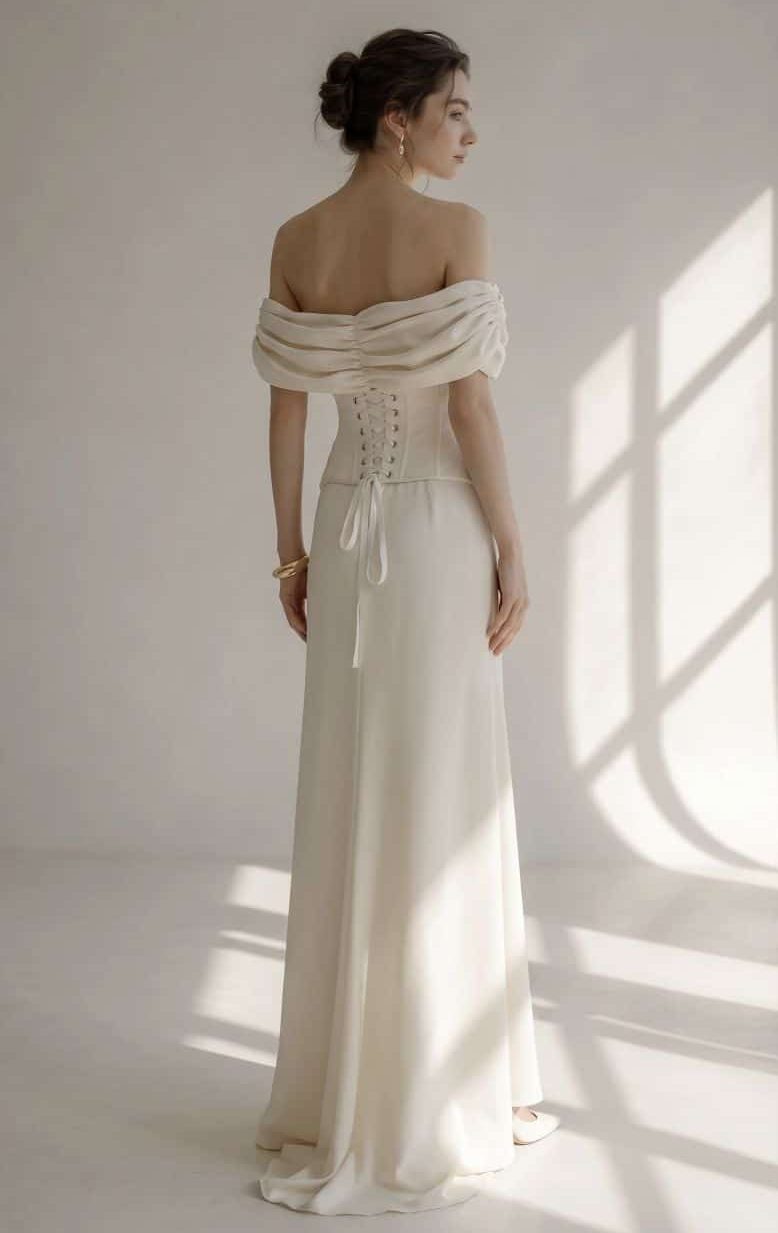
That’s exactly why a wedding dress with a detachable skirt is a brilliant “cheat code.” It completely sidesteps that “worn once” trap. Throw that corset top on with jeans for an anniversary dinner. Hem the skirt to a cool midi length or mix and match it with a totally different top. Clothes shouldn’t have to sit in a dark cardboard box for thirty years just to prove they were a good purchase. Their true value lies in actually being—you know—worn.
The Second Outfit, Like a New Habit
Bridal magazines have been calling this “second look” a trend for about five years now. But it isn’t a trend. Trends come and go. This is a habit that brides are adopting for good. Once you’ve danced at your own wedding without worrying about a train, there’s no turning back. Once you’ve worn a corset top to dinner a year later, you realize that the old model—buy once, wear once—was always a strange deal masquerading as romance.
It is precisely this shift that brands like Caribis are responding to. Not a seasonal mood, but a fundamental change in how brides think about purchasing designer wedding dresses. Fewer monuments. More possibilities.
The Wedding Skirt Changes the Score
This is where the two-piece wedding dress concept gets interesting. A wedding skirt isn’t a compromise; it’s a category of its own. It pairs beautifully with a corset top, a structured bodice, or a simple blouse. You can wear a long version for the ceremony and switch to a short one for the reception. Best of all, you can wear it again—with a different top, to a different event, or for another anniversary.
This ability to re-wear the garment represents a quiet revolution in bridal fashion. It doesn’t look radical; instead, it looks practical and advantageous in every way. Instead of investing in a single, expensive gown meant for one-time use, you are buying pieces that function as a versatile wardrobe.
Wedding Dresses Are Becoming More Specific, Not Simpler.
The second shift concerns fit. For a long time, bridal dresses were designed with a narrow range of body types and venues in mind—cathedrals, banquet halls, and church naves. Anything else—such as a town hall, a backyard, or a city park—wasn’t considered a “real” wedding.
That has changed. Bridal fashion is now designed for a wider variety of weddings and body types. Corset wedding dresses play a role here: a structured bodice can be adjusted to fit a broader range of figures than a fixed-size dress. Detachable elements allow the bride to adjust the level of formality without buying two outfits. Things have become simpler.
Wedding corset tops do the work no one talks about
Beneath it all lies a history of construction that brides rarely see: boning, waist tape, panel counts, and interlining. These are the invisible elements that determine whether the bridal look will hold up through nine hours of standing, kneeling, sitting, hugging, and dancing.
A well-constructed corset achieves what a strapless dress cannot. It distributes pressure. It maintains its shape without constricting and keeps the bodice in place during movement. That is why corset tops have migrated from the lingerie drawer to the forefront of bridal style. This isn’t just decoration; it’s engineering.
Caribis builds its collection around this concept: structured tops, detachable skirts, and fabrics selected for how they behave in motion rather than just how they look in the studio. The brand isn’t trying to sell a “moment”; it is selling garments that simply happen to be beautiful.
What Don’t Brides Like?
Talk to literally any bride in her late twenties or early thirties, and you’ll hear the same complaints. No one wants to look in the mirror and see a stranger staring back. And spending thousands on a dress that will end up gathering dust in the closet forever? Absolutely not. Women are simply fed up with playing dress-up to satisfy someone else’s aesthetic.
Understand, this isn’t some bold anti-wedding rebellion. Vows remain incredibly important. Photos still matter. But the dress is finally being knocked off its pedestal. It is just one piece of a massive, chaotic puzzle.
As we know, bridal fashion is notoriously slow to catch up with real-world culture. Yes, for some time now, we’ve seen runway designers moving away from those gigantic “dream dresses.” But now, that trend is finally reaching actual shopping carts. We are seeing a drastic reduction in single-use purchases. Brides are demanding modular separates. They are focused on how the fabric actually feels against their skin and how it moves.
New Wedding Wardrobe
If this article has a central thesis, here it is: the wedding dress isn’t dead. It has simply ceased to be the only item in the room. Today’s brides are essentially curating a custom capsule collection for the big day: a killer corset, a sleek skirt, a dramatic overskirt, and a striking veil—yet they want a completely different vibe for the reception. They are looking for pieces that look stunning together but stand perfectly well on their own—items that can genuinely be worn again, altered, or easily resold.
Who tapped into this mindset? Caribis. The brand doesn’t dictate rules; instead, it offers the solutions brides have been waiting for. Shopping on their site feels more like raiding a curated fashion wardrobe than wandering through a stuffy bridal salon. You simply filter by fabric or silhouette, mix and match—and boom! You’ve put together a sophisticated look for the ceremony and a wild outfit for the dance floor, all from the same core collection.
It’s much more in tune with how weddings actually happen these days. Whether it’s an intimate backyard ceremony or a lavish, high-budget affair, an outfit change has become practically de rigueur. The era of massive, one-time-wear gowns was fun, but honestly? Practicality looks a lot more stylish now.