
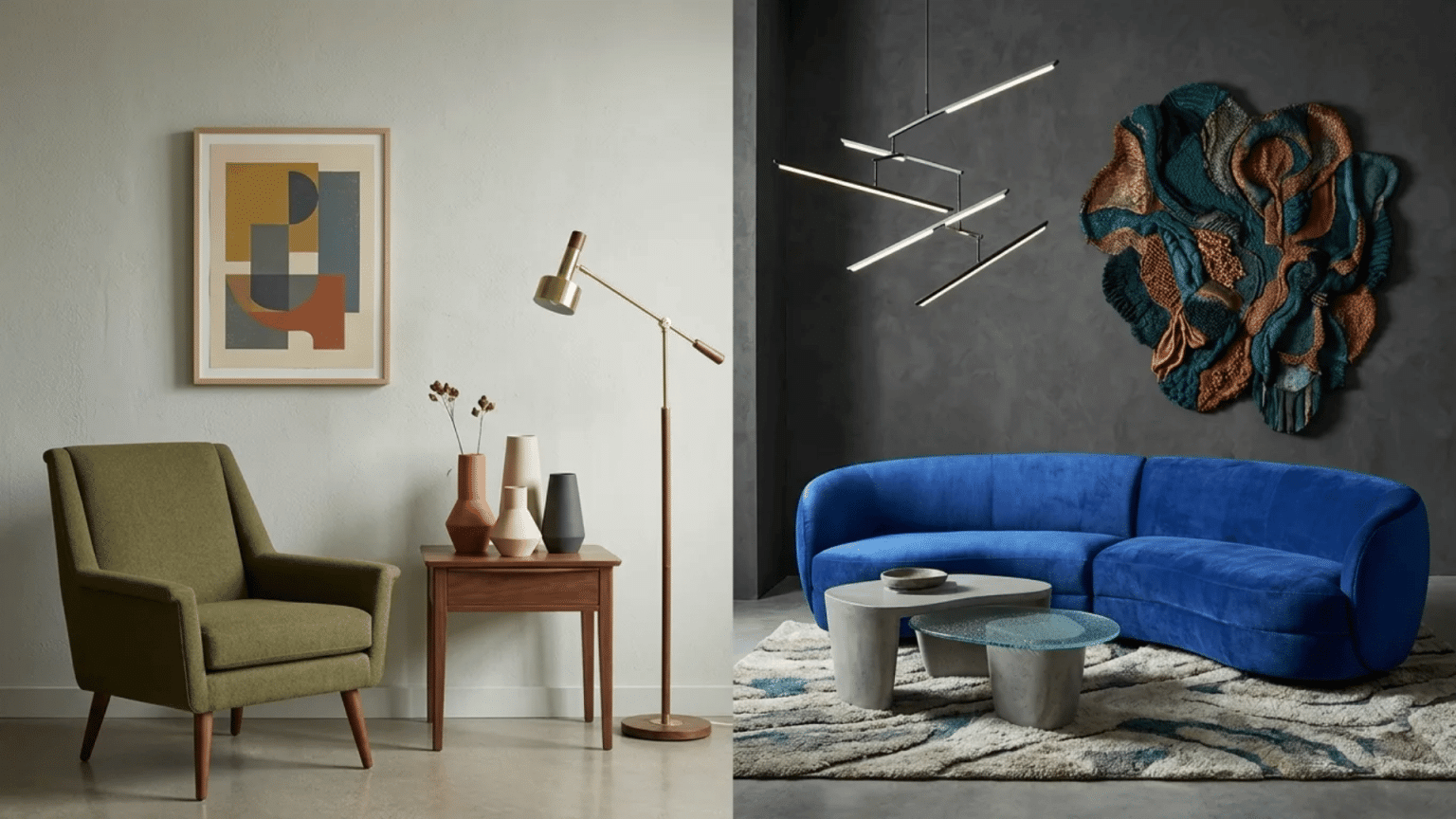
Some interior designs feel effortlessly timeless. Others look like they belong on the cover of this year’s design magazine.
That’s usually where the modern vs contemporary debate begins.
At first glance, both styles seem similar. Clean lines, open layouts, and minimal clutter often overlap. But the details tell a completely different story.
One style stays rooted in a specific design era. The other keeps shifting with what feels current.
From furniture and colors to different textures and mood, the differences become much clearer once the layers are pulled back.
Modern vs Contemporary: Quick Overview
Some rooms look timeless. Others feel straight out of a design magazine from this year. That’s the easiest way to separate modern and contemporary style.
One follows a design era. The other follows what feels current right now.
| Feature | Modern Design | Contemporary Design |
| Time Period | Early to mid-20th century | Present-day styles |
| Style Base | Rooted in a specific movement | Constantly evolving |
| Lines | Sharp and structured | Smooth with mixed forms |
| Colors | Warm neutrals and earthy shades | Soft neutrals with bold contrast |
| Materials | Wood, leather, stone | Glass, metal, concrete, layered textures |
| Furniture | Functional and understated | Sculptural and trend-aware |
| Decor | Minimal and controlled | Statement-driven and flexible |
| Overall Feel | Calm and grounded | Sleek and current |
Modern design keeps things steady and intentional. Contemporary design likes to shift, adapt, and surprise a little.
What Is Modern Design?
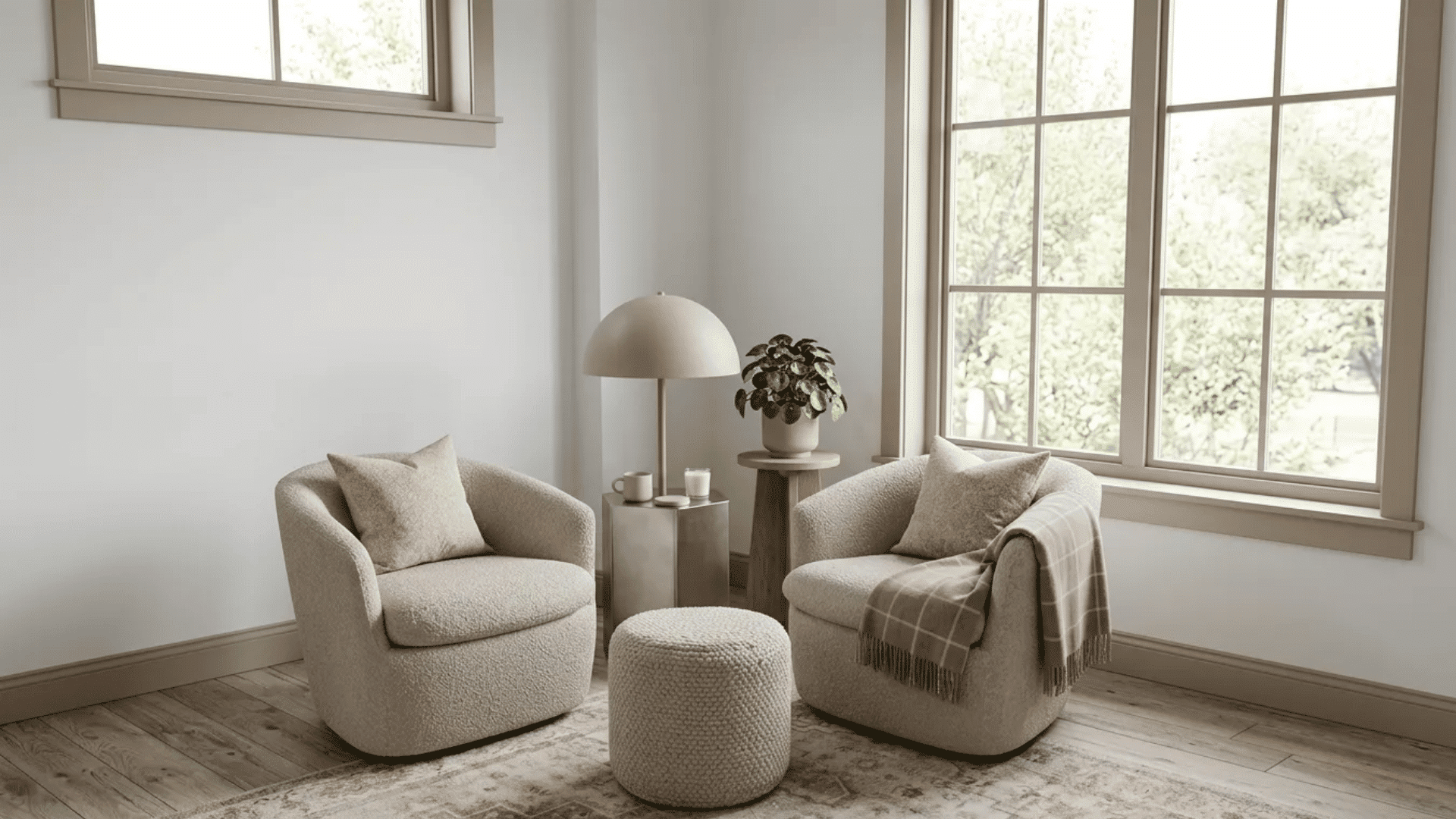
Modern design began during the modernist movement of the late 19th and early 20th centuries.
It moved away from heavy decoration and focused on simplicity, function, and practical living.
Every piece had a purpose, and unnecessary detail was removed.
Core Features of Modern Design
Modern design focuses on simplicity, function, and clean visual balance.
Every element feels intentional, with minimal clutter, natural materials, and furniture that keeps the space calm and structured.
Clean Lines
Modern interiors use straight lines, smooth surfaces, and simple shapes. Furniture feels structured without looking bulky.
Warm Neutral Colors
Common shades include:
- Beige
- Brown
- Cream
- Olive
- Rust
These colors create a calm and grounded look.
Natural Materials
Modern spaces often feature:
- Wood
- Leather
- Stone
- Linen
Textures stay natural instead of overly polished.
Function Over Decoration & Minimal Clutter
Furniture is designed to be useful first. Decor stays minimal and intentional. Rooms feel open, balanced, and easy to move through. Nothing feels overcrowded.
What Does Modern Design Feel Like?
Modern interiors usually feel warm without looking heavy.
The clean lines and simple layouts help the space stay calm and organized. There’s a strong sense of structure, but the overall look still feels comfortable and easy to live in. Because the style avoids fast-changing trends, it often keeps a timeless appeal.
It avoids fast-changing trends and keeps things simple without feeling plain.
What Is Contemporary Design?
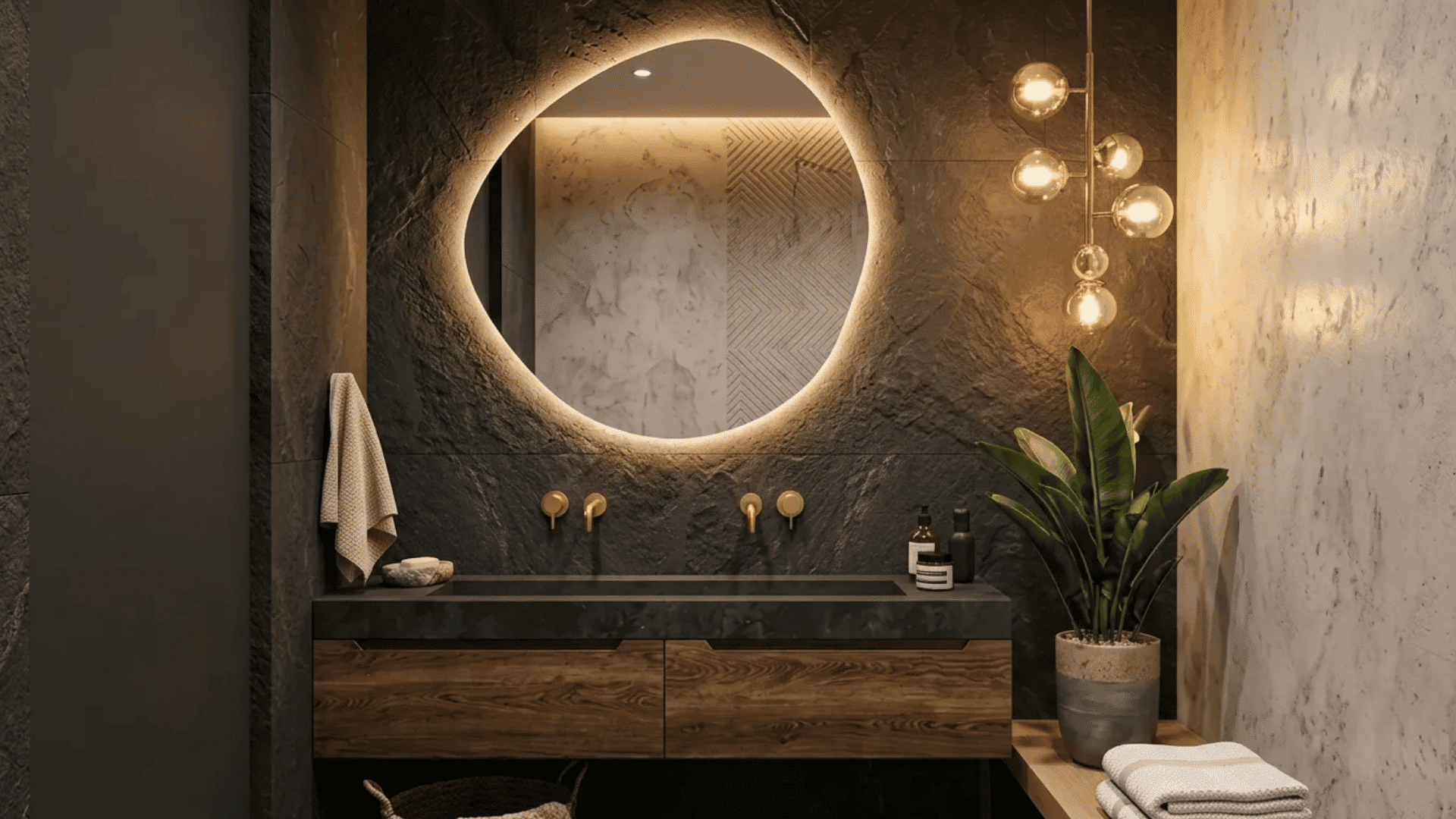
Contemporary design is all about what feels current right now. It shifts with trends, ideas, and lifestyles, which keeps the style constantly moving.
Unlike modern design, it is not tied to one design period. A contemporary space today may look completely different a few years later.
Core Features of Contemporary Design
Contemporary interiors often mix:
- Curved and sharp shapes
- Neutral tones with bold accents
- Glass, metal, wood, and textured finishes
- Open layouts with natural light
The style also borrows details from popular looks like:
- Minimalism
- Scandinavian
- Industrial
- Organic modern
That blend keeps the space fresh without feeling rigid.
What Does Contemporary Design Feel Like?
Contemporary spaces usually feel sleek and polished without looking overly formal. Natural light, open layouts, and clean surfaces help rooms feel bright and spacious.
The style also feels flexible. Furniture, textures, and decor can shift with changing trends without losing balance.
There’s often a mix of simplicity and bold detail. A statement light, curved sofa, or textured wall quietly adds personality.
There’s more freedom to mix textures, shapes, and statement pieces while still keeping the overall look polished.
How To Identify Modern Design Instantly?
Modern design usually gives off a calm, grounded feel without trying too hard.
Nothing looks excessive. Nothing feels random.
Here are some easy signs to spot it:
- Mid-century furniture with clean shapes
- Warm wood finishes like walnut or teak
- Straight lines and low-profile pieces
- Earthy neutral shades like beige, olive, brown, and cream
- Open layouts that still feel inviting
Modern interiors lean toward balance and function. Every piece looks intentional.
A quick clue?
If the room feels timeless, practical, and quietly polished, it’s probably modern design.
How To Identify Contemporary Design Instantly?
Contemporary design has a more current, fashion-forward energy. It changes with trends, so the look feels fresher and more flexible.
Some common signs include:
- Layered textures like glass, metal, wood, and matte finishes
- Strong contrast using black, white, or bold accents
- Sculptural furniture with curved or artistic forms
- Statement lighting and trend-driven decor
- Large windows and airy open spaces
Contemporary interiors often feel lighter and more dynamic. There’s usually a little visual drama without making the room feel crowded.
Easy giveaway?
If the space feels sleek, current, and slightly experimental, it’s likely contemporary.
Can Modern and Contemporary Work Together?
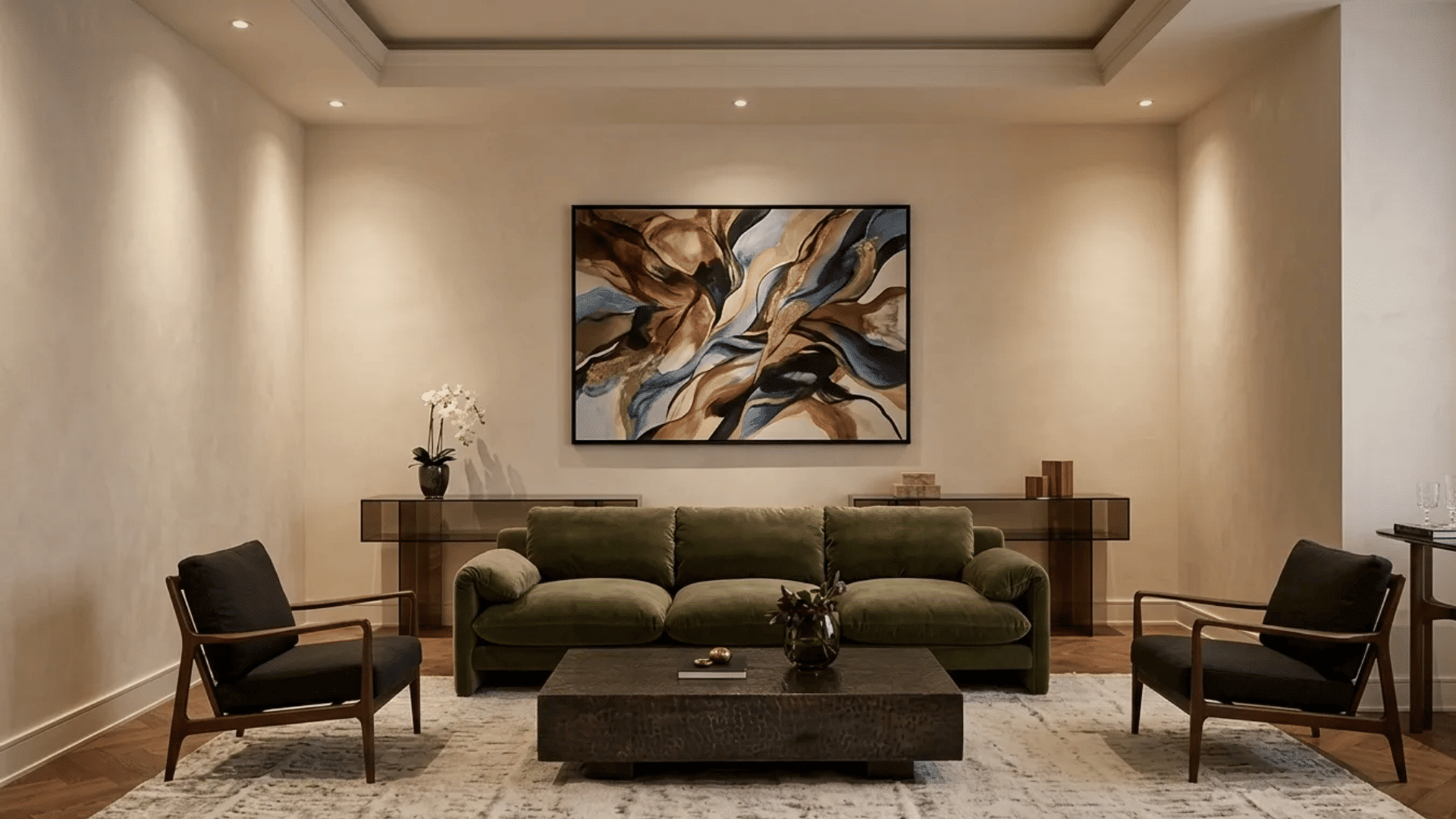
Absolutely. In fact, many well-designed homes blend both styles naturally. The mix works because one style adds structure while the other adds freshness.
A space might include:
- Modern wooden furniture
- Contemporary pendant lighting
- Warm neutral tones
- Bold abstract artwork
- Clean layouts with layered textures
The result feels polished without looking stiff. Comfortable without looking casual.
That balance is where the magic usually happens. Too much modern can feel rigid. Too much contemporary can feel trend-heavy. Together, they create spaces that feel current but still lasting.
Modern vs Contemporary in Different Spaces
Different rooms show the contrast more clearly. One leans calm and grounded. The other adds drama without going over the top.
1. Living Room
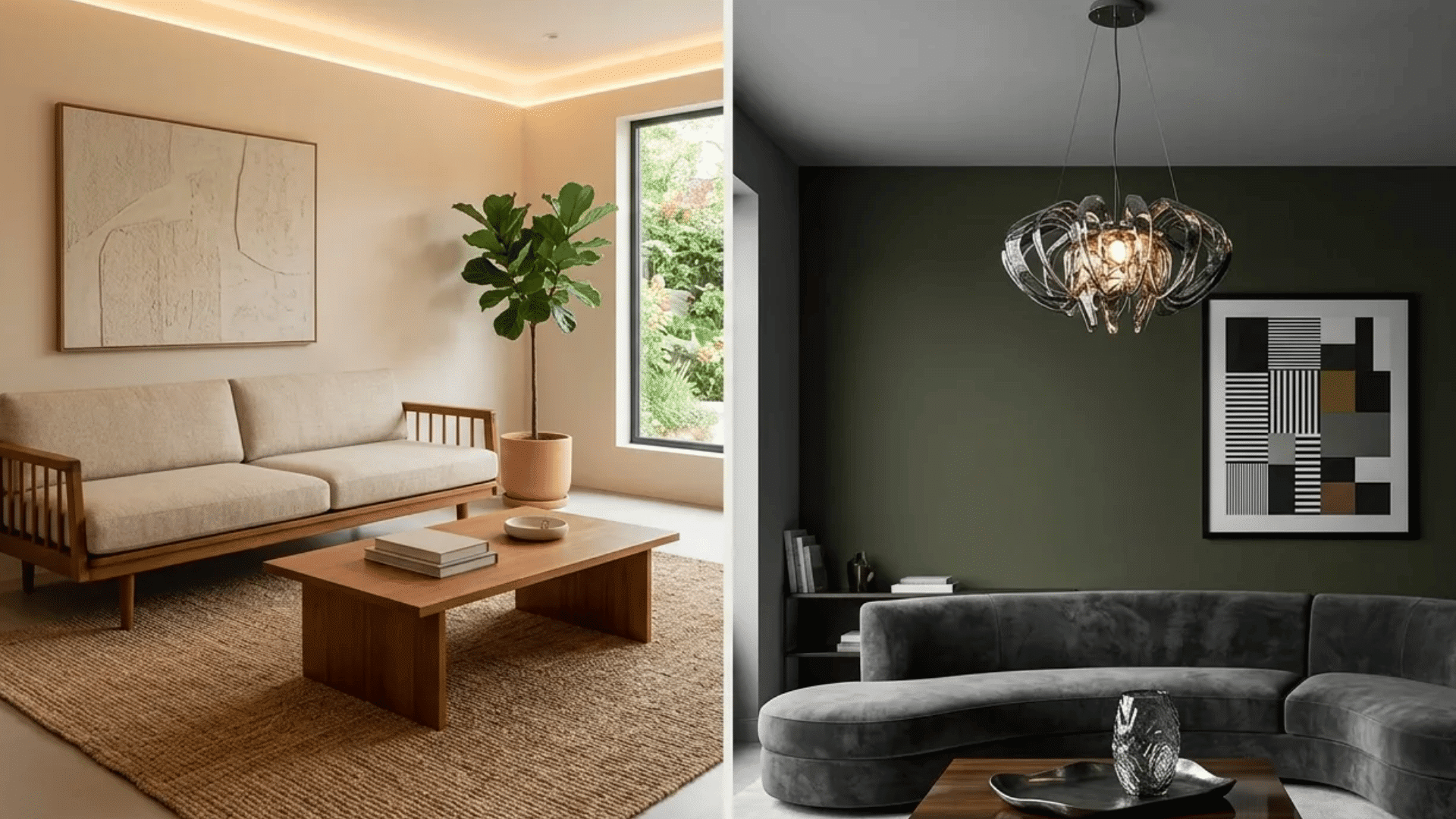
Modern living rooms feel steady and uncluttered. Contemporary spaces feel sharper, moodier, and slightly more expressive.
| Modern | Contemporary |
| Teak furniture with clean edges | Curved sectional that softens the room |
| Earth-tone palette that feels relaxed | Sharp black-and-white contrast with depth |
| Minimal decor with open surfaces | Bold lighting that steals attention |
2. Kitchen
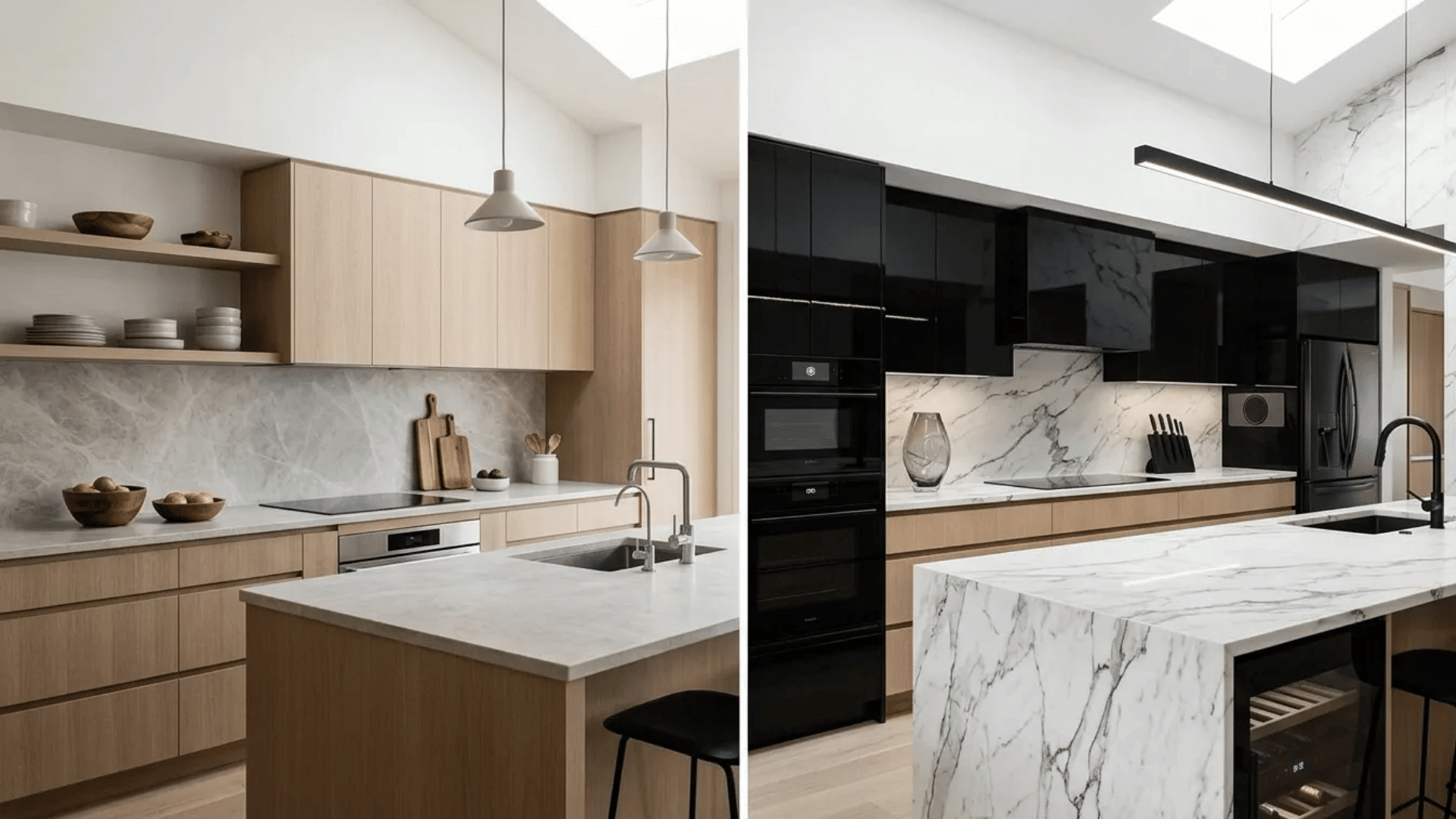
Modern kitchens stay practical without trying too hard. Contemporary kitchens often look sleek enough to belong in a magazine spread.
| Modern | Contemporary |
| Flat wooden cabinets with natural texture | Matte or glossy finishes with cleaner contrast |
| Warm neutrals that keep things soft | High-contrast palette with stronger visual impact |
| Functional layout focused on simplicity | Smart features blended into the design |
3. Bedroom
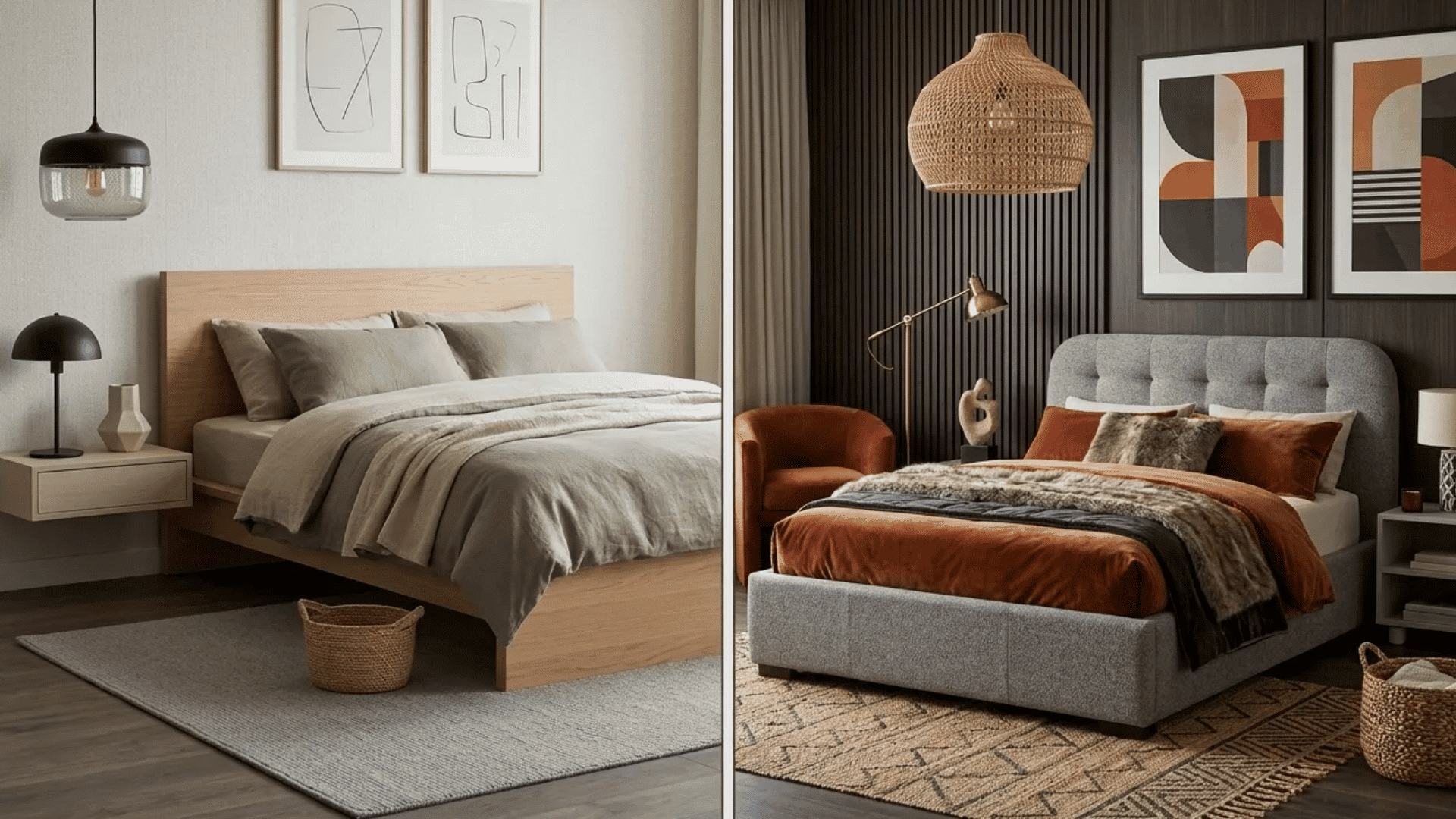
Modern bedrooms create a quiet, restful setup. Contemporary bedrooms feel polished with a little extra attitude.
| Modern | Contemporary |
| Clean wood bed frame with simple lines | Upholstered statement bed with softer curves |
| Soft earthy bedding that feels calm | Layered textures that add depth |
| Minimal accessories with subtle styling | Accent lighting that shapes the mood |
Common Myths About Modern and Contemporary Design
Modern and contemporary design often get mixed up because both styles share clean lines and minimal details. The real difference comes from their time period, flexibility, and overall feel.
- Modern Means Current: Modern design actually refers to a past design movement, mainly from the early to mid-20th century.
- Contemporary Design Has No Rules: Contemporary spaces still follow balance and simplicity, but allow more freedom with trends and materials.
- Both Styles Feel Cold: Modern interiors feel warmer through wood and earthy tones, while contemporary spaces soften sharp lines with texture and lighting.
Once the basics become clear, spotting the difference between modern and contemporary design gets much easier.
Which Style Fits Better?
Both styles focus on clean interiors, but the overall feel is very different.
Choose Modern If:
Modern design suits calm, balanced spaces with warm wood tones, simple furniture, and clean layouts.
It works well for anyone who prefers timeless styling over changing trends. Less decor, soft colors, and practical pieces help rooms feel relaxed and organized.
Choose Contemporary If:
Contemporary design fits spaces with contrast, texture, and a little personality.
Bold lighting, sculptural furniture, and layered materials often define the look. The style feels more current, flexible, and visually active without feeling overwhelming.
The better choice depends on whether the space should feel timeless and grounded or fresh and expressive.
The Bottom Line
Modern and contemporary design may share clean lines and minimal styling, but the feeling they create is completely different once the details come into focus.
Modern spaces stay calm, grounded, and timeless through warm materials and practical layouts. Contemporary interiors bring more contrast, texture, and personality while keeping the space polished and current.
Neither style is better.
It simply depends on whether the room should feel steady and relaxed or fresh and expressive.
And honestly, some of the best interiors borrow a little from both.
Still stuck between modern and contemporary?
Drop a comment with the space in mind or the style that feels closer. Sometimes one small detail gives the answer away instantly.
Frequently Asked Questions
What Comes First, Modern or Contemporary?
Modern art came before contemporary art. Most art historians and critics put the beginning of modern art in the West at around the 1860s, continuing up to the 1960s. Contemporary art means art made in the present day.
What Can I Say Instead of “Contemporary”?
Key synonyms for Contemporary includeCurrent, Present-Day, Up-To-The-Minute, and Recent.
What Are the 4 C’s of Art?
Critical Thinking, Communication, Collaboration, and Creativity are fundamental to visual arts, media arts, and design education.