Curtain rods are not always an option. Renters, dorm rooms, and quick refreshes often need something else entirely.
Drilling holes into someone else’s wall feels risky. A temporary fix that still looks polished feels impossible to find.
That is where how to hang curtains without a rod comes in. Hooks, adhesive brackets, Velcro, and clips all solve the same problem in different ways.
Some options hold heavy blackout fabric. Others work best for sheer panels and short-term setups. The best practical methods follow, each with the weight limits and installation steps required to make it work.
Can You Hang Curtains Without a Curtain Rod?
Curtains do not always need a traditional rod to function or look finished. No-drill alternatives work well depending on curtain weight, window type, surface material, and whether the setup is temporary or permanent.
Curtain weight decides how much support a method needs to provide. Lightweight sheer panels work with almost any no-drill option, while heavier fabric needs a sturdier bracket or tension system.
Window and surface type also affect which method holds up best. Wood trim suits tap-in brackets, metal surfaces suit magnetic rods, and smooth drywall works well with adhesive hooks or brackets.
Temporary setups favor removable options like Velcro strips or tension rods, while longer-term arrangements can use stronger adhesive brackets.
What to Consider Before Hanging Curtains Without a Rod
Choosing the right method starts with three factors: curtain weight, window measurements, and the hanging system suited to the space. Each one narrows down which no-drill options will actually hold up.
- Check Curtain Weight: Sheer curtains suit Velcro or clips. Medium weights need a tension rod or command hooks. Heavy blackout curtains need reinforced adhesive brackets or tap-in hardware.
- Measure Your Window Area: Note the curtain width, desired height, coverage needed, and how far above the window frame the curtain should sit. Placing curtains higher than the frame helps a small space feel large and pulls the room together.
- Choose the Right Hanging Method: Compare options side by side before committing, since installation ease and weight capacity vary widely between tension rods, command hooks, adhesive brackets, and Velcro strips.
Balancing these three factors, instead of picking a method at random, helps keep a curtain from sagging or falling within the first week. That combination sets up every method covered next.
How to Hang Curtains without a Rod: Diy Methods
Each method solves the same core problem differently, so matching the curtain type and window material to the right option makes all the difference.
1. Use a Tension Rod Inside the Window Frame

This is the fastest fix for rental homes, small windows, and café-style curtains where nothing needs to look permanent. It’s not the right call for heavy fabric, since the spring tension can quietly loosen over time and let the whole rod drop.
How to Install:
- Measure the inside frame width at the top, middle, and bottom. Use the narrowest number.
- Pick a rod rated 4 to 6 inches wider on its low end than that measurement so the spring has enough compression to grip.
- Twist the rod open until it’s about 1 inch longer than the opening.
- Angle one end into the frame, then push the other end in flush and level.
- Press down on the center. It shouldn’t shift more than a quarter inch.
- Slide the curtains on before locking them in place.
I stick a strip of felt or a rubber caulk saver on each rod tip. It stops the spring tension from denting painted trim, especially in older rentals with soft wood.
2. Hang Curtains With Command Hooks
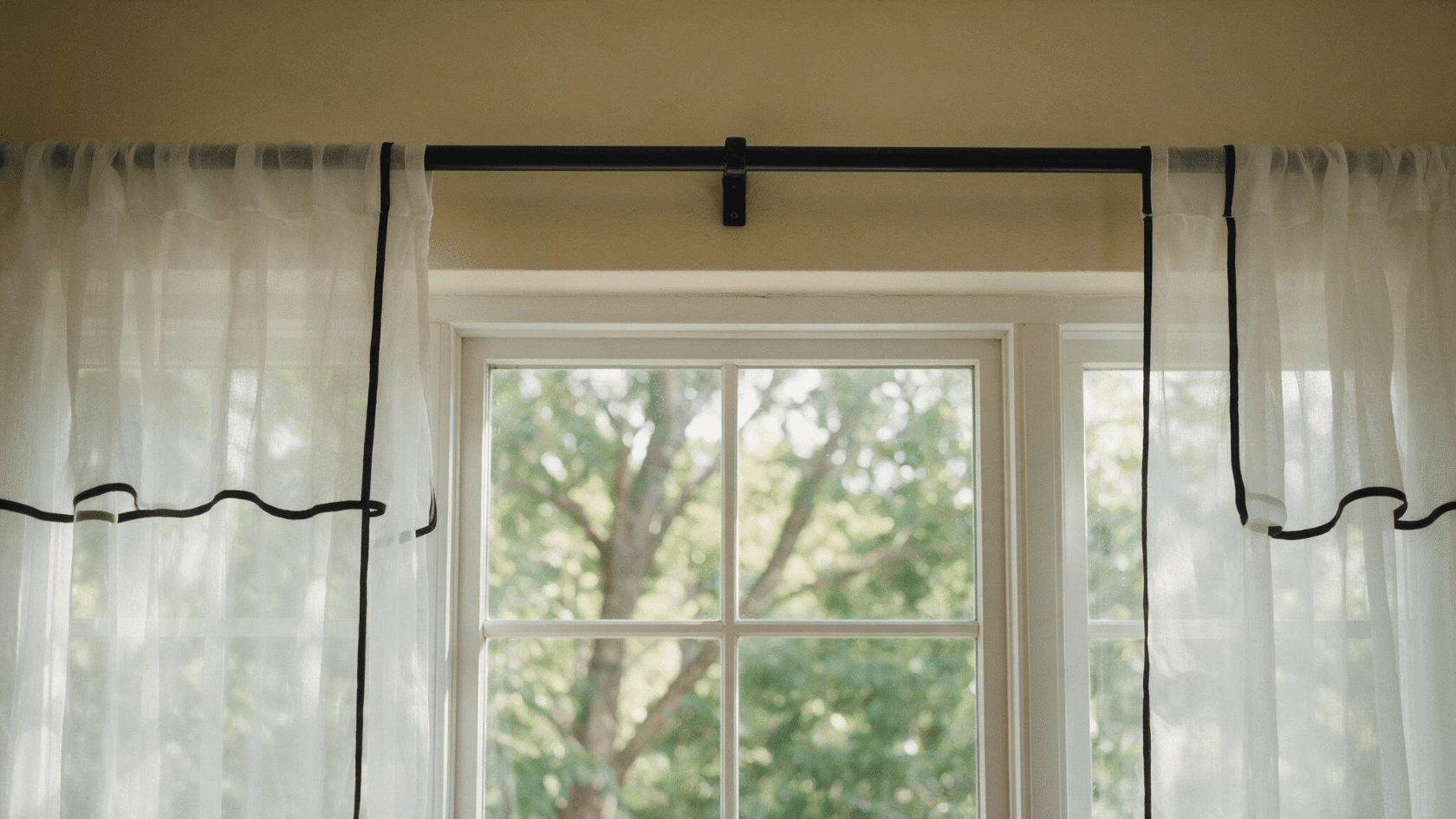
Renters who want something fully removable without wall damage tend to reach for this method first. The tradeoff shows up with heavier curtains, since most hooks are rated well below what a thick or lined panel actually weighs.
How to Install:
- Wipe the wall with isopropyl alcohol and let it dry for 1 minute.
- Mark hook spots 3 to 4 inches above the frame, spaced every 8 to 10 inches for a standard rod.
- Press each hook with full palm pressure for 30 seconds.
- Wait at least 1 hour, ideally 24, before hanging any weight.
- Rest the rod ends into the hook cradles.
3. Hang Curtains With Adhesive Hooks
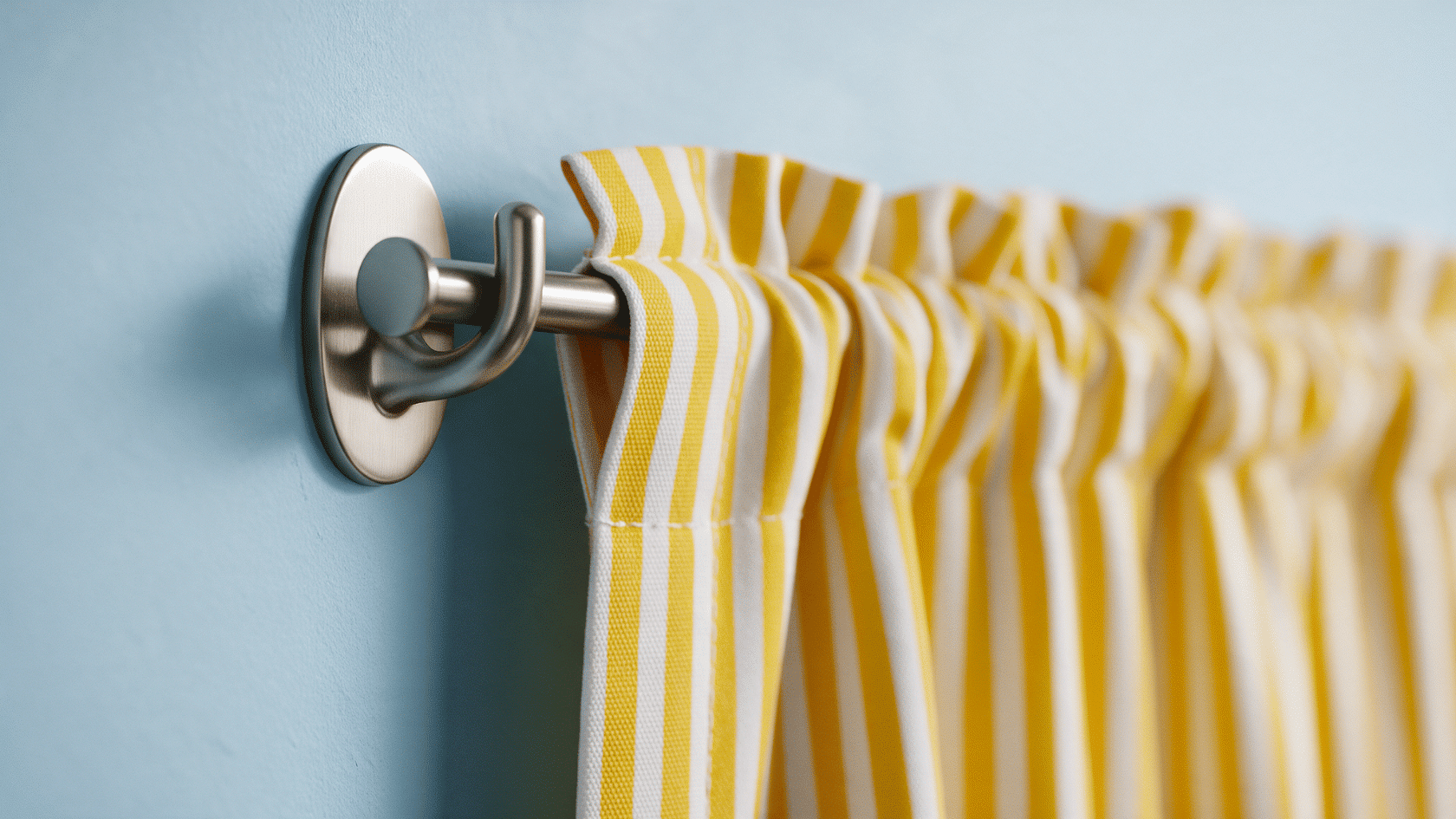
If you want the classic curtain-rod look without drilling, this is the closest substitute. It struggles on walls with weaker adhesive grip once you add a heavier curtain, so surface prep matters more here than with lighter methods.
How to Install:
- Measure and mark level spots above your window frame.
- Attach heavy-duty adhesive wall hooks (such as 3M Command hooks) across the top.
- Wait at least an hour, or up to a full day, for the adhesive to bond securely before hanging any weight.
- Loop your curtain tabs, rings, or clips directly onto the hooks.
- This works best with lightweight or sheer fabrics.
For anything heavier than cotton, I add an extra hook near the center of the rod span. A single hook on each end almost always lets the middle bow forward under blackout fabric within a week.
4. Attach Curtains With Velcro Strips
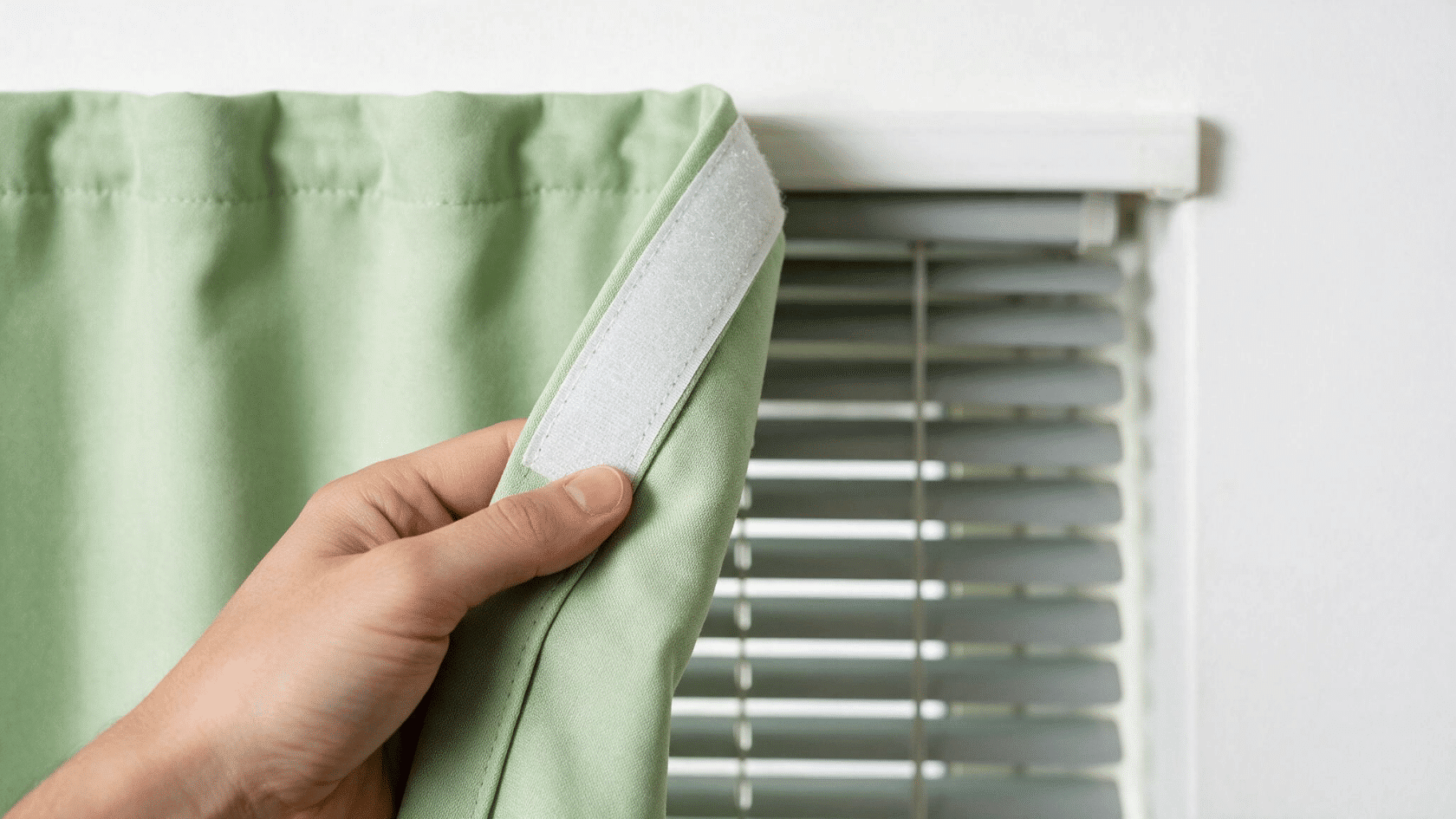
This is the go-to for testing out a no-drill setup in a short-term rental before committing to anything sturdier. It tends to fail with heavier or blackout-style fabric, where the added pull works the strips loose faster than expected.
How to Install:
- Cut heavy-duty Velcro rated for at least 10 lbs per inch to match the curtain width.
- Clean the wall or frame with an alcohol wipe.
- Peel the backing and press one strip to the wall, one to the curtain header, holding each for 30 seconds.
- Wait 1 hour, then press the curtain onto the wall strip along its full length, not just the ends.
Iron a strip of buckram into the curtain top first. Velcro grips a stiff woven backing far better than it grips thin sheer fabric on its own.
5. Hang Curtains Using Curtain Clips
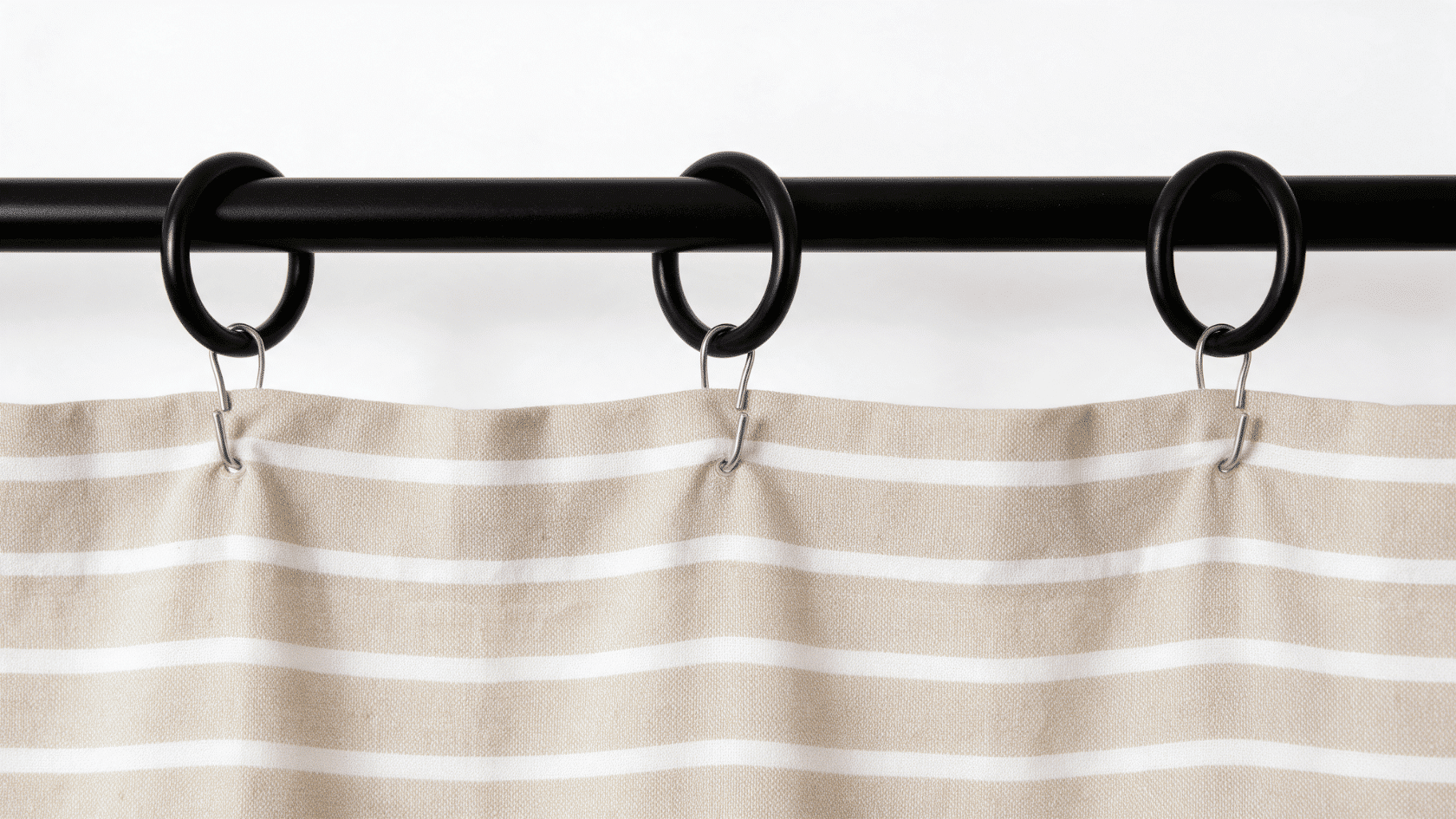
Studio apartments, attic rooms, and anything with a decorative, minimal feel suit this setup well. It’s not built for spaces that need a sturdier, more permanent-feeling hold, since wire naturally has some give under weight
How to Install:
- Install eye hooks or wire anchors 2 inches above the frame on each side.
- Thread galvanized curtain wire (1/16 to 3/32 inch diameter works for most panels) through the anchors.
- Tighten the turnbuckle until the wire has no sag.
- Space pinch clips every 4 to 6 inches along the wire, then hang the curtain.
6. Use Magnetic Curtain Rods
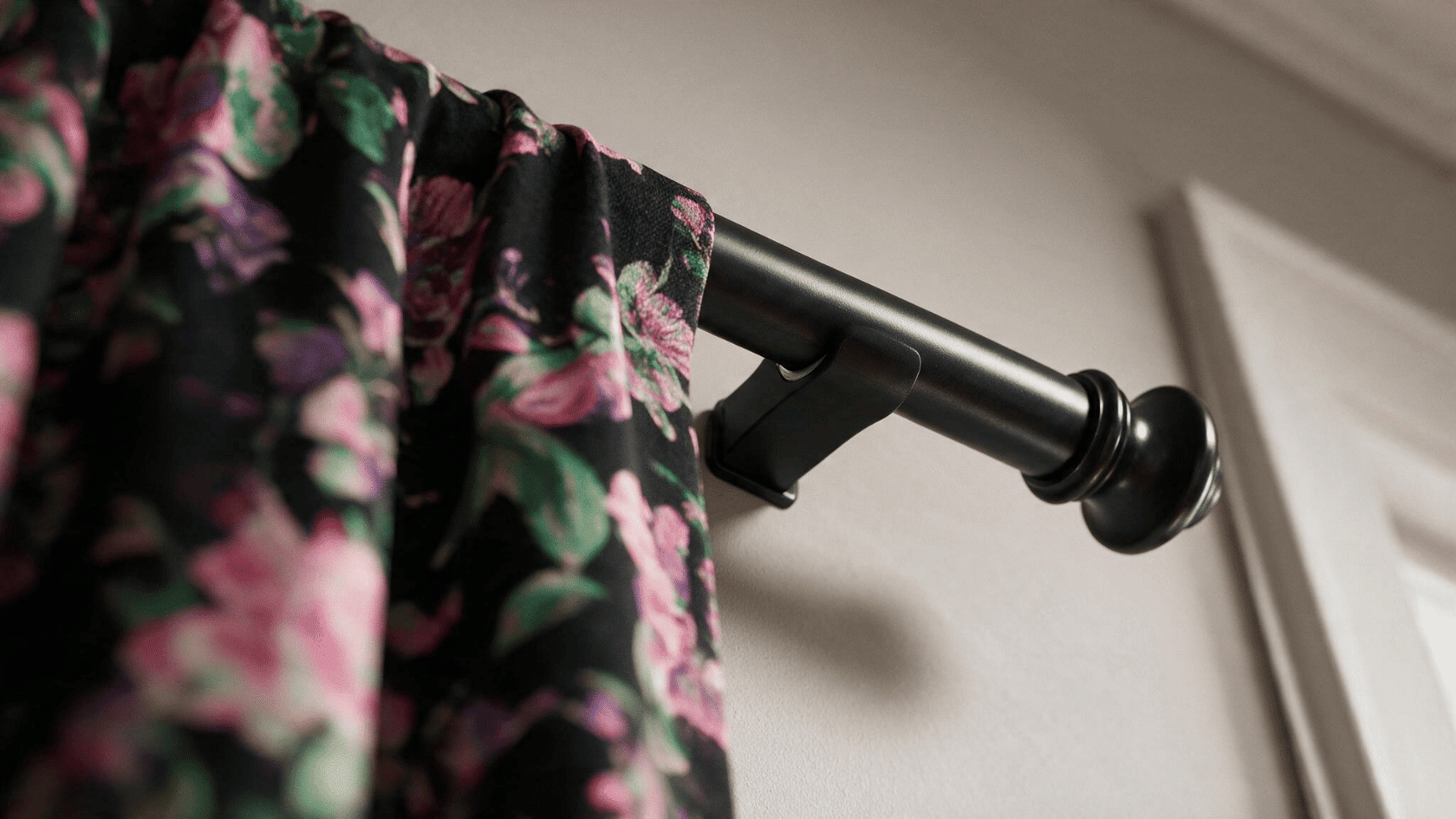
Metal doors and metal window frames are really the only places this method makes sense, and it works well there since no wall installation is needed at all.
Standard drywall or wood-framed windows won’t hold it, because there’s simply no metal surface for the magnets to grip.
How to Install:
- Test the surface with a small magnet first. Steel doors and frames work; aluminum won’t.
- Choose a rod rated for your curtain’s weight, usually listed as 5 to 10 lbs capacity.
- Press the magnetic end caps flush to the metal on both sides, checking level.
- Slide the curtain on before final placement.
7. Hang Curtains From a Shelf or Existing Structure
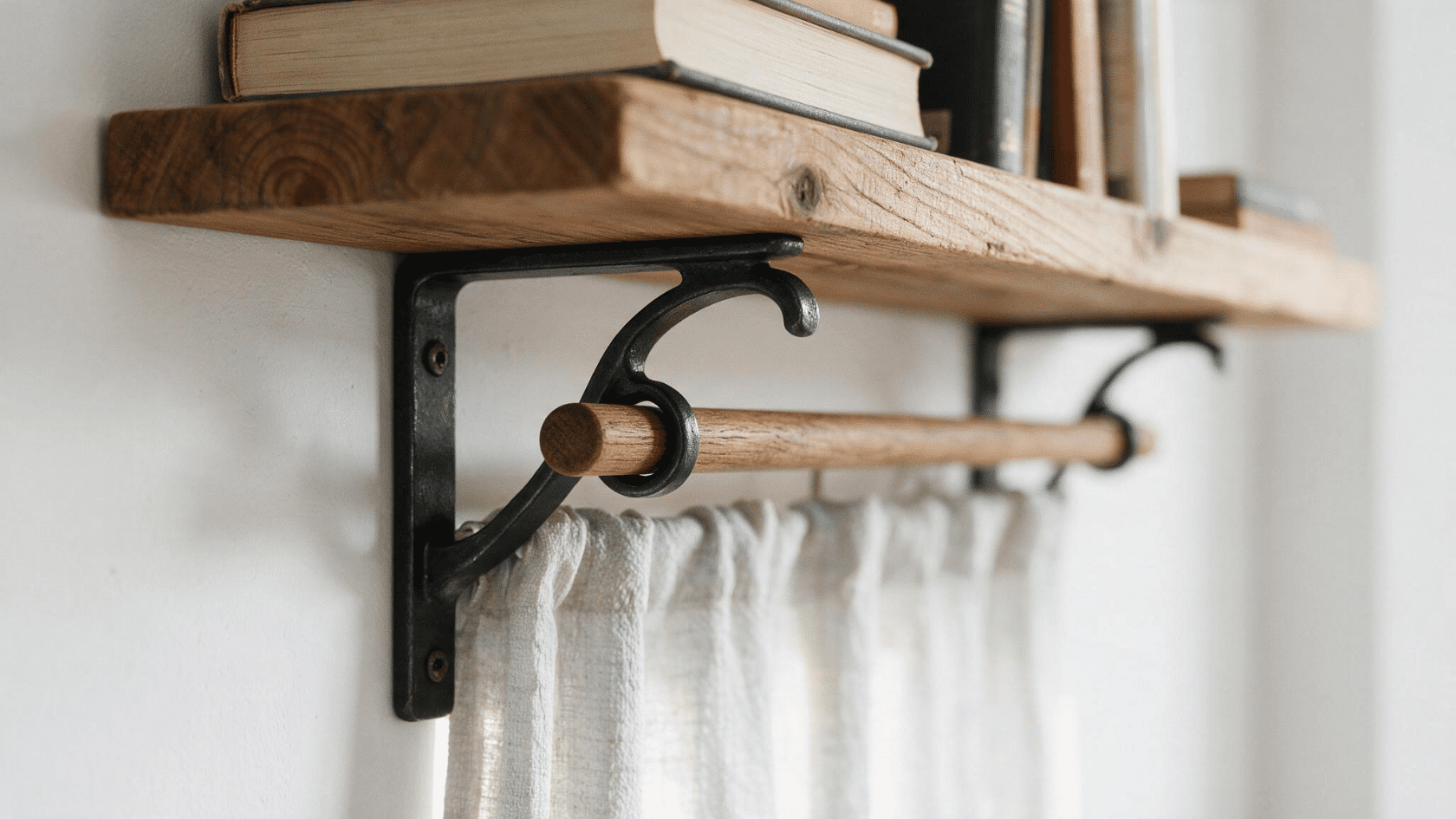
This works well when a shelf, canopy frame, or ledge already sits close enough to the window to double as support. Windows with nothing nearby to anchor onto simply won’t have a structure to build this method around.
How to Install:
- Measure from the shelf underside to the floor. It should match your curtain’s finished length within 1 inch.
- Install small cup hooks into the shelf underside every 6 inches.
- Clip curtain rings onto the hooks.
- Press down on the shelf first to confirm it can bear the weight.
On wide panels, I add two extra hooks near the center. Without them, the middle sags forward within a few weeks.
8. Use Ceiling-Mounted Hooks for a Straight Drop

Rooms aiming for extra height or a floor-to-ceiling look benefit most from this setup, since the drop point sits above the window rather than beside it. Textured or popcorn ceilings are a poor match, as the adhesive grip weakens much faster on that surface than on smooth drywall.
How to Install:
- Mark points along the ceiling line every 6 to 8 inches, directly above the window.
- Clean with an alcohol wipe. Skip this method entirely on textured or popcorn ceilings; adhesive won’t hold there.
- Press each hook firmly for 30 seconds.
- Wait a full 24 hours before hanging any weight.
- Clip or tie the curtain top to each hook.
I always test one hook with a heavy book for 48 hours before committing the whole line. Ceiling adhesive fails more often than wall adhesive because gravity pulls straight down on it.
Best No-Rod Curtain Hanging Methods by Situation
Matching a method to the actual room or situation makes the decision faster than testing several options at once.
|
Situation |
Best Method |
|---|---|
|
Rental apartment |
Command hooks or tension rod |
|
No wall damage |
Tension rod or magnetic rod |
|
Heavy curtains |
Strong adhesive brackets or tap brackets |
|
Small bathroom window |
Tension rod |
|
Temporary setup |
Velcro or clips |
|
Metal door/window |
Magnetic rod |
|
Room divider |
Wire system |
Most rooms fit neatly into one of these situations, so this table doubles as a shortcut past the trial-and-error stage. Pairing the right method with the actual space cuts down on wasted hardware.
What Can I Use Instead of a Curtain Pole?
Wooden dowels, metal pipes, and tension rods are the most reliable curtain pole alternatives. Thick wooden dowels or closet rods, stained or painted to match your decor, rest easily on standard brackets or hooks and work well for medium to heavy panels.
Copper, brass, or electrical conduit pipes offer a sleek industrial finish and work with the same bracket setups. Tension rods need no hardware at all and wedge directly into window frames or alcoves.
For a rustic look, a cleaned, sanded tree branch or bamboo pole slides through curtain pockets as easily as a store-bought rod.
Other Creative Ways to Hang Curtains
A rod doesn’t have to look like a rod. Swapping in unexpected materials or repurposing what’s already in the room can give a no-drill setup real character instead of a temporary feel.
- Tree branch: Find a sturdy, straight branch about 1.5 to 2 inches thick, strip the bark if you want a cleaner finish, seal it with a light coat of polyurethane, then mount it with heavy-duty hooks rated for at least the branch’s own weight plus the curtain.
- Rope or twine: Use rope at least 3/8 inch thick so it doesn’t sag under fabric. String it across the window, knot each end tight around a wall-mounted eye hook, then slide curtain rings onto the rope before hanging the panels.
- Leather straps: Cut leather straps 6 to 8 inches long, loop each one around a wooden dowel, and screw or adhesive-mount the strap ends to the wall on either side, spaced to match the dowel’s length.
Final Thoughts
Skipping a drill does not mean giving up on style. Hanging curtains without a rod depends on choosing the right support for your curtain weight and window setup, such as tension rods, adhesive hooks, or Velcro strips.
Renters get a damage-free setup, quick decorators get a fast fix, and heavier curtains need sturdier hardware like adhesive brackets or tap-in pins. Every option above proves how to hang curtains without a rod without sacrificing a finished look.
Pick one method, check the weight limit, then hang with confidence today. Grab the hardware that fits your curtain weight, then hang your curtains the no-drill way today.
What’s your go-to method for hanging curtains without drilling? Share it in the comments.
Frequently Asked Questions
Does IKEA Sell No-Drill Curtain Rods?
IKEA offers tension rods and adhesive-friendly curtain wire kits designed for no-drill installs. They work well for lightweight panels, though heavier IKEA curtains may need a wall-mounted alternative for lasting support.
Will No-Drill Curtain Hardware Leave Marks on Rental Walls?
Quality adhesive hooks and brackets rated for wall-safe removal usually peel off cleanly without paint damage, but test a small hidden spot first to avoid surprises on move-out day, especially on textured surfaces.
How Long Do Adhesive Curtain Hooks Typically Last Before They Need Replacing?
Most quality adhesive hooks hold steady for several months to a year, depending on humidity, wall type, and curtain weight, though checking the bond every few months prevents sudden drops.