

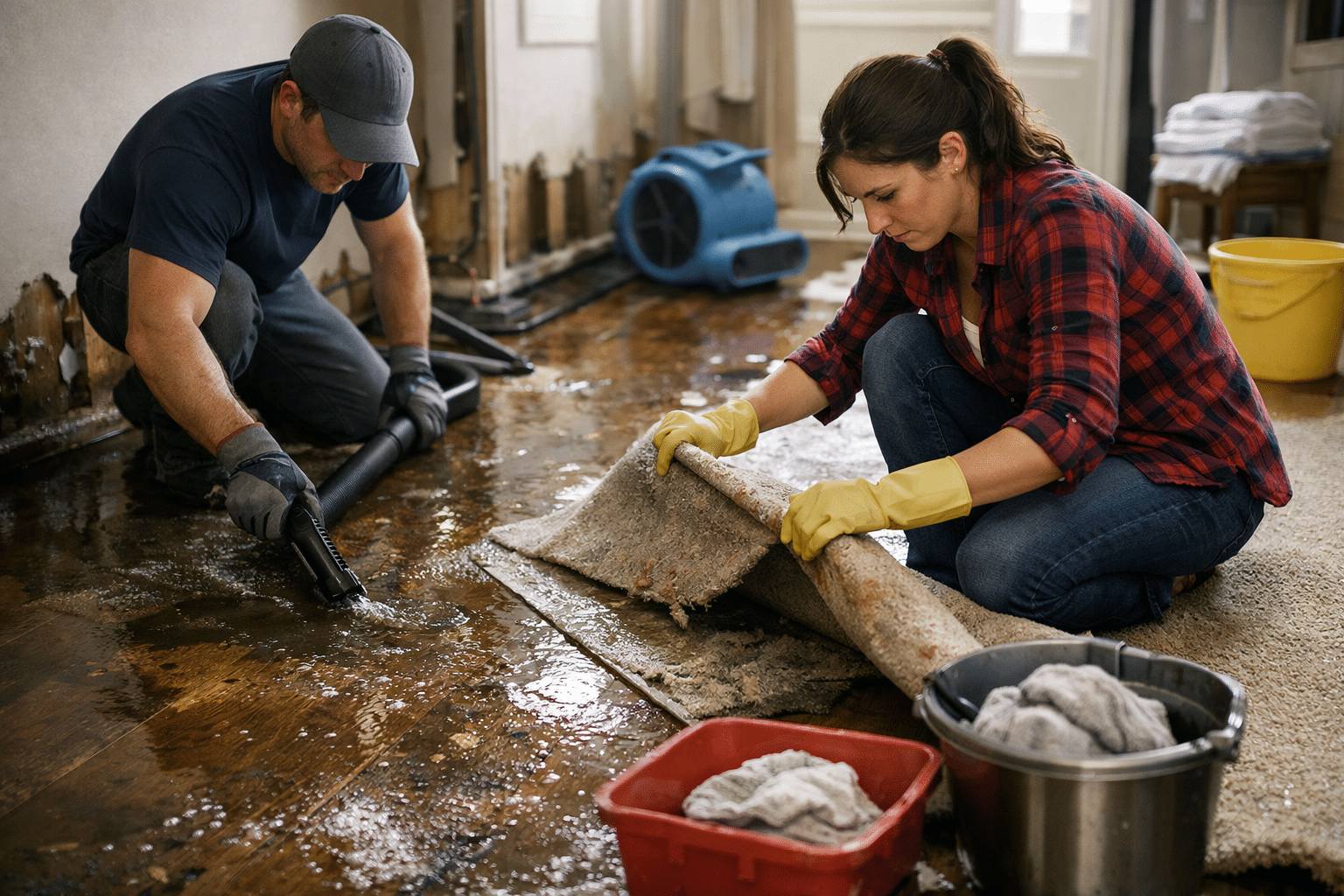
Water doesn’t wait. A burst pipe, a failed appliance, a flooded basement, and suddenly you’re standing in inches of water, trying to figure out where even to begin. Those first hours after a water incident are the ones that determine whether you’re looking at a manageable cleanup or a months-long repair job.
The good news is that if you move fast and make the right calls, you can limit most of the damage. Here’s exactly what to do.
Stop the Source First
Before anything else, find out where the water is coming from and stop it. If it’s a broken pipe or a burst washer hose, shut off the main water supply.
If the situation involves your electrical system, flooded outlets, water near the breaker box, or water touching appliances that are still plugged in, don’t go near it. Cut power to the affected area from the panel if it’s safe to do so, or call an electrician before you walk in.
This step seems obvious, but people frequently skip it in a panic. Walking into a flooded room with live electricity nearby is far more dangerous than the water itself.
Call for Help Early

The second the area is safe to enter, get a professional water damage clean up service on the phone. This is not the step to delay or try to handle entirely on your own with shop vacs and box fans.
Water travels through walls, under flooring, and into insulation and subfloors where you can’t see it and household equipment can’t reach it. Professional teams bring moisture meters, industrial extraction equipment, and air movers that pull water out of materials rather than just off surfaces.
The faster that call goes out, the better your outcome. Same-day response makes a real difference, and most restoration companies offer emergency lines for exactly this reason.
Document Everything Before You Touch It
While you’re waiting for the team to arrive, take photos and videos of every affected area. Open drawers, pull back rugs, and photograph what’s underneath. Document furniture, flooring, walls, and any personal property that got wet. This is your insurance claim, and the more thorough your documentation, the stronger your position when you file.
If you need to move furniture to protect it, that’s fine, but photograph it in place first. Adjusters need to see the damage as it was, not after you’ve reorganized the room.
Remove Standing Water If You Can
If you have a wet/dry vacuum, you can start pulling up standing water while you wait. Work from the farthest point from the door toward the exit so you’re not repeatedly walking back through wet areas.
Keep windows open if outdoor humidity is lower than inside, since ventilation speeds up the drying process considerably.
If the flooding came from outside or a sewage backup, don’t attempt to clean it up yourself at all. That water carries bacteria and contaminants that require proper protective equipment and disposal protocols.
For clean water sources such as a burst supply line or an overflowed sink, light extraction on your end won’t hurt, but understand it only addresses what’s on the surface.
Mold Is Already on the Clock
This is the part most people don’t realize until it’s too late. Within 24 to 48 hours of water exposure, mold spores can begin to germinate on wet surfaces. Drywall, carpet padding, wood framing, and insulation absorb moisture fast, and once mold takes hold inside those materials, the remediation process becomes significantly more expensive and disruptive.
You won’t see it at first. There’s no visible fuzz, no obvious discoloration in those early hours. But the clock starts the moment water hits a porous surface, which is exactly why professional drying equipment matters so much.
Industrial air movers and dehumidifiers pull moisture out of materials, not just the air, and that distinction is what keeps mold from getting a foothold.
What to Move, What to Leave
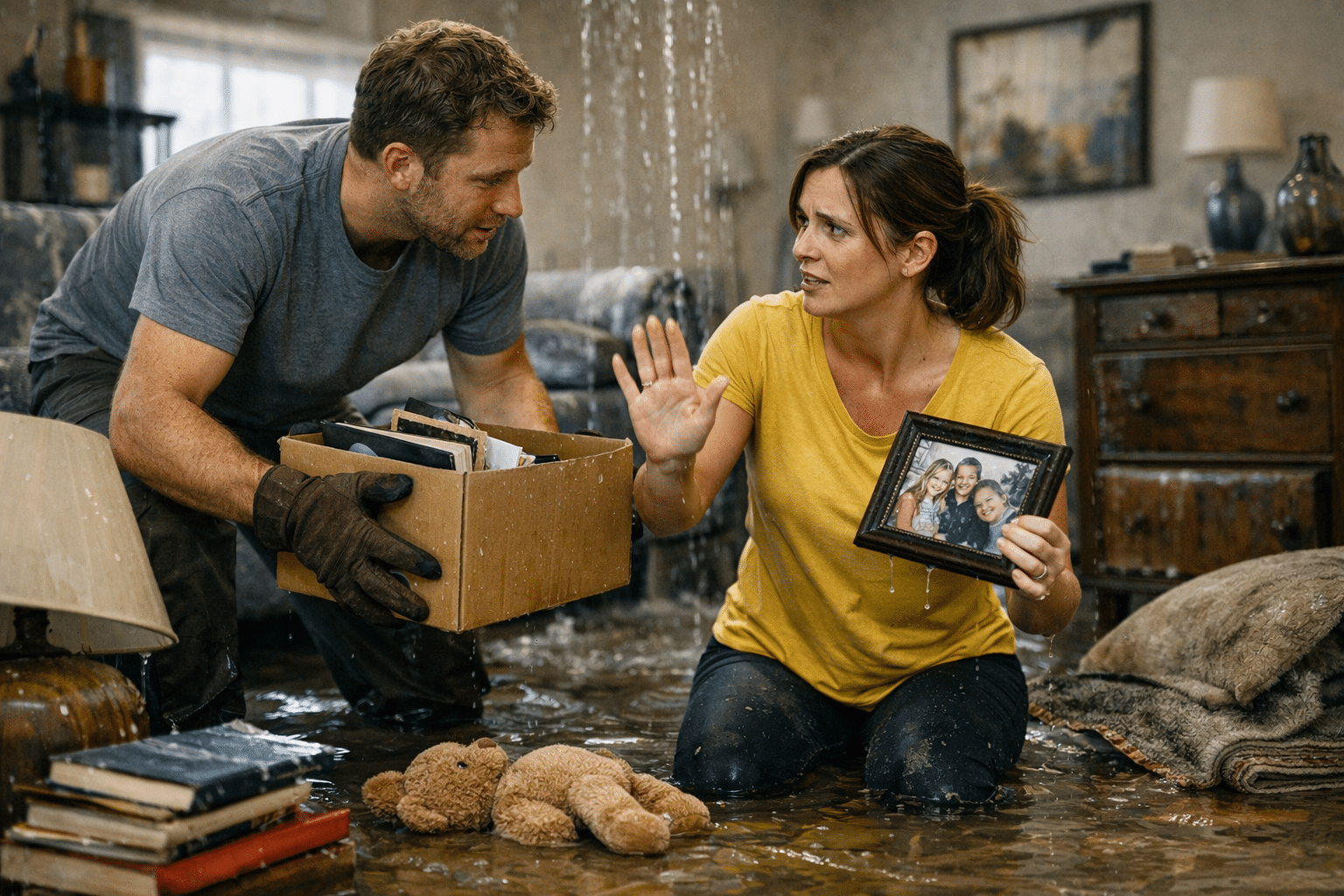
Furniture, rugs, and soft furnishings should come out of the wet area as soon as they’re documented. Wet upholstery and fabric hold moisture for a long time and contribute to mold growth if left sitting on a damp floor.
Hard furniture that got wet on the legs or base can often be saved if it dries quickly, so get it elevated or moved to a dry area.
Leave structural decisions to the professionals. Don’t pull up flooring, cut into walls, or remove baseboards before the restoration team assesses the situation.
Moisture meters will tell them what’s wet behind the surface, and tearing into things prematurely can complicate both the drying process and your insurance claim.
What Comes After the First 24 Hours
Once the extraction and initial drying are underway, the focus shifts to monitoring.
Professional teams check moisture readings daily and adjust equipment placement based on where water is still sitting inside walls and floors. This phase typically runs three to five days depending on the extent of the damage and the materials involved.
After drying is complete, any damaged materials get removed and replaced, surfaces get treated, and the space gets cleared for reconstruction. It’s a process, but one that goes far smoother when those first 24 hours are handled correctly.
When water hits your home, the instinct is to freeze up or try to fix everything at once. Neither helps. Stop the source, call for help, document what you see, and let the professionals take it from there. That’s the sequence that saves homes.