
Helichrysum oil comes from the Helichrysum italicum plant, a small flowering herb native to the Mediterranean region. It has been used in traditional herbal medicine for hundreds of years.
Historically, people relied on it to treat wounds, skin irritation, and inflammation. Today, it has made its way into modern skincare and wellness products worldwide.
So what is helichrysum oil good for exactly? This article covers helichrysum oil benefits and helichrysum essential oil benefits for skin health, muscle recovery, stress relief, and safe daily use.
What Are the Ingredients in Helichrysum Oil?
Helichrysum oil derives its wide range of benefits from the natural compounds it contains. Each compound in helichrysum oil plays a specific role in its effectiveness.
These are the key ingredients that give the oil its well-known properties:
| Compound | Primary Role |
| Neryl Acetate | Soothes skin and supports cell regeneration |
| Alpha-Pinene | Offers anti-inflammatory and antimicrobial support |
| Italidiones | May help reduce bruising and support skin repair |
| Limonene | Provides antioxidant protection and a light, fresh scent |
What Is Helichrysum Oil Good For?
Helichrysum oil has a surprisingly wide range of uses. From skin repair to muscle relief and stress reduction, its benefits cover both physical and emotional well-being.
1. Skin Health
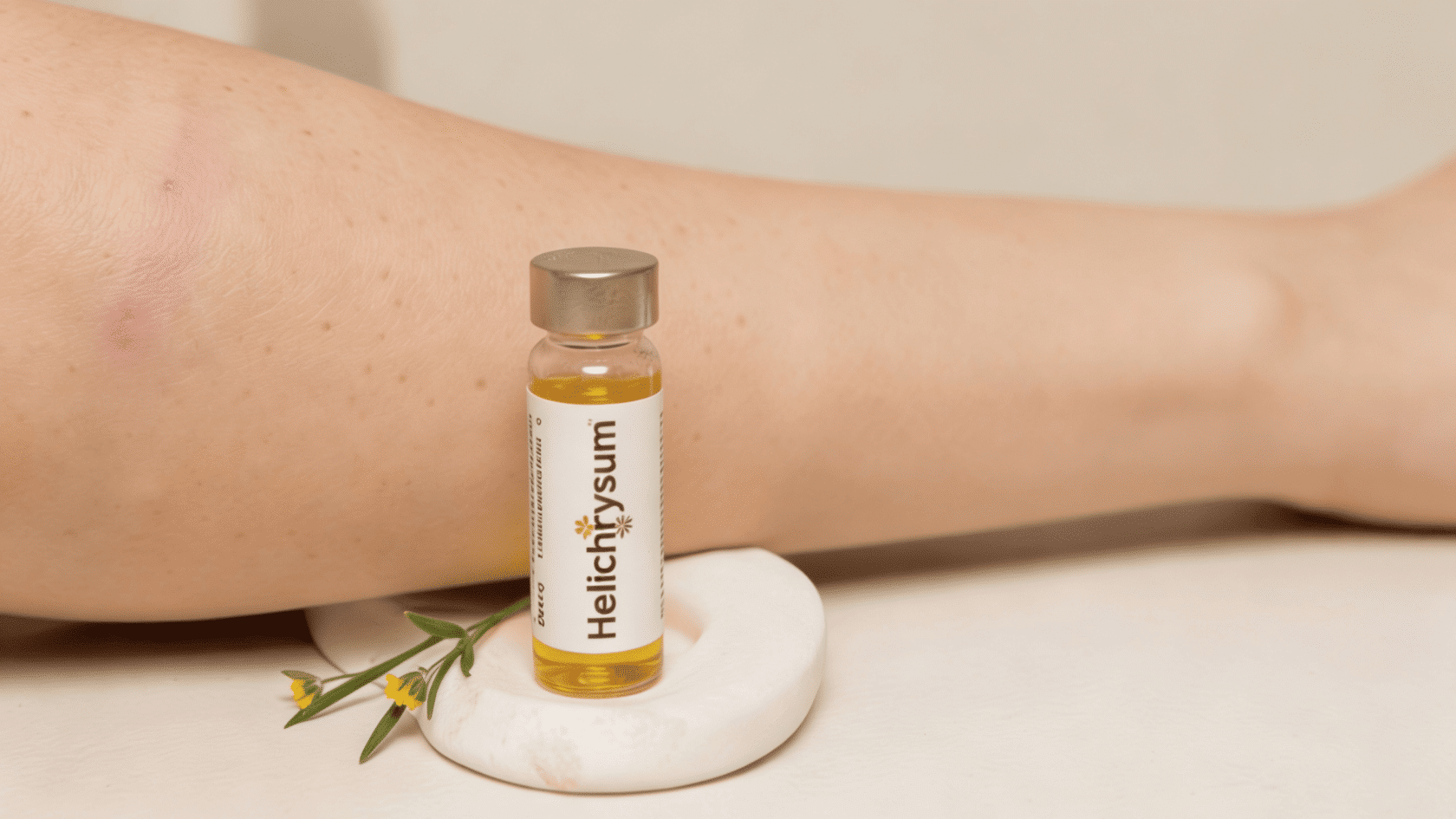
Helichrysum oil is widely used for skin repair and care. It fades the appearance of scars, calms redness, and soothes minor irritations, while supporting faster healing of blemishes and breakouts.
Rich in antioxidants, it protects skin from daily damage and helps improve texture and tone with consistent use.
2. Pain and Muscle Recovery
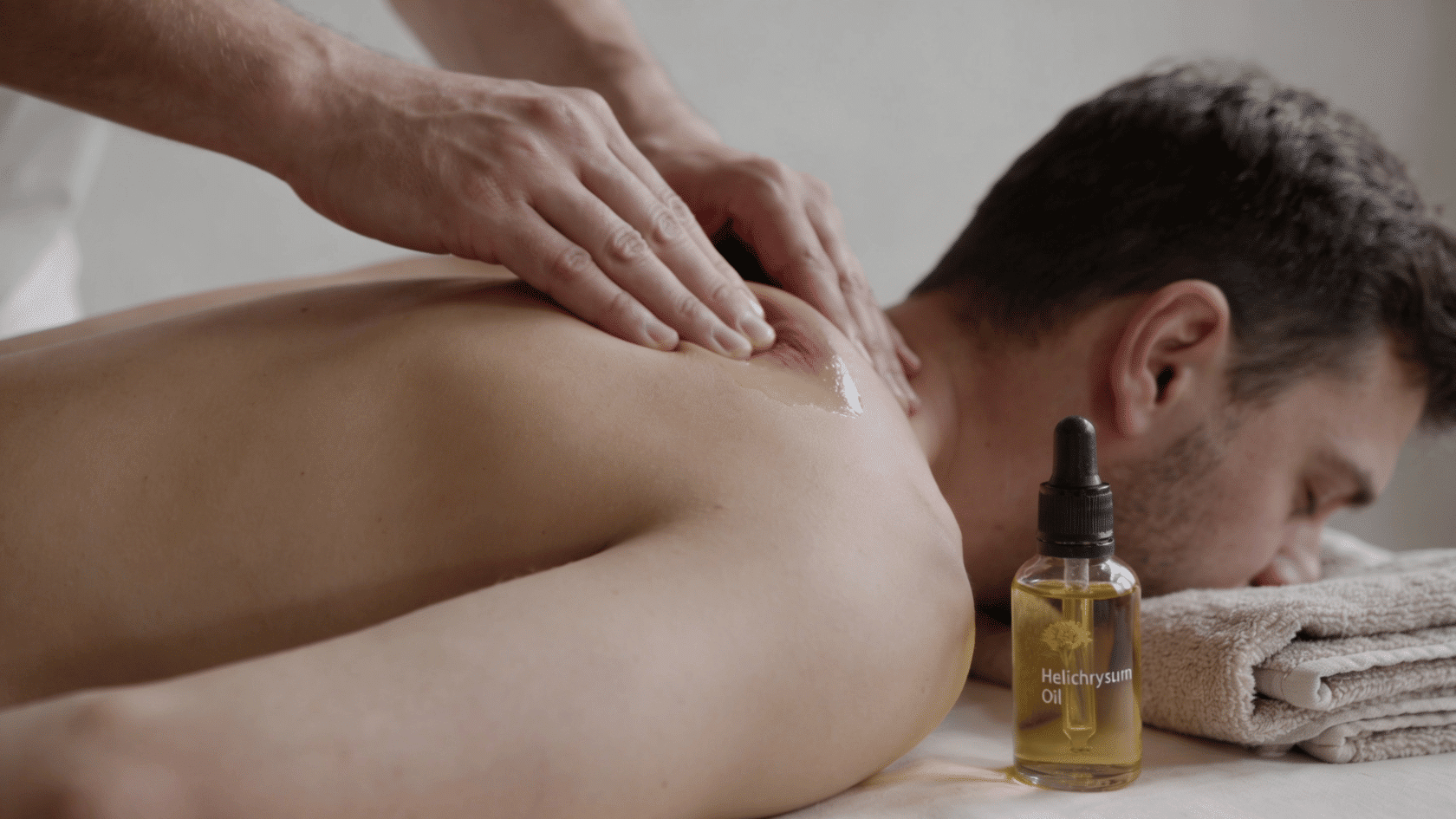
Helichrysum oil is one of the more practical options for managing muscle soreness and discomfort. It eases sore muscles after physical activity, reduces inflammation, and works well in massage blends for stiff joints and tired muscles.
Mixed with a carrier oil, it absorbs quickly and may bring noticeable relief to problem areas with regular use.
3. Stress and Relaxation

Helichrysum essential oil supports emotional well-being by relieving everyday stress and promoting a calm, settled feeling.
Used in diffusers or massage blends, it helps the mind slow down after a demanding day and may support improved sleep quality over time.
4. Wound Care and Healing
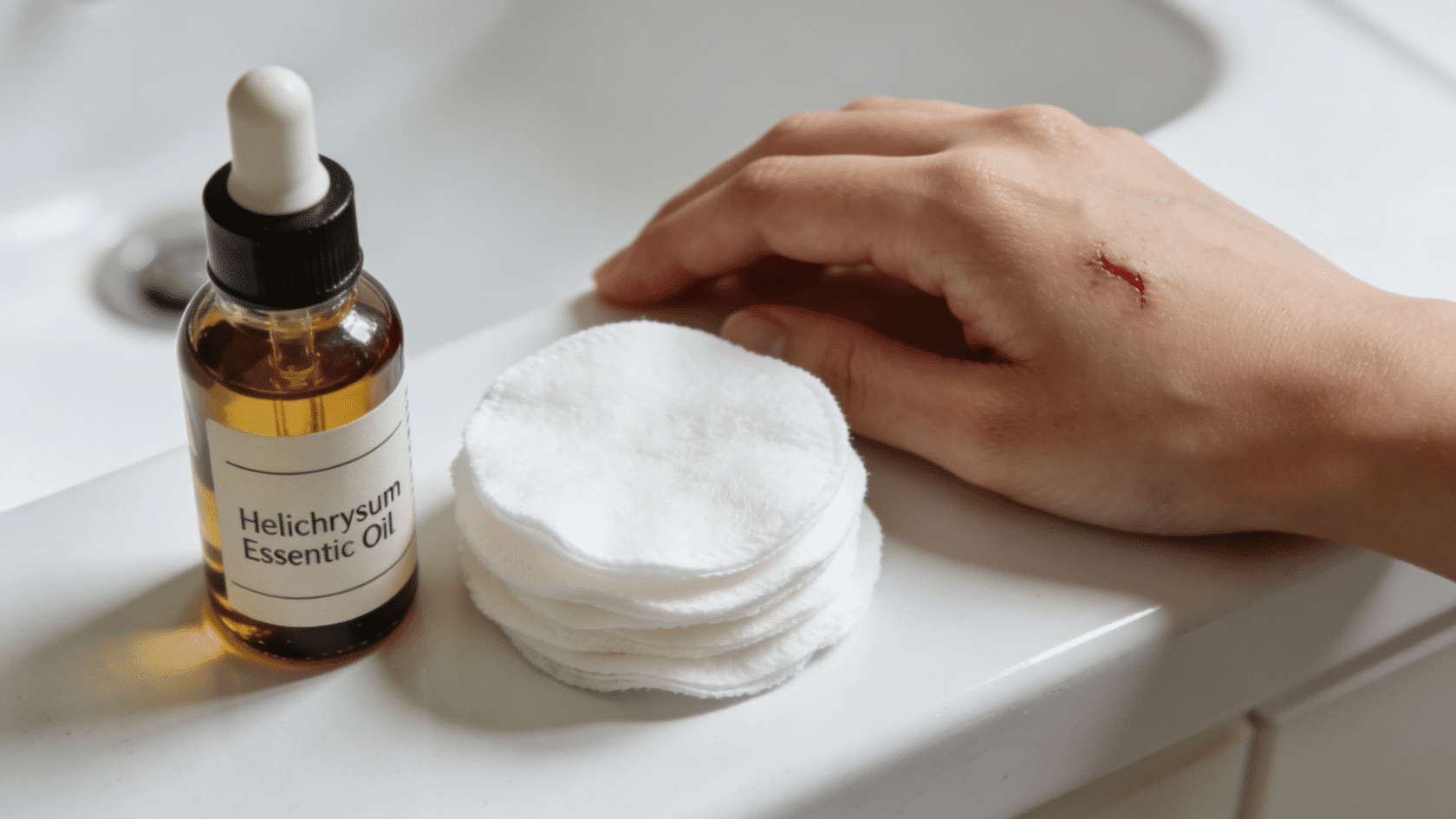
Helichrysum oil has a long history in wound care, known for speeding up the healing of minor cuts, bruises, and small wounds.
Its antimicrobial properties help reduce bruising, swelling, and the risk of infection, while also soothing post-procedure skin for faster recovery. As always, it works best when properly diluted and applied to clean, affected skin.
5. Respiratory Support
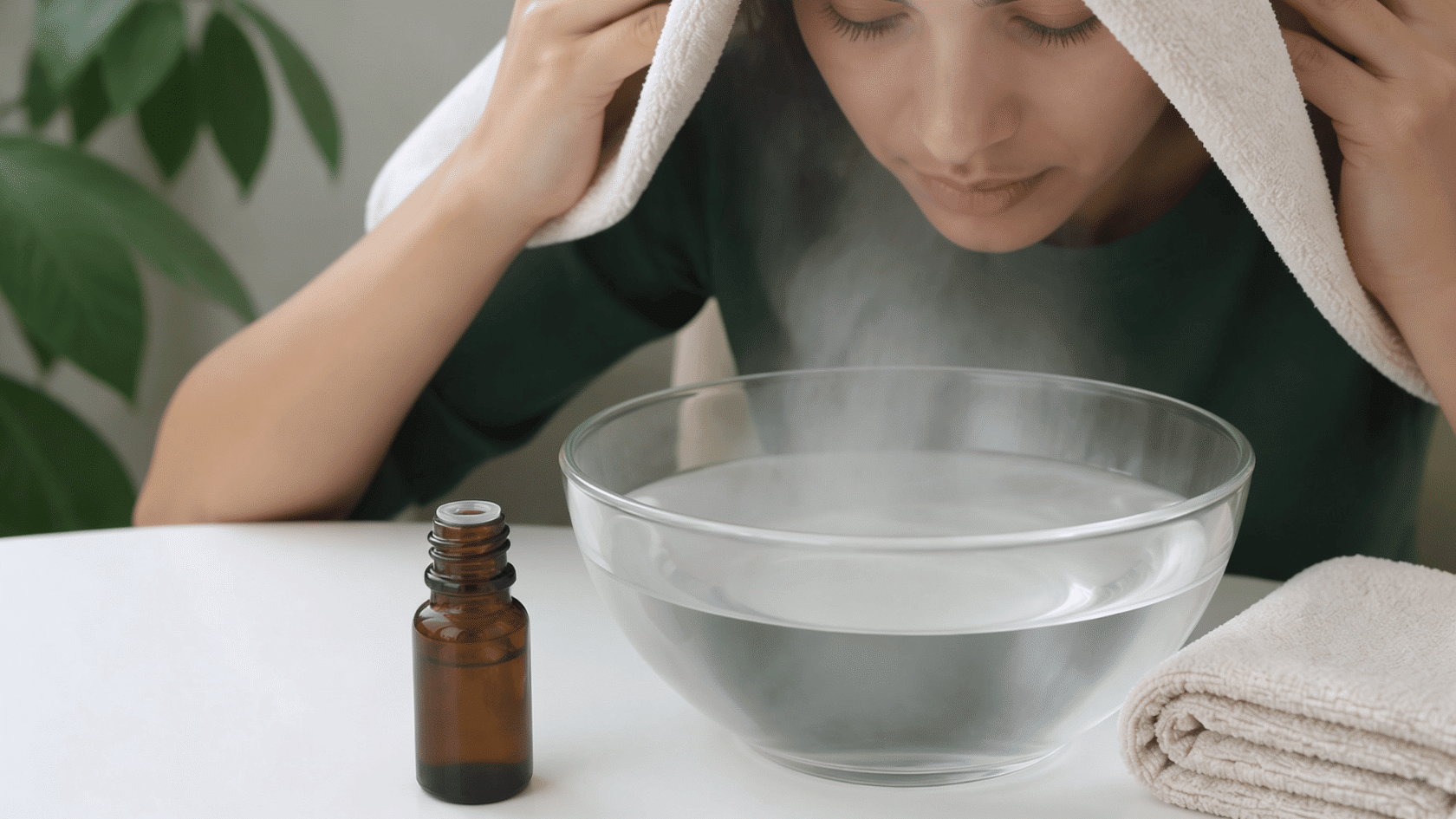
Helichrysum oil offers gentle respiratory support, soothing mild congestion and airway irritation during colds and seasonal allergies.
A few drops in hot water make a simple steam remedy that promotes clearer breathing without harsh chemicals or additives.
6. Immune Support

Helichrysum oil plays a small but meaningful role in supporting immune health, with antioxidant compounds that protect the body from daily stress and antimicrobial properties that promote long-term resilience.
Best Ways to Apply the Oil
Helichrysum oil is easy to add to your daily routine once you know the basics. Using it correctly keeps your skin safe and makes the oil more effective.
There is more than one way to use helichrysum oil, depending on your goal. Each method targets a different need, from skin care to muscle relief to relaxation.
Application Methods to Try:
- Topical application: Dilute with a carrier oil and apply to skin, scars, or sore muscles
- Diffusing: Add 3 to 4 drops to a diffuser for stress relief and aromatherapy
- Steam inhalation: Add 2 drops to a bowl of hot water and inhale slowly for respiratory comfort
- Bath soak: Mix 4 to 5 drops with a carrier oil and stir into warm bathwater
- Scalp massage: Blend with coconut or jojoba oil and massage gently into the scalp
Starting with one method at a time makes it easier to notice how your body responds. Once comfortable, you can combine methods based on your daily needs.
Important Dilution Tips:
Helichrysum oil must always be diluted before it touches your skin. Applying it undiluted can cause redness, irritation, or a burning sensation, even on normal skin.
| Use Case | Helichrysum Oil | Carrier Oil | Best Carrier Oil to Use |
| Face Application | 1 drop | 1 teaspoon | Jojoba or Rosehip oil |
| Body Massage | 3 to 4 drops | 1 tablespoon | Sweet almond or Coconut oil |
| Bath Soak | 4 to 5 drops | 1 tablespoon | Coconut or Sunflower oil |
| Sensitive Skin | 1 drop | 1 tablespoon | Jojoba or Calendula oil |
| Muscle Relief | 3 drops | 1 tablespoon | Argan or peppermint-infused oil |
Does Helichrysum Oil Have Side Effects?
Helichrysum oil is generally considered safe when used correctly. But like any essential oil, it can still cause side effects in certain situations or for certain people.
Skin Irritation: Using helichrysum oil directly on skin without a carrier oil can cause redness, itching, or irritation. Always dilute it properly before applying it to any part of your body.
Allergic Reactions: Some people may develop an allergic reaction after using helichrysum oil. Signs include rashes, swelling, or difficulty breathing, and these should be treated as medical emergencies right away.
Increased Bleeding Risk: Helichrysum oil naturally slows blood clotting. Using too much of it, especially if you take blood-thinning medications, can raise your risk of bruising or prolonged bleeding.
Hormonal Disruption Some research suggests helichrysum oil may interact with hormone levels in the body. People with hormone-sensitive conditions should speak to a doctor before using it regularly.
Sensitivity to Sunlight: Applying helichrysum oil to skin before stepping into the sun may increase sensitivity. This can lead to sunburn or dark spots, so it is best used in the evening or indoors.
Who Shouldn’t Use Helichrysum Oil?
Helichrysum oil works well for many people, but certain groups should avoid it entirely to prevent unwanted reactions or health risks.
- Pregnant and Breastfeeding Women may affect hormone levels and fetal development
- Young children’s (Under 6) skin is too sensitive for essential oil exposure
- People on blood thinners increase the risk of excessive bleeding or bruising
- People with Bleeding Disorders can worsen clotting problems like hemophilia
- People Allergic to the Daisy Family: may trigger reactions from the Asteraceae plant group
- People scheduled for Surgery blood-thinning effect poses a risk before any procedure
How to Choose the Best Helichrysum Oil for Maximum Benefits?
Not all helichrysum oils on the market are equal in quality. Knowing what to look for before buying saves you money and ensures you get a product that actually works.
Label Checklist Before You Buy:
- Botanical name: Should say Helichrysum italicum clearly on the label
- Country of origin: Look for oils sourced from the Mediterranean region
- Extraction method: Steam distillation is the most reliable and preferred method
- Concentration: Should state 100% pure essential oil with no added fillers
- Batch number and expiry date: Confirms freshness and proper quality control
A good example is Plant Therapy Helichrysum Essential Oil, which clearly lists Helichrysum italicum on the label along with steam-distilled extraction and purity testing details.
The brand also provides sourcing information and batch testing, which helps confirm the oil is genuine and properly processed.
Avoid products that only list a common name like “immortelle oil” without a botanical name. Transparency on the label is always a good sign of a trustworthy brand.
Pure vs Blended Helichrysum Oil
Pure helichrysum oil contains nothing except the oil extracted from the plant. It is more concentrated and gives you the full range of benefits without any added ingredients diluting its strength.
Blended helichrysum oil comes pre-mixed with a carrier oil or other essential oils. These are convenient for beginners and are ready to apply directly without extra preparation.
| Feature | Pure Helichrysum Oil | Blended Helichrysum Oil |
|---|---|---|
| Concentration | 100% essential oil | Diluted with carrier oils |
| Ready to Use | No, needs dilution | Yes, apply directly |
| Best For | Experienced users | Beginners |
| Shelf Life | Longer | Shorter due to carrier oils |
| Cost | Higher upfront | More affordable |
If you are just starting, a pre-blended option is a practical and safer choice. As you get more comfortable, switching to pure oil gives you more control over how you use it.
Common Buying Mistakes to Avoid
Many first-time buyers end up with low-quality products simply because they did not know what to check.
Here are the mistakes to watch out for:
- Buying the cheapest option: High-quality Helichrysum oil is naturally pricey due to its rarity
- Ignoring the botanical name: Products without Helichrysum italicum listed may be a different species
- Skipping brand research: Always check reviews and whether the brand does third-party testing
- Choosing plastic bottles: Essential oils degrade plastic over time, which contaminates the oil
- Overlooking expiry dates: Expired oil loses its potency and can irritate the skin
Storage Tips to Maintain Quality
Helichrysum oil can lose its potency quickly if stored incorrectly. Proper storage keeps the oil fresh, effective, and safe to use for as long as possible.
How to Store It Correctly:
- Keep in a dark glass bottle, preferably amber or cobalt blue
- Store in a cool, dry place away from heat and direct sunlight
- Always close the cap tightly after each use to prevent oxidation
- Avoid storing in the bathroom as humidity can affect quality
- Keep away from children and pets at all times
A properly stored pure Helichrysum oil can last up to two to three years. Blended oils have a shorter shelf life depending on the carrier oil used in the mix.
Conclusion
Helichrysum oil is a natural remedy that truly delivers, from repairing skin and easing sore muscles to calming everyday stress.
Now that you have the full picture, pick one benefit that speaks to your routine and start there.
The dilution tips and application methods shared above make it easy to use safely and effectively.
Always choose a quality oil with the botanical name clearly listed on the label. Have you tried helichrysum oil before? Share your experience or any questions you have in the comments below.
Frequently Asked Questions
How Often Should I Use Helichrysum Oil?
For most uses, once daily is a good starting point, but always observe how your skin responds and adjust frequency based on your comfort and specific needs.
Is Helichrysum Good for Age Spots?
Helichrysum may help fade age spots slightly due to its antioxidant and skin-soothing properties. However, scientific evidence is limited, and results are usually mild compared to ingredients like vitamin C or retinoids.
Which is Better, Frankincense or Helichrysum?
For age spots and skin discoloration, Helichrysum is often considered slightly better.
For overall anti-aging, firmness, and wrinkles, frankincense is usually the better choice.