Struggling with cluttered rooms and mismatched furniture? Bauhaus decor can simplify your space while keeping it stylish.
This design style focuses on clean lines, functional layouts, and thoughtful use of materials. It makes rooms feel open, organized, and modern.
By embracing minimalism and smart furniture choices, you can create a home that is both practical and visually pleasing.
In this guide, you’ll learn the history of Bauhaus, its key principles, and how to bring its timeless style into your home today.
What is Bauhaus Interior?
Bauhaus interior design is built on one core idea: form follows function. Every element in a room, from the furniture to the lighting fixtures, earns its place by serving a clear practical purpose.
Unlike many home aesthetics that prioritize mood, personality, or decorative layering, Bauhaus strips everything back to its essentials. Ornamentation is removed. What remains is structure, clarity, and visual balance.
Clean lines and geometric shapes define the look. Rectangles, circles, and straight edges bring a sense of order to every surface and space. Nothing is added without intention, and nothing functional is hidden behind decoration.
The result is a style that feels open, organized, and deliberately modern, without sacrificing comfort or visual appeal.
Core Principles
The Bauhaus movement is guided by a few key principles that define its approach to design. These concepts ensure every piece is functional, simple, and visually balanced.
| Principle | Description |
|---|---|
| Form Follows Function | Design prioritizes utility and efficiency. Every element serves a practical purpose. |
| Minimalism and Simplicity | Excess decoration is eliminated to focus on essential forms and clarity. |
| Unity of Art, Craft, and Technology | Fine arts and applied arts merge, ensuring functional objects are also visually harmonious. |
The History of Bauhaus
The Bauhaus movement, founded in Germany in 1919 by Walter Gropius, unified art, craft, and industrial production.
- Combined fine art, crafts, and industrial methods in one school.
- Emphasized hands-on workshops where students learned by doing.
- Focused on functional, visually balanced designs for everyday use.
- Promoted clean lines, geometric forms, and simplicity across architecture and furniture.
- Influenced modern design globally after 1933, laying the foundation for the International Style.
Bauhaus integrated functionality with creativity, setting a timeless standard that continues to inspire interior design today.
German OriginsThe Bauhaus school emphasized hands-on learning. Students explored architecture, furniture, painting, and textiles in integrated workshops. Experimentation and collaboration were central to the curriculum. Students learned by making, testing, and refining their designs. The style deliberately rejected the ornate decorations of earlier movements like Arts and Crafts. Simplicity and functionality became its defining principles. |
Global Spread and Influence
The Bauhaus school closed in 1933, pushing pioneers like Gropius and Mies van der Rohe to relocate to the U.S.
They introduced Bauhaus principles to architecture and interiors, influencing modern American design. Their work helped popularize the International Style and minimalism across the country.
Bauhaus ideas spread globally, inspiring designers to embrace functional beauty and simplicity in every space.
Key Figures in Bauhaus Interior Design
The Bauhaus movement was shaped by visionary figures whose ideas and work continue to influence modern interiors and design.
This table showcases the leading figures of Bauhaus interior design:
| Designer / Figure | Specialty | Key Contribution |
|---|---|---|
| Walter Gropius | Functional Balance | Bauhaus founder, who taught at Harvard, emphasized that form follows function |
| Marcel Breuer | Tubular Steel | Created Wassily Chair, minimalist steel furniture |
| Mies van der Rohe | Minimalist Architecture | Barcelona Chair, open-plan designs |
| László Moholy-Nagy | Visual Integration | Founded New Bauhaus, photography, and graphics |
| Josef Albers & Marianne Brandt | Color & Metalwork | Influenced furniture, metalwork, and color theory |
Characteristics and Style Elements
Bauhaus interiors are instantly recognizable due to several defining characteristics.
These elements work together to create spaces that are functional, balanced, and visually striking. Below are the elements that define Bauhaus style.
1. Geometric Shapes and Clean Lines

Straight lines, right angles, and basic shapes dominate Bauhaus furniture, lighting, and architecture. These forms create a sense of order and clarity.
Simplicity guides both function and appearance. Geometric designs ensure every element is purposeful and visually balanced.
2. Primary Colors and Neutral Tones
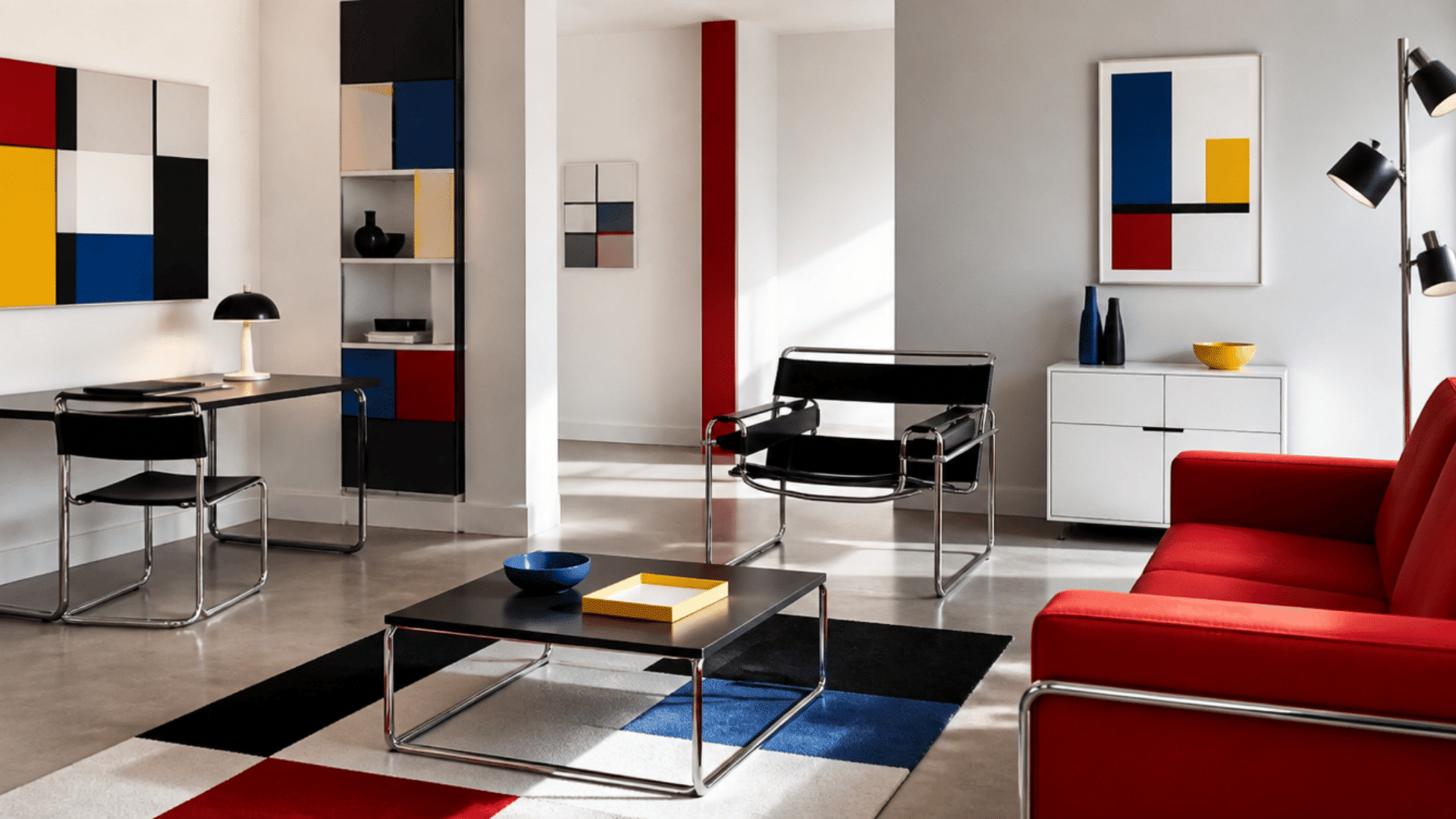
Red, blue, and yellow are used alongside black, white, and gray to create vibrant, balanced interiors.
This combination adds energy without overwhelming the space. Neutral tones keep rooms calm and grounded.
3. Innovative Materials
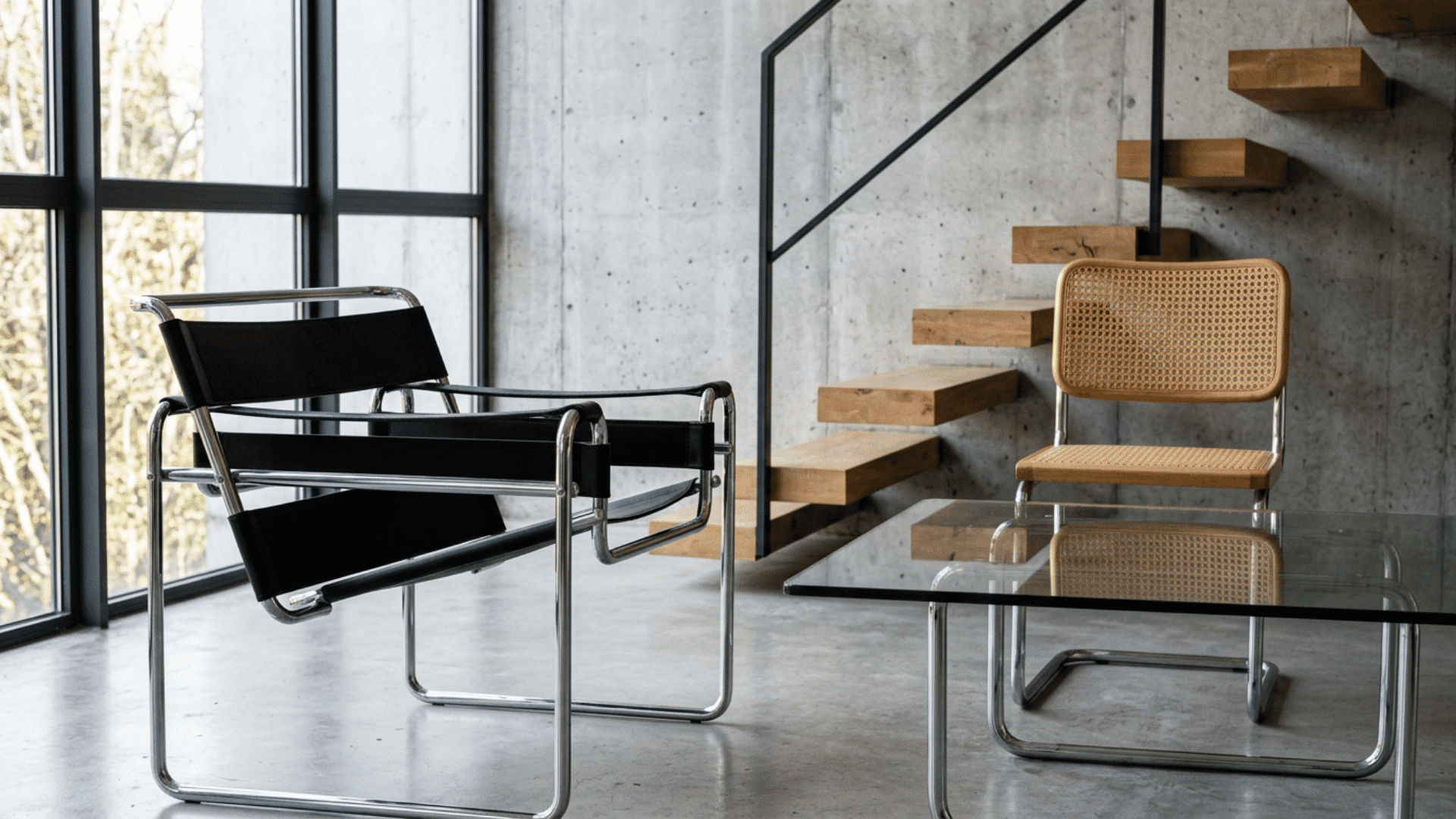
Bauhaus design uses tubular steel, chrome, glass, concrete, and wood to highlight structure and function.
These materials emphasize honesty in construction. Each choice supports durability, practicality, and visual clarity.
4. Functional Furniture
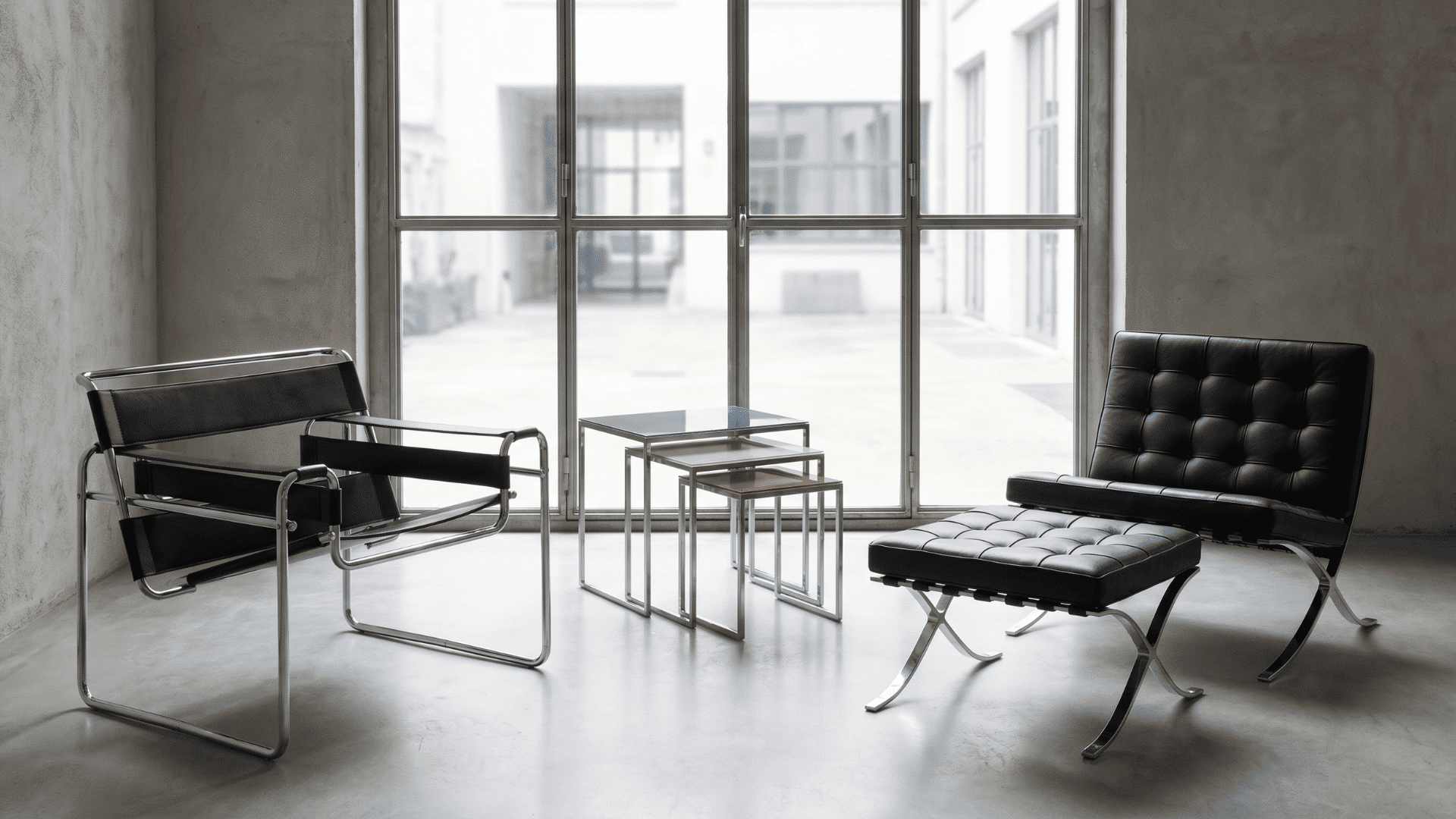
Iconic pieces like the Wassily Chair, Barcelona Chair, and Albers Nesting Tables define Bauhaus design.
These items are minimal, practical, and visually striking, combining functionality with timeless style.
Why Does Bauhaus Stand Out in Design History?
Bauhaus sits at the opposite end of the spectrum from styles built on decoration, pattern layering, and expressive excess.
Where a maximalist approach to decorating prioritizes personality, bold color, and visual richness, Bauhaus removes everything that does not serve a direct functional purpose.
The movement embraces industrial methods in design and production. Materials like steel, glass, and concrete are celebrated for their honesty rather than being dressed up or concealed.
Usability and practicality sit at the center of every decision. Each design element is intentional, supporting modularity and long-term adaptability over trend-led styling.
Ornate aesthetics and stylistic embellishments are avoided entirely. Bauhaus prioritizes clean lines, geometric forms, and lasting functionality above all else.
Applying Bauhaus Principles in Modern Interiors
Modern homes can embrace Bauhaus by blending industrial precision with warmth.
Functional and stylish choices bring rooms to life. Keep reading to find out how.
5. Material and Palette Contrast
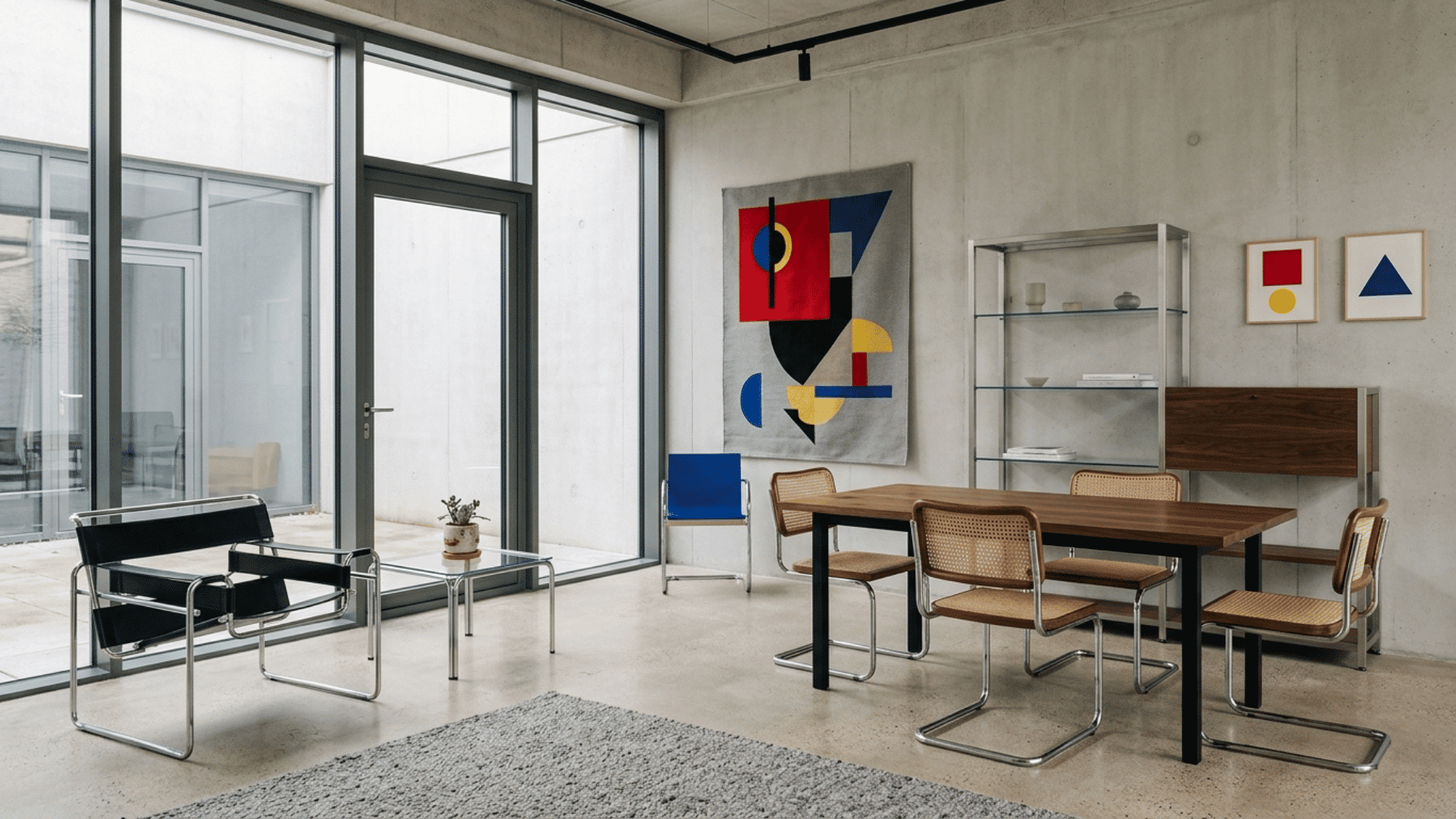
Mix steel and glass with natural woods like walnut or oak to create visual interest. This balances industrial and organic elements.
Use neutral tones as a base, adding primary color accents for vibrancy. The contrast keeps interiors lively yet harmonious.
6. Purposeful Curation
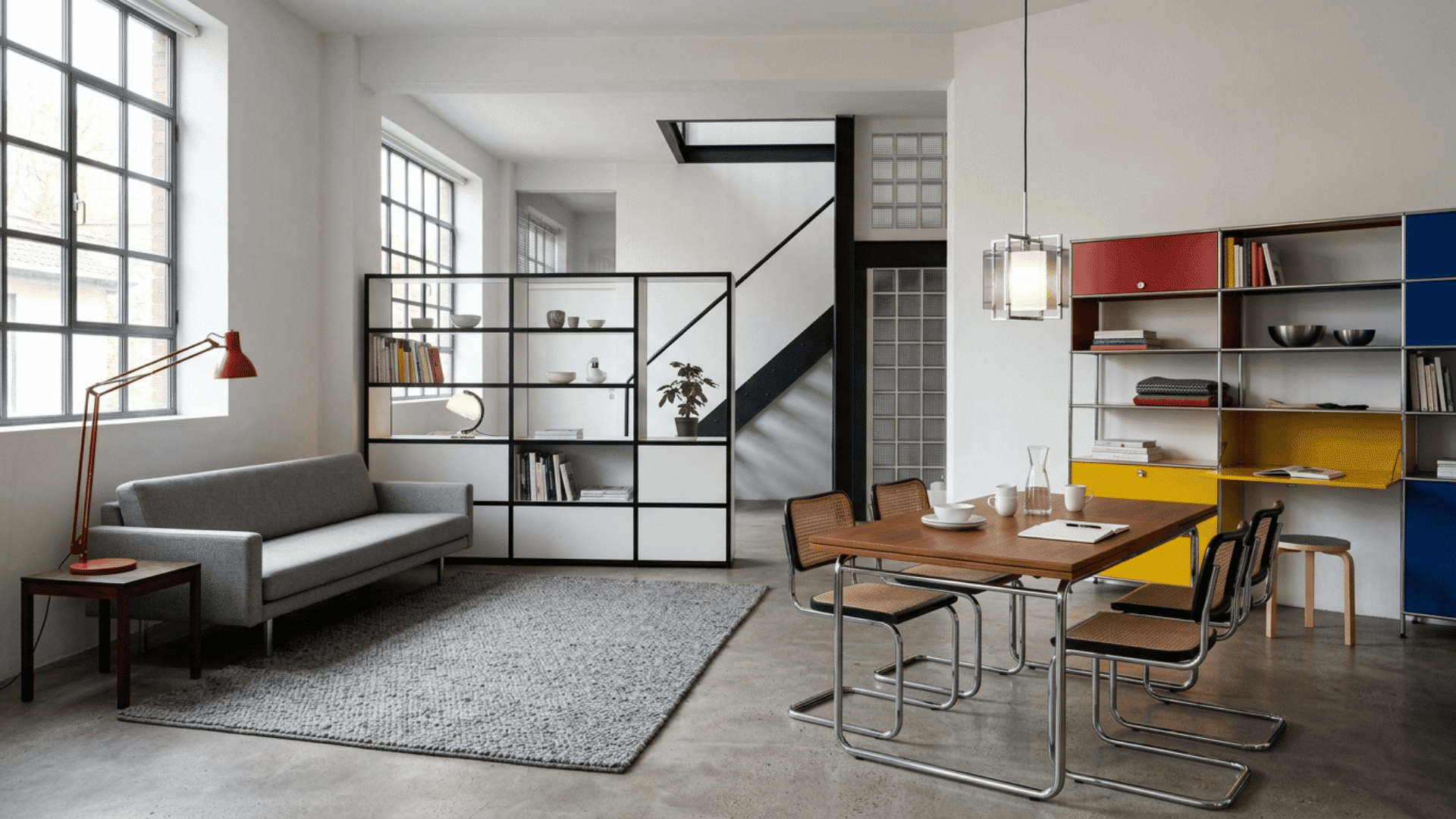
Choose multi-functional furniture and accessories to make the most of your space. Each piece should serve a clear purpose.
Use lighting to define zones and support utility. Thoughtful placement ensures the room is both practical and inviting.
7. Adding Warmth to Minimalism
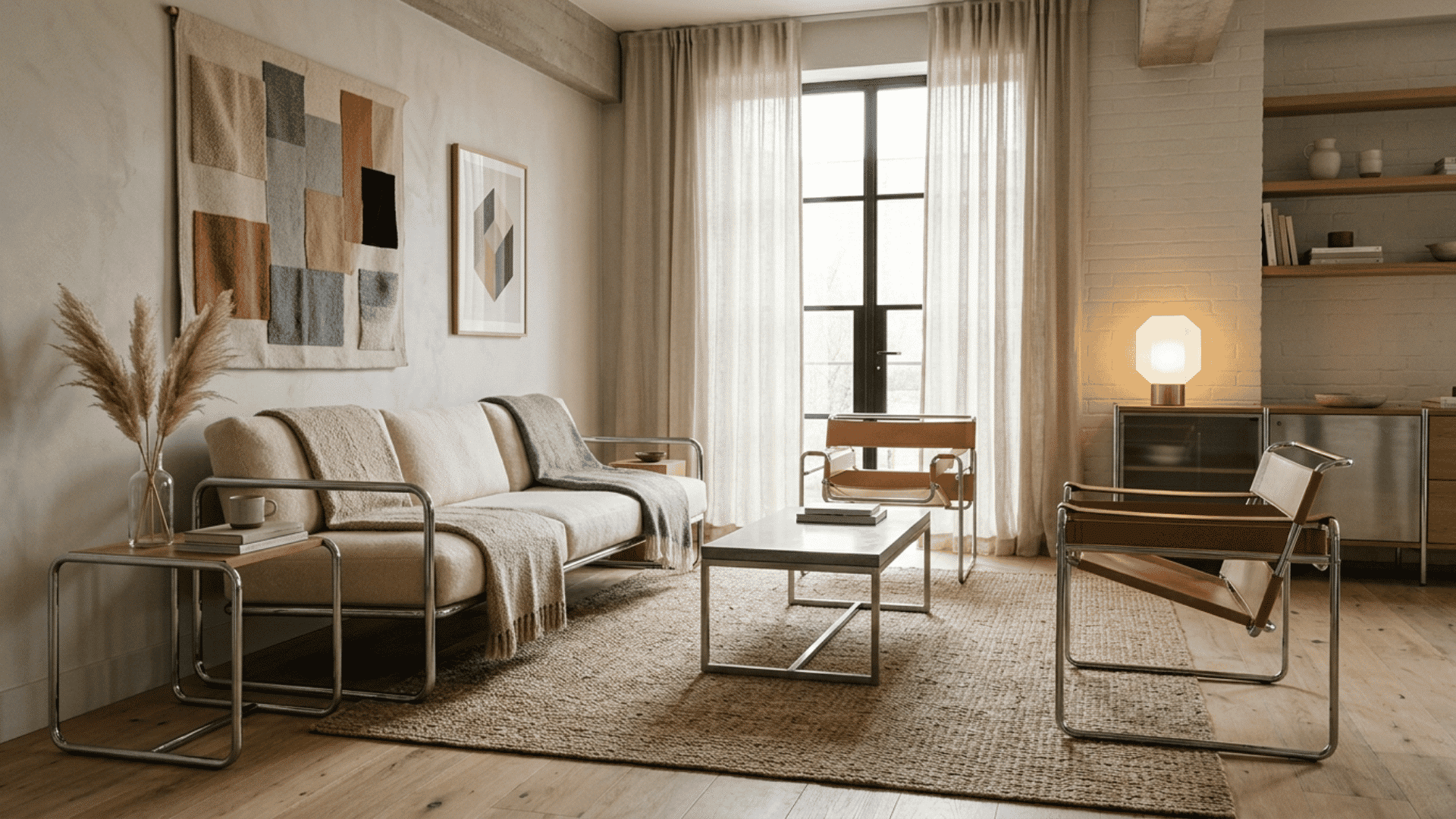
Add textiles, soft lighting, or climate-appropriate materials to warm up the minimalist industrial look.
These touches balance the stark lines and metal surfaces, making spaces feel comfortable and inviting.
Bauhaus Legacy Today
Bauhaus continues to shape architecture, interiors, and industrial design worldwide. Its principles also guide design education across the globe.
- Global Influence: Bauhaus impacts architecture, interior spaces, and industrial design on a broad scale.
- Educational Legacy: Its ideas inform design schools and curricula internationally, shaping future designers.
- Simplicity and Utility: Emphasize clean lines, functional layouts, and clarity in visual composition.
- Sustainable Guidance: Principles of efficiency and practical beauty support modern sustainable practices.
- Enduring Relevance: A focus on functionality and aesthetic balance ensures the Bauhaus’s enduring influence.
- Designer Inspiration: Professionals continue to draw on Bauhaus ideals to create timeless, adaptable spaces.
Bauhaus remains a reliable source of guidance for creating functional, elegant, and balanced interiors anywhere.
Final Thought
Bauhaus decor brings clarity and balance to any space. It makes homes feel organized, functional, and stylish without extra clutter.
Embracing its clean lines and practical layouts helps you enjoy rooms that are both comfortable and visually appealing. You don’t need to sacrifice style for usability.
Start small by choosing key furniture pieces or color schemes that follow Bauhaus principles. Even a few changes can transform your home instantly.
Ready to refresh your space? Try incorporating Bauhaus decor today and experience a home that works beautifully for your lifestyle.
Share your favorite Bauhaus-inspired ideas in the comments below!
Frequently Asked Questions
How Can Lighting Complement Bauhaus Decor?
Use simple, geometric lighting fixtures to highlight functional areas. Soft, indirect light enhances warmth without breaking the minimalist aesthetic.
Are Plants Suitable for Bauhaus Interiors?
Yes, adding plants brings natural texture and softness. They maintain the clean, functional style while introducing life and balance.
Can Bauhaus Decor Work in Small Apartments?
Absolutely. Modular furniture and open layouts maximize space. Minimalist principles make even compact rooms feel organized and airy.