The most interesting rooms rarely follow the rules. They layer, clash, collect, and somehow still feel completely intentional.
That is the quiet power behind maximalist interior design; it turns personal taste, bold choices, and collected details into spaces that feel alive rather than assembled.
Most people assume more means messier, but the best maximalist rooms prove the opposite.
The difference between clutter and character comes down to how color, texture, and repetition connect across a space.
When those elements work together, even the fullest room feels balanced.
What separates a stunning maximalist interior from an overwhelming one is rarely the amount of decor, but the thinking behind every single layer.
What Is Maximalist Room Design?
Maximalist room design is an interior style that uses bold colors, layered decor, mixed textures, and personal details to create a rich and expressive space.
It focuses on creating rooms that feel visually interesting, comfortable, and full of personality.
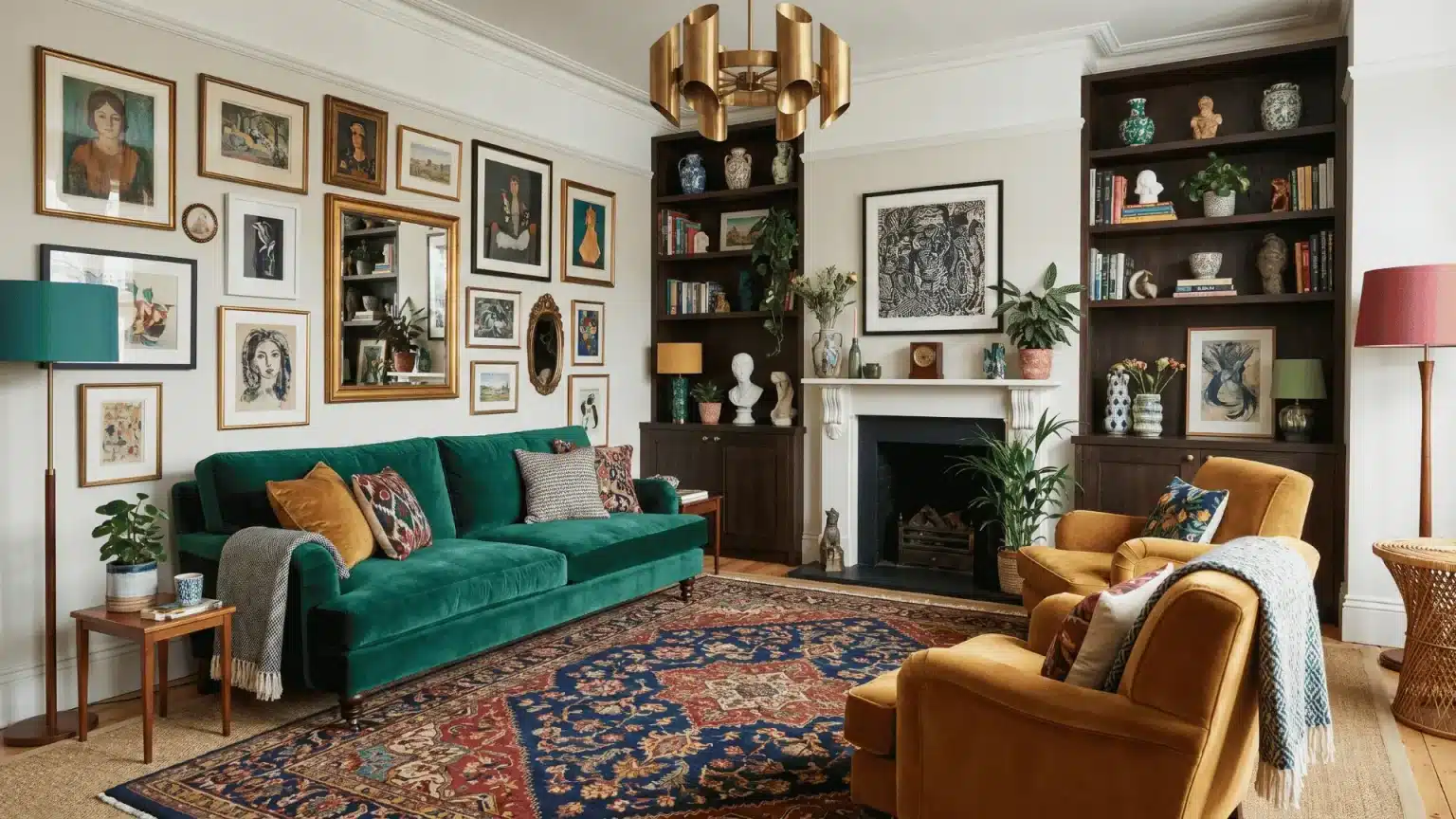
Common features include bold color palettes, pattern mixing, statement furniture, gallery walls, layered textiles, and decorative collections.
Unlike clutter, maximalism feels organized because the colors, textures, and decor connect visually. Compared to minimalism, maximalism focuses on heavier layering and stronger decorative detail.
Best Color Schemes for Maximalist Rooms
Maximalist rooms usually feel more balanced when they use a repeated color palette rather than random colors throughout the space.
Repeating key shades across furniture, artwork, textiles, and decor keeps the room connected while still allowing bold styling choices.
- Jewel Tones: Emerald green, burgundy, and mustard yellow add warmth.
- Bright Colors: Pink, orange, coral, and teal create a playful look.
- Dark Shades: Black, navy, and forest green add strong contrast.
Tips to Keep Bold Colors Balanced:
- Repeat 2–3 core colors throughout the room
- Use neutral breaks through flooring, ceilings, or large furniture
- Balance warm and cool tones for better visual flow
- Repeat colors across decor, textiles, and artwork to keep the space connected
Maximalist Bedroom Design Ideas
Maximalist bedrooms feature bold colors, statement decor, and layered textures to create warm, cozy spaces. They focus on comfort, personality, and rich decorative detail.
1. Bold Bedding and Layered Textiles
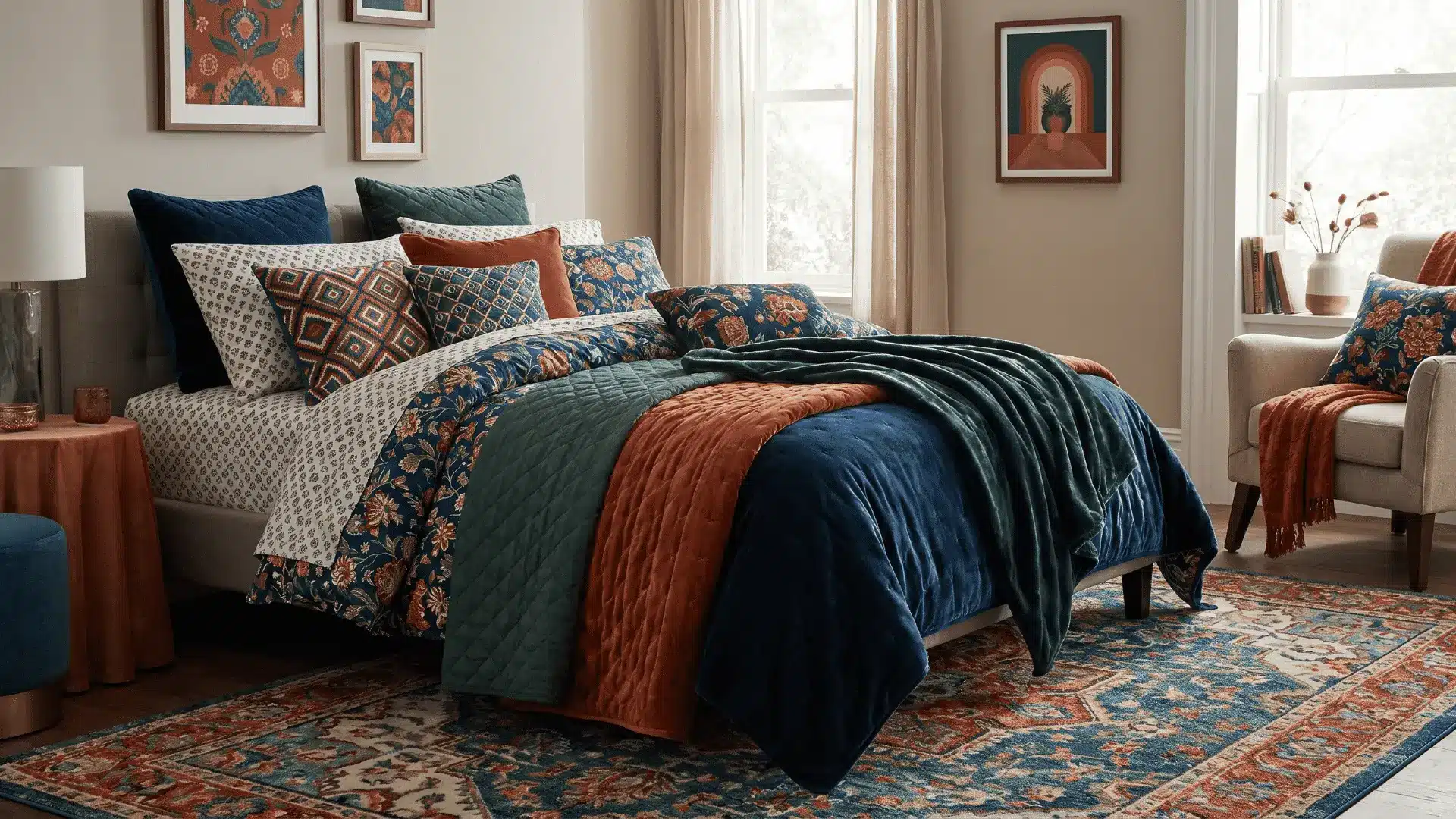
Patterned bedding, velvet blankets, layered throws, and decorative pillows help add texture and depth to the bedroom. These layered fabrics make the space feel warmer, fuller, and more visually interesting.
Repeating similar colors across bedding, rugs, curtains, and artwork helps the room feel balanced. This also prevents the layered decor from looking too random or overwhelming.
2. Statement Headboards and Bed Frames
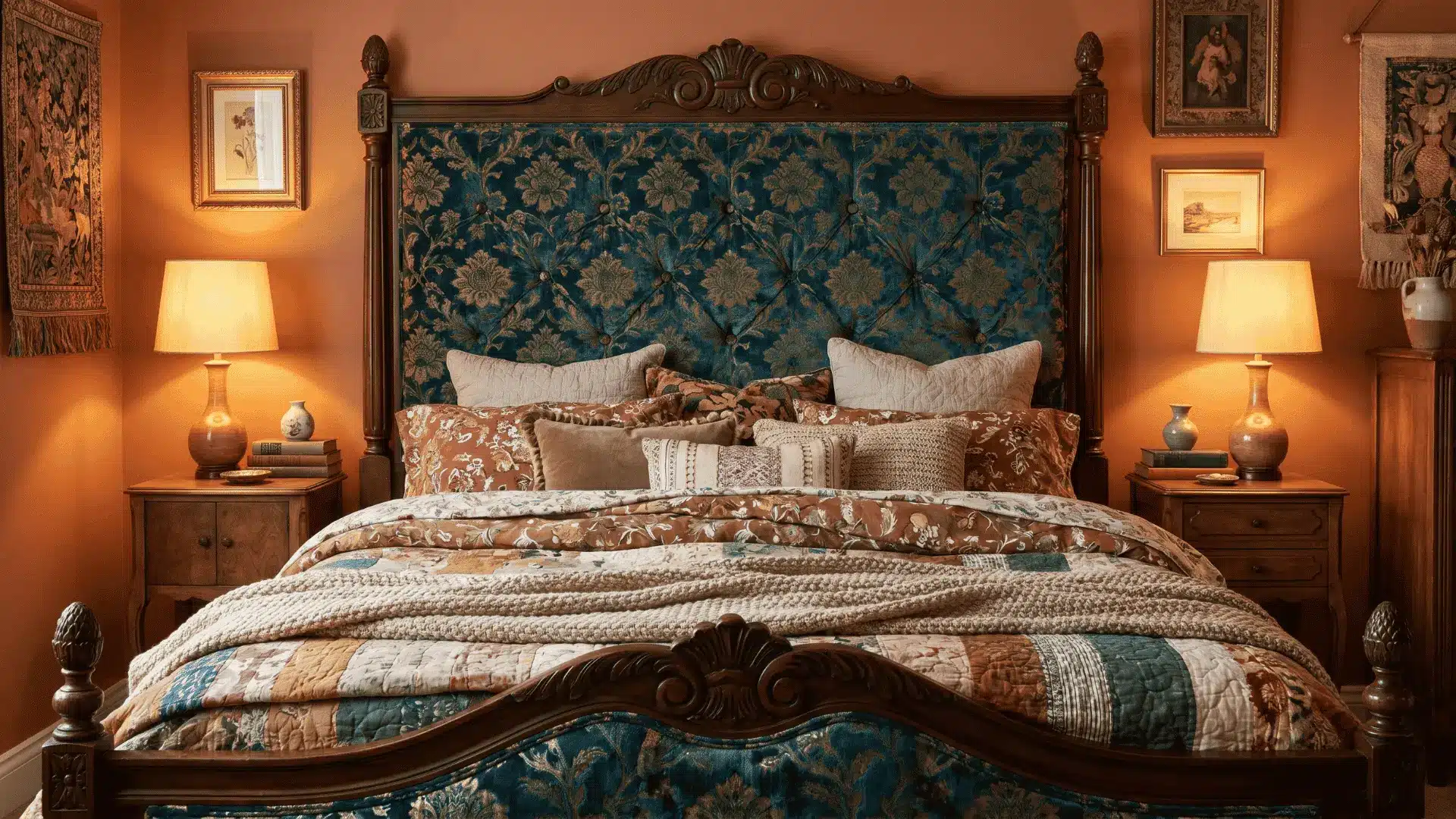
Large headboards and decorative bed frames help create a strong focal point in maximalist bedrooms. They make the bed stand out and help anchor the overall room design.
Tufted beds, canopy frames, curved headboards, and carved wood designs add more visual detail. These statement pieces also make the room feel richer and more expressive.
3. Rich Colors and Accent Walls
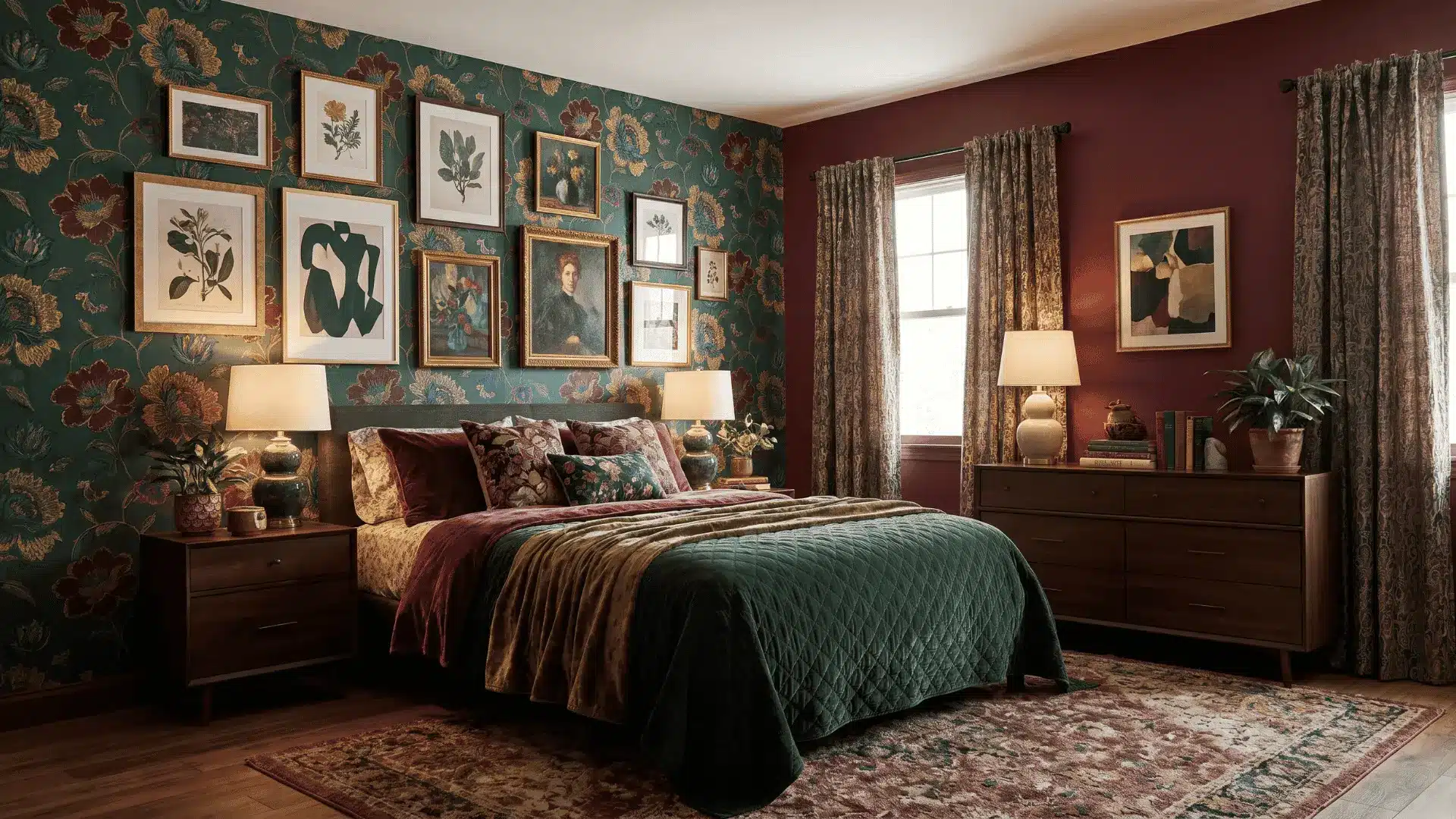
Deep green, burgundy, navy blue, charcoal, and mustard tones help create a warmer atmosphere. These darker and richer shades also add stronger contrast throughout the room.
Accent walls and patterned wallpapers help break up plain surfaces and add more visual depth. They also make maximalist bedrooms feel more dramatic without needing excessive decor.
4. Mood Lighting and Layered Lighting
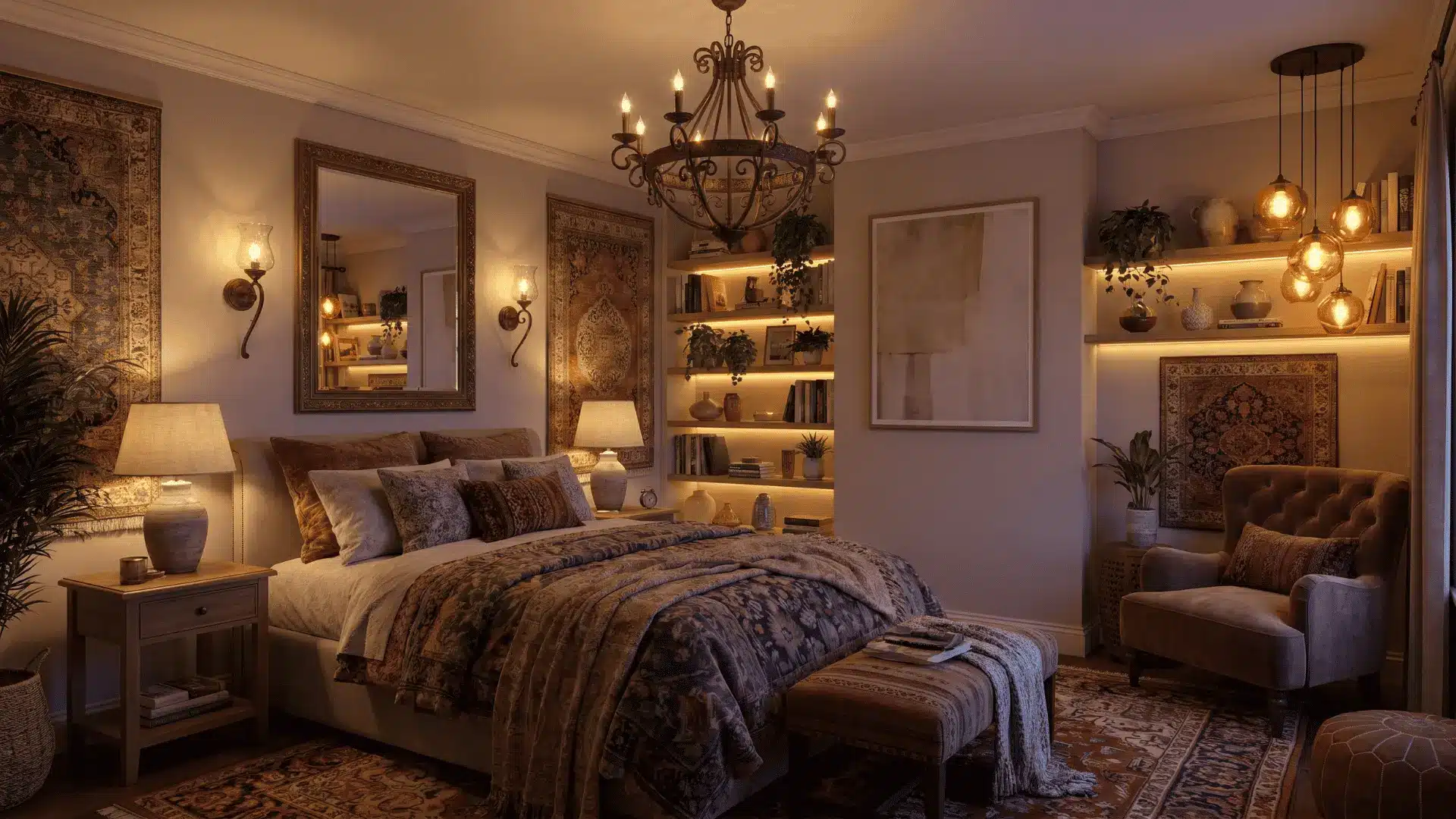
Table lamps, pendant lights, chandeliers, and wall sconces help soften bold colors and textures. Using multiple light sources also helps different areas of the room feel more balanced.
Warm lighting creates a cozier atmosphere and makes layered interiors feel more comfortable. It also helps highlight fabrics, furniture, artwork, and decorative details more clearly.
5. Statement Furniture and Accent Pieces
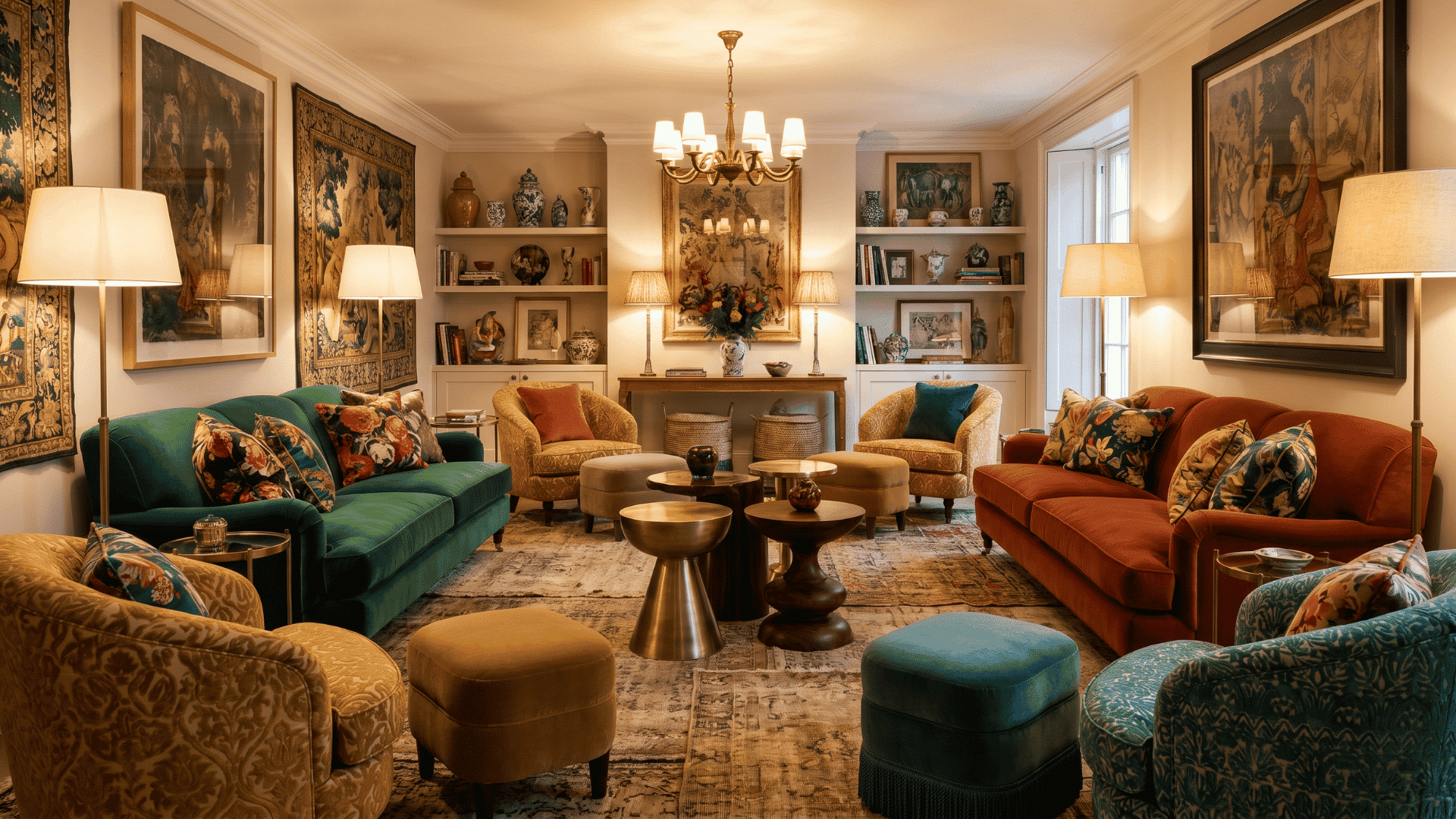
Velvet sofas, curved chairs, bold upholstery, and sculptural furniture help create strong focal points. These larger furniture pieces add texture, shape, and personality throughout the room.
Statement furniture also helps maximalist interiors feel more structured and visually balanced. Using bold furniture carefully prevents the space from feeling cluttered or overcrowded.
6. Mixing Vintage and Modern Decor
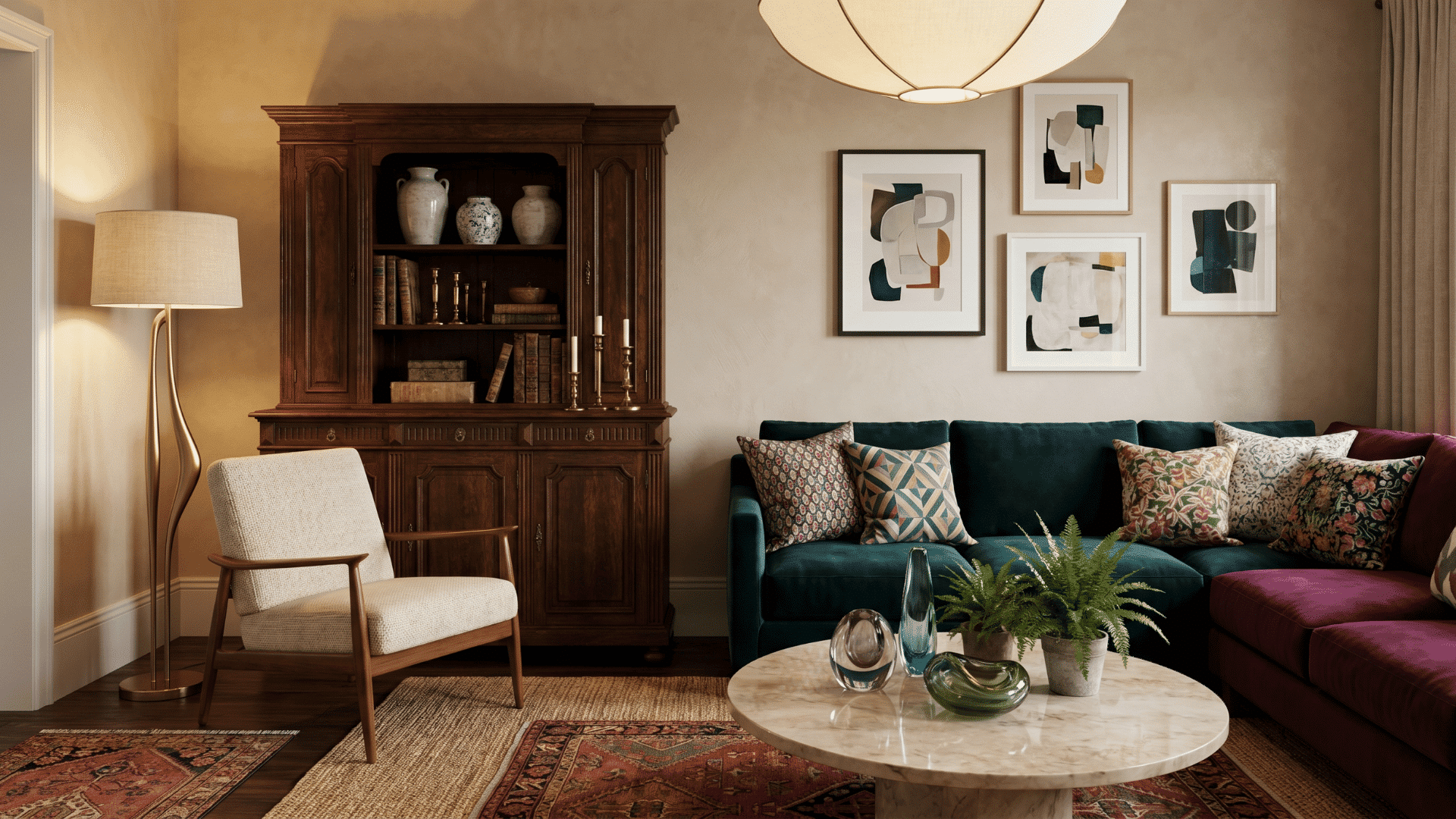
Combining antique furniture with modern pieces creates a more collected and layered appearance. This mix of styles helps maximalist rooms feel more personal and visually dynamic.
Shared colors, finishes, and materials help different decor styles feel connected together. This keeps the room balanced instead of making the furniture look mismatched.
7. Create Gallery Walls
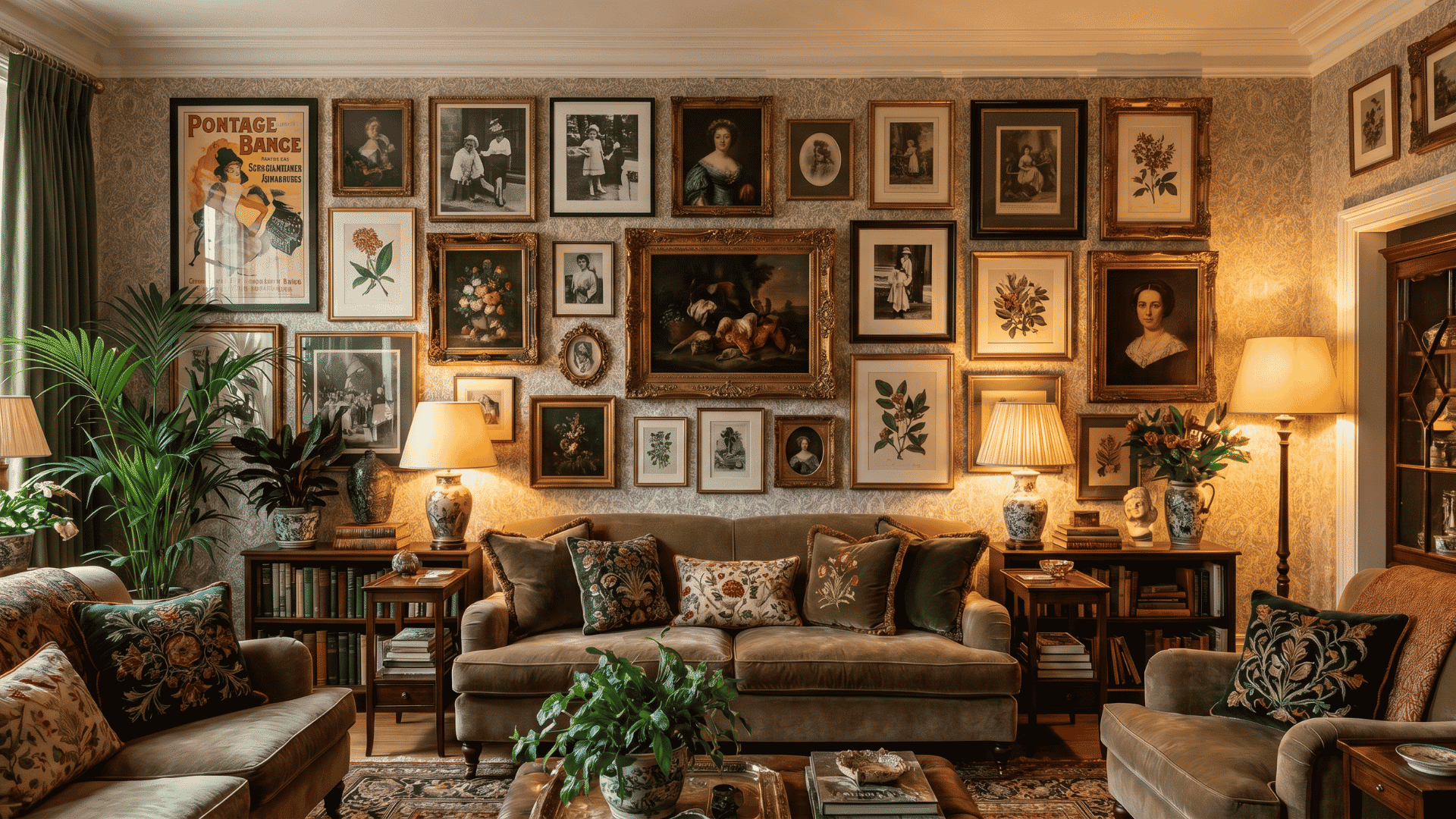
Gallery walls with framed art, photos, posters, and mixed frame styles add personality to empty walls.
Layered wall decor also helps maximalist interiors feel more expressive and detailed.
Using different artwork sizes and frame styles creates better contrast and visual interest.
Well-arranged gallery walls help fill larger spaces without making the room feel chaotic.
8. Style With Mirrors and Shelving
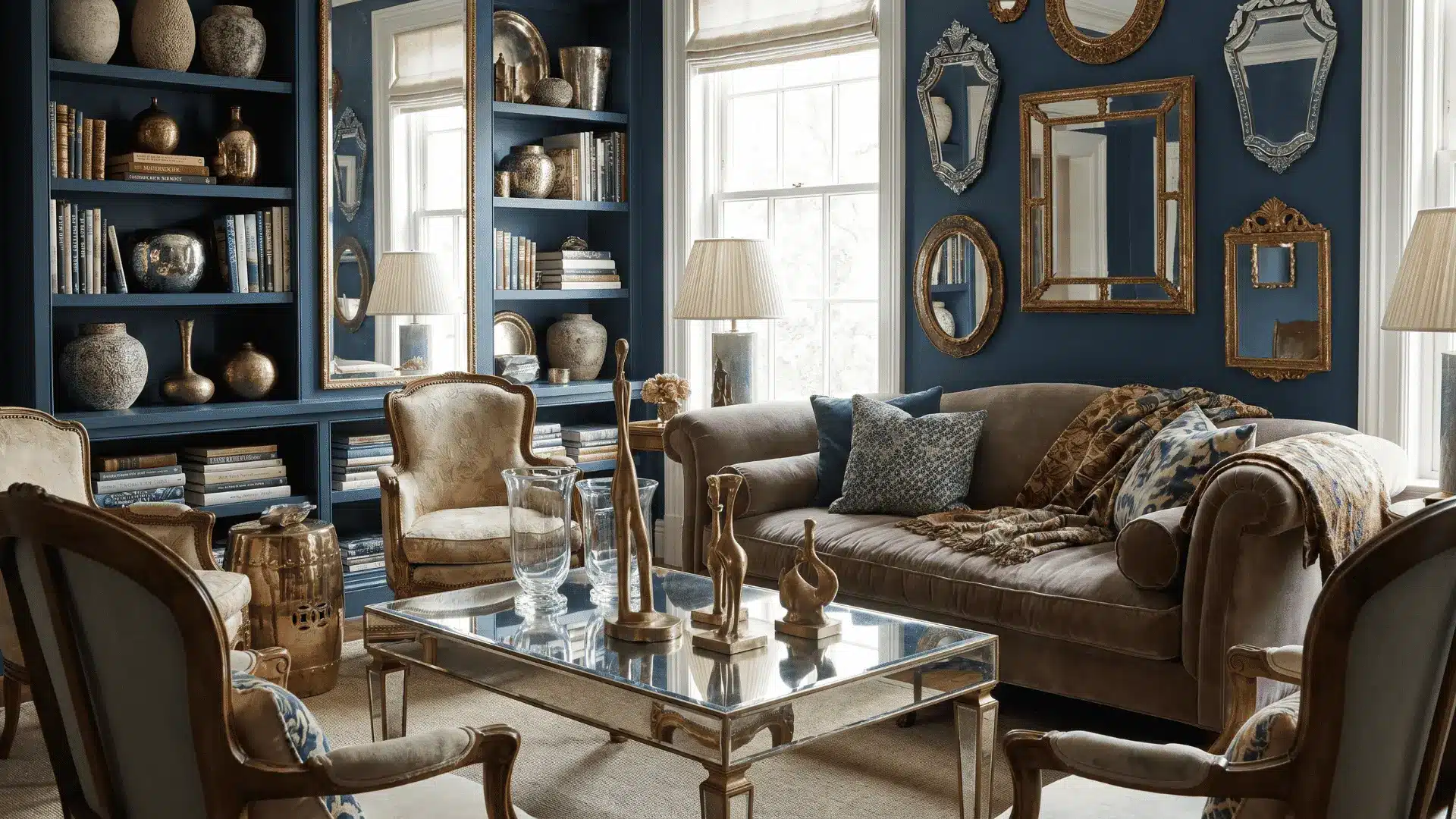
Decorative mirrors help reflect light and reduce heaviness in darker or heavily layered spaces. They also make maximalist rooms feel brighter, larger, and more visually open.
Shelves with books, plants, candles, and collected decor help organize decorative items neatly. This adds texture and personality while still keeping the room functional and balanced.
Small Space Tips for Maximalist Interior Design
Small rooms can still support maximalist design when the layout, color palette, and furniture choices are carefully planned.
Successful small-space maximalism focuses on layered details while keeping the room well organized and comfortable to move through.
| Tip | How It Helps |
|---|---|
| Use Vertical Space | Tall shelves, hanging decor, and wall-mounted lighting add layers without taking up floor space |
| Repeat a Clear Color Palette | Consistent colors across furniture, textiles, and artwork keep the room visually connected |
| Choose Multi-Functional Furniture | Storage ottomans, nesting tables, and benches reduce clutter while adding style |
| Prioritize Layout First | Clear pathways and proper spacing prevent the room from feeling cramped or overcrowded |
| Add Mirrors Strategically | Reflective surfaces open up tight spaces and reduce visual heaviness from heavy layering |
| Limit Floor-Level Decor | Keeping the floor clear while decorating walls and surfaces maintains a breathable layout |
Common Maximalist Design Mistakes to Avoid
Maximalist interiors look best when bold colors, patterns, and decor still feel visually balanced.
Without enough structure and repetition, layered spaces can start to feel crowded or overwhelming.
- Using Too Many Colors: Repeat a few key colors to keep the room balanced and connected.
- Overfilling the Room: Too much decor can make the space feel crowded and harder to enjoy.
- Ignoring Lighting: Layered lighting helps soften bold colors and highlight textures better.
- Mixing Patterns Randomly: Use patterns with shared colors or different sizes for better balance.
- Choosing Random Decor: Decor that reflects personal interests and collections makes the room feel more meaningful.
With the right balance, maximalist interiors can feel bold, stylish, and comfortable without looking overwhelming.
Conclusion
A well-designed maximalist room design creates spaces that feel expressive, comfortable, and visually connected without becoming overwhelming.
The key is balancing bold colors, layered textures, statement furniture, and decorative details through repetition, scale variation, and intentional styling.
Instead of following strict design rules, maximalism gives more freedom to combine personal collections, vintage finds, artwork, and rich materials in a way that feels natural and lived-in.
Which maximalist design idea would you try first in your home? Share your thoughts in the comments below.
Frequently Asked Questions
Which Flooring Works Best in Maximalist Rooms?
Wood flooring, patterned rugs, vintage carpets, and textured flooring work especially well because they add warmth and visual depth.
How do You Keep Maximalist Interiors Organized?
Using repeated colors, clear layouts, storage furniture, and intentional decor placement helps maximalist spaces feel stylish instead of cluttered.
Can Maximalist Design Work in Small Apartments?
Yes, small apartments can still use maximalist design through vertical storage, layered decor, mirrors, and repeated color palettes without making the space feel crowded.