
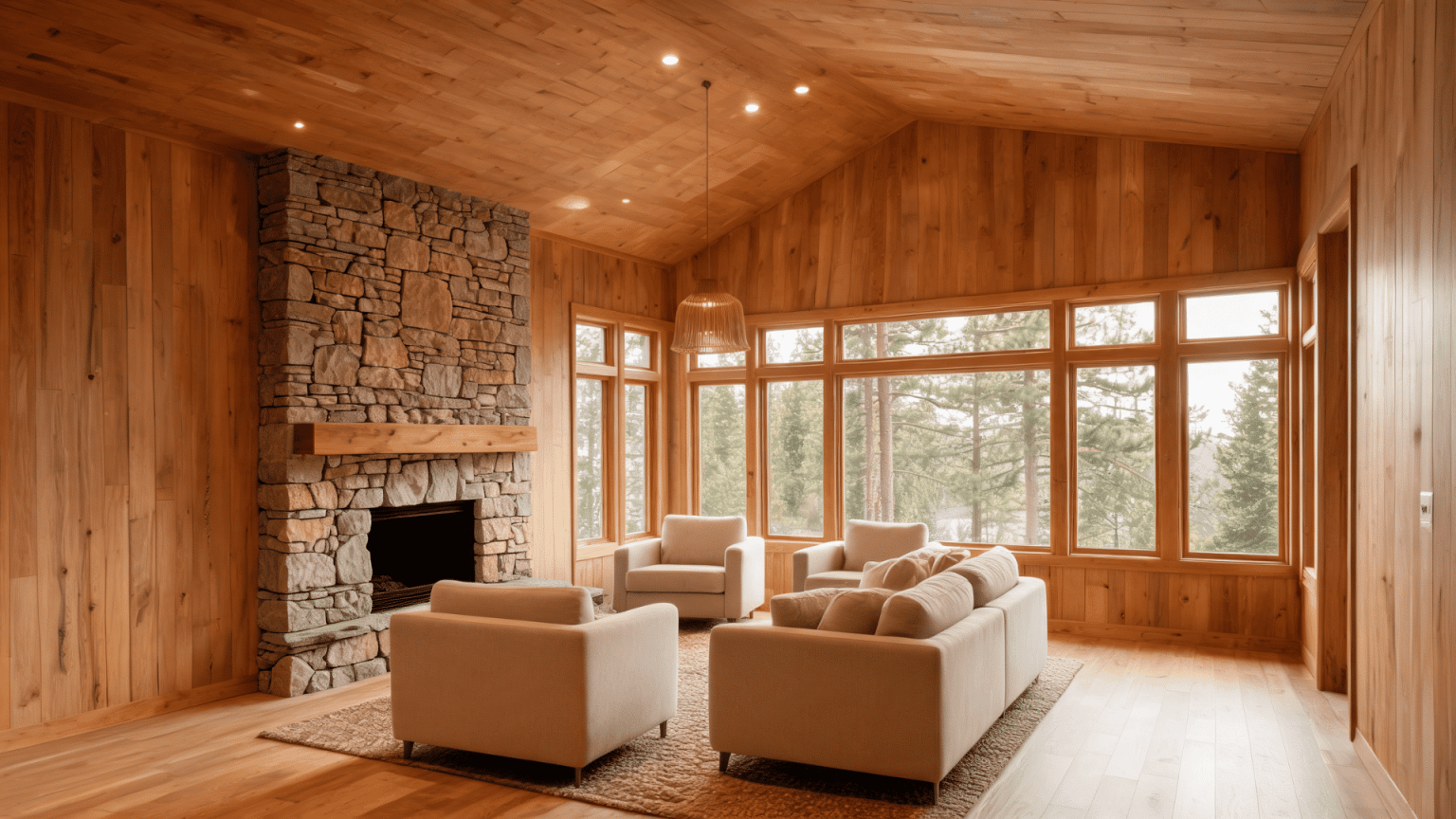
Cabin interiors are often seen as just rustic wooden spaces, but that’s not the full idea. It’s really about making a space feel calm, simple, and comfortable using natural materials and light.
Cabin interior design uses easy layouts and warm textures to create a relaxed feel. It focuses more on comfort and flow than on a specific style or look.
It is not only for remote cabins. The same idea can be used in modern homes too, as long as the space feels simple, natural, and easy to live in.
Cabin interiors also bring nature inside through natural light, raw textures, and earthy tones.
What is Cabin Interior?
Cabin interior design is the use of natural materials, simple layouts, and warm textures. It creates a calm and comfortable environment that feels close to nature.
It is not only a rustic style. It can also be used in modern or vacation homes, as long as the focus is on comfort, simplicity, and a relaxed feel.
Inside a cabin interior, you usually find wood or stone surfaces, a central fireplace or stove, soft fabrics, and a layout that supports easy movement and comfort.
Core Design Ideas in Cabin Interiors
Core design ideas in cabin interiors focus on natural materials, simple layouts, and warm textures. They create a calm, grounded space with a strong connection to nature.
These ideas help balance comfort and functionality without making the space feel heavy or overdesigned. Every element works together to keep the interior natural, relaxed, and easy to live in.
1. Stone Fireplace as The Main Focal Point
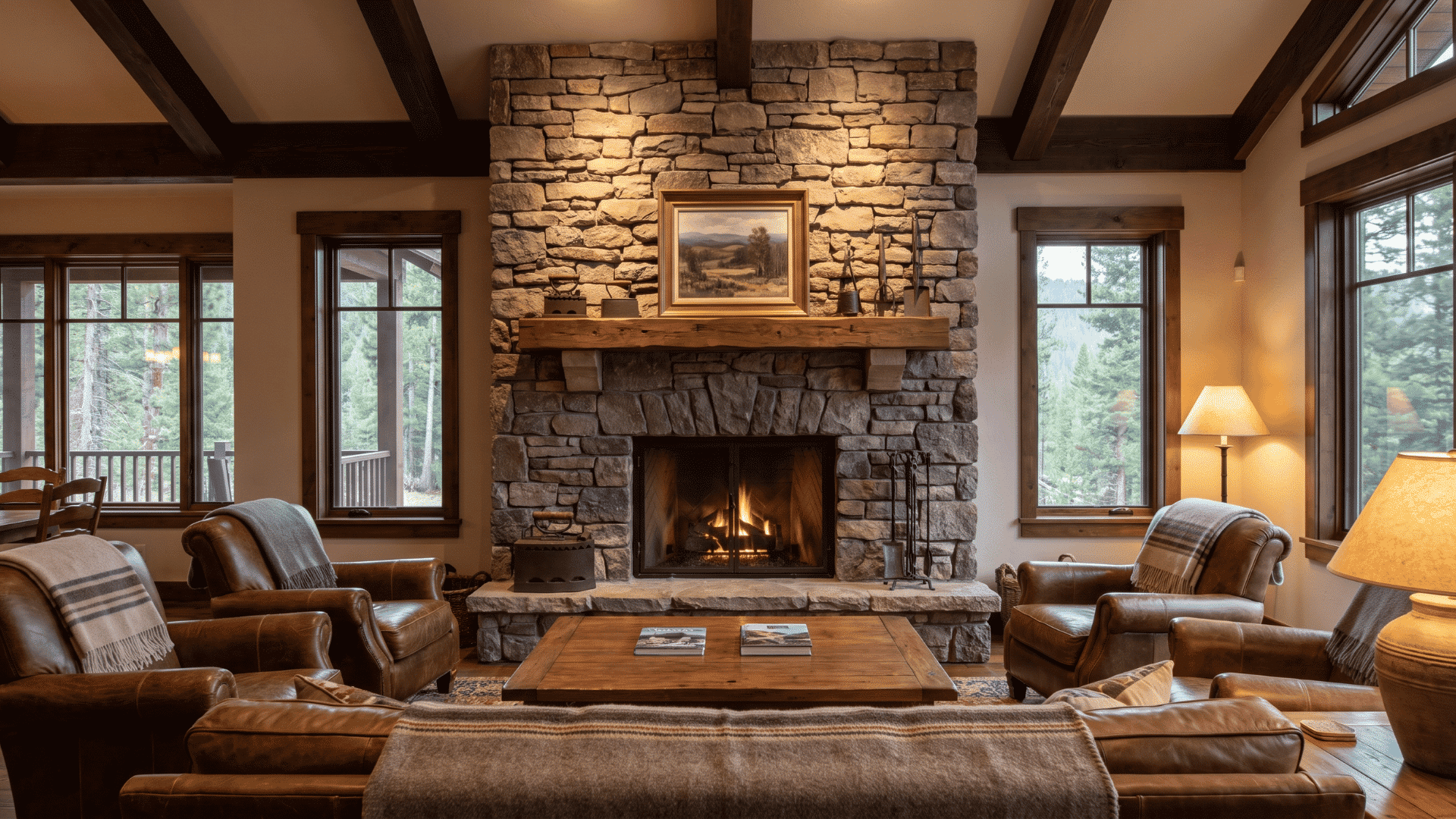
A stone fireplace serves as the focal point of a room. It anchors the layout and guides the arrangement of furniture and seating around it.
A stone hearth or wood-burning stove gives weight and balance to the space. It is often mistaken as secondary décor, but it plays a central structural and visual role.
2. Open Floor Layout for Better Flow
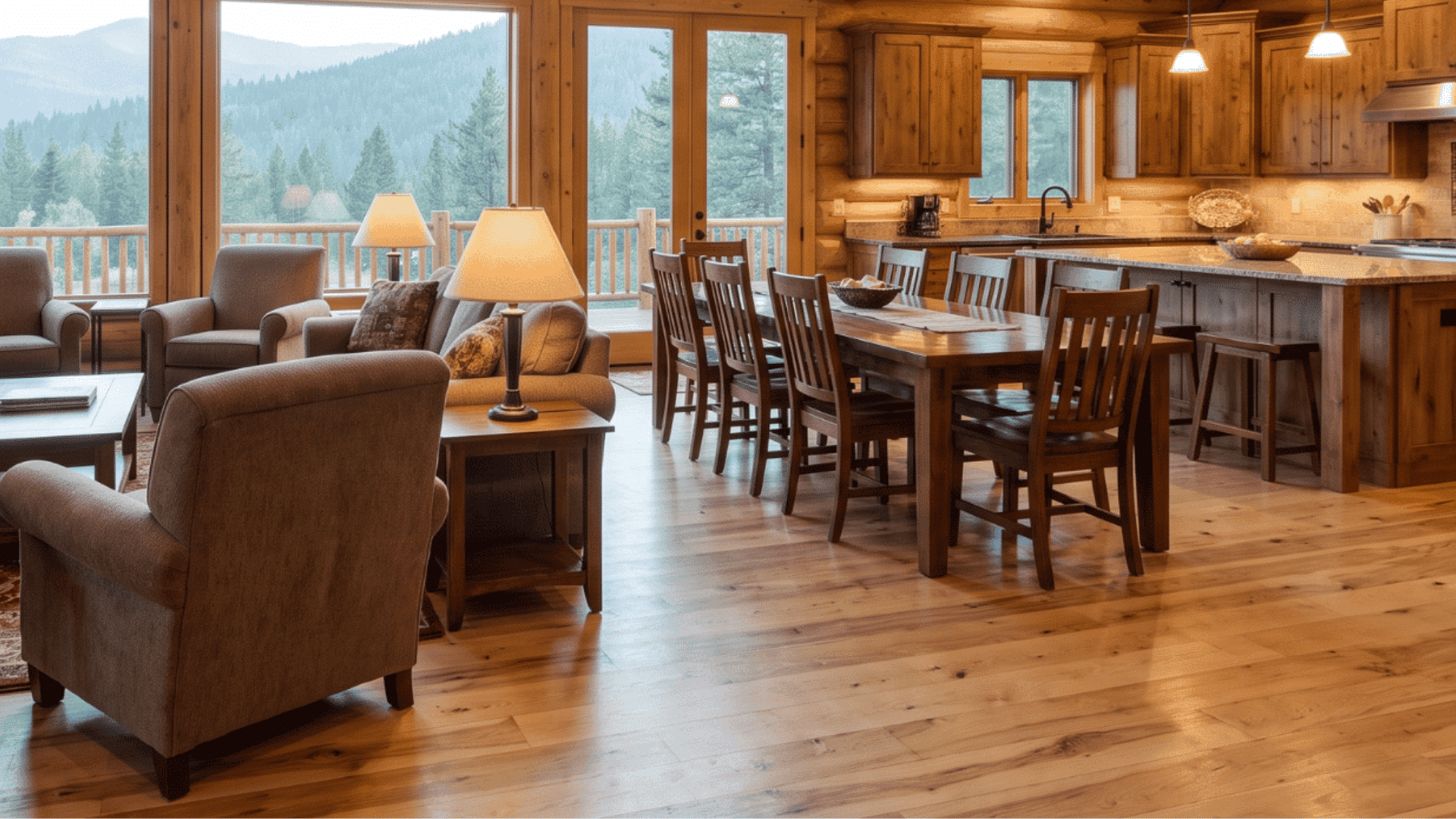
An open floor layout improves movement and creates a clear sense of space. It allows rooms to connect smoothly and supports an easy, natural flow in daily use.
Open-plan cabin design often feels more spacious while maintaining unobstructed sightlines. It is sometimes seen as less cozy, but it can still feel warm when arranged with thoughtful zones and materials.
3. Floor-To-Ceiling Windows for Natural Light
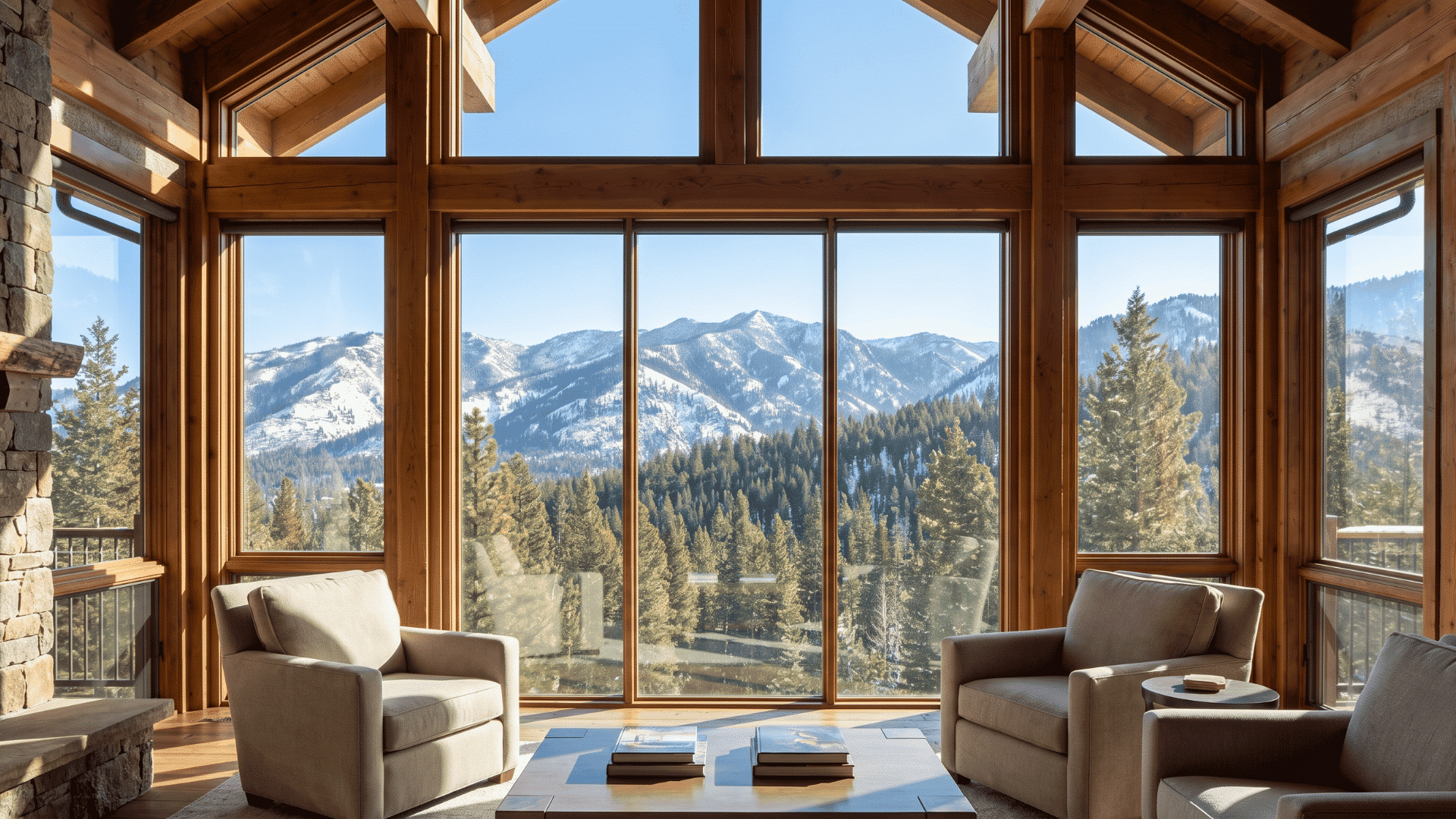
Floor-to-ceiling windows bring in natural light and connect indoor spaces with the outdoors. Large glass panels help frame mountain views and create a clear visual link with nature.
These windows are often thought to make a room feel cold. In reality, they can feel balanced and warm when paired with natural materials and soft interior finishes.
4. Layered Warm Lighting Setup
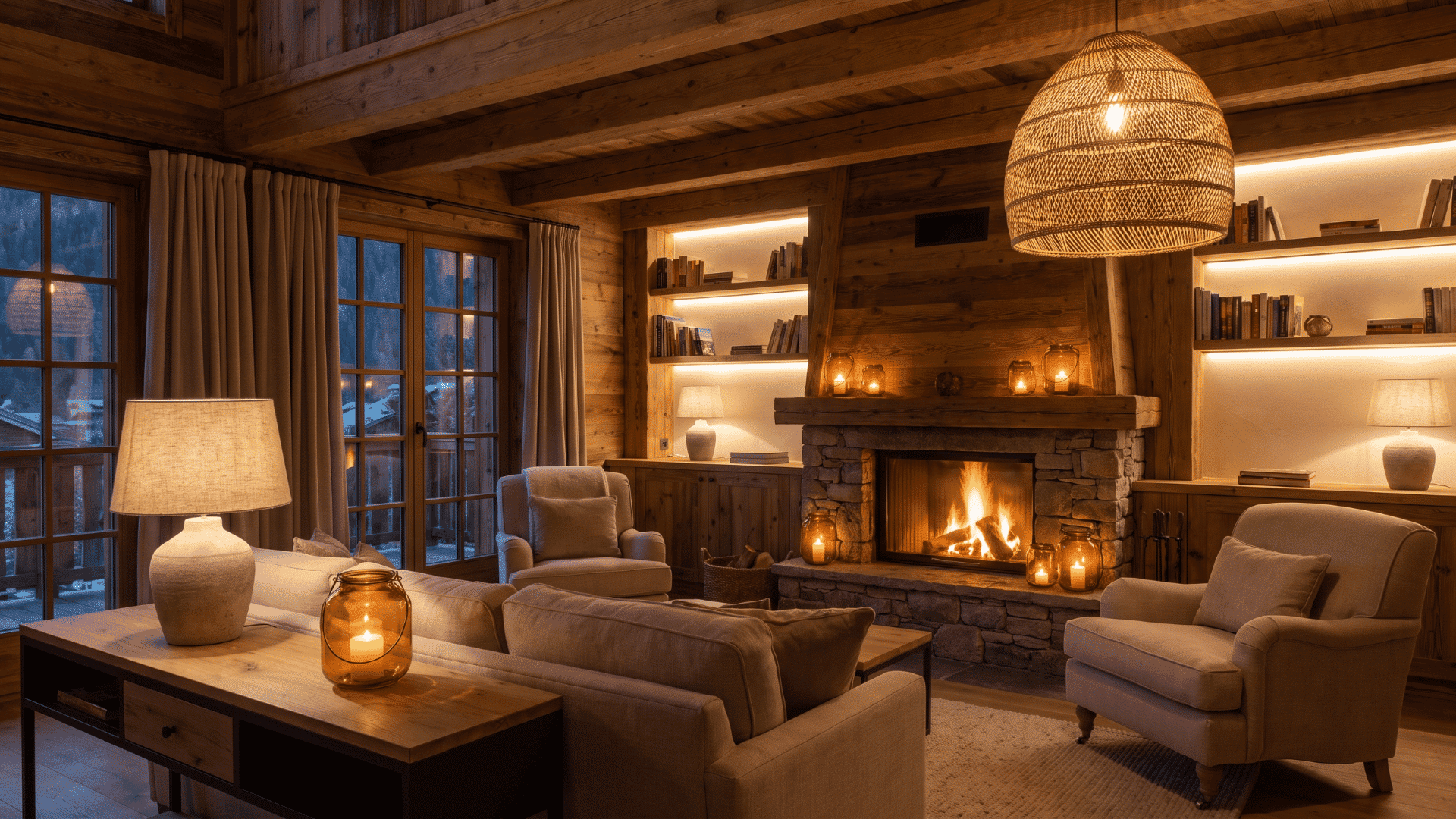
A layered warm lighting setup helps shape the mood through multiple light levels. Ambient lamps, lantern lights, and string lights work together to create depth and comfort in a room.
Relying on a single light source often leaves spaces flat and uneven. Layered lighting spreads brightness gently and makes different areas feel more usable and inviting.
5. Leather Sofas for Rustic Contrast
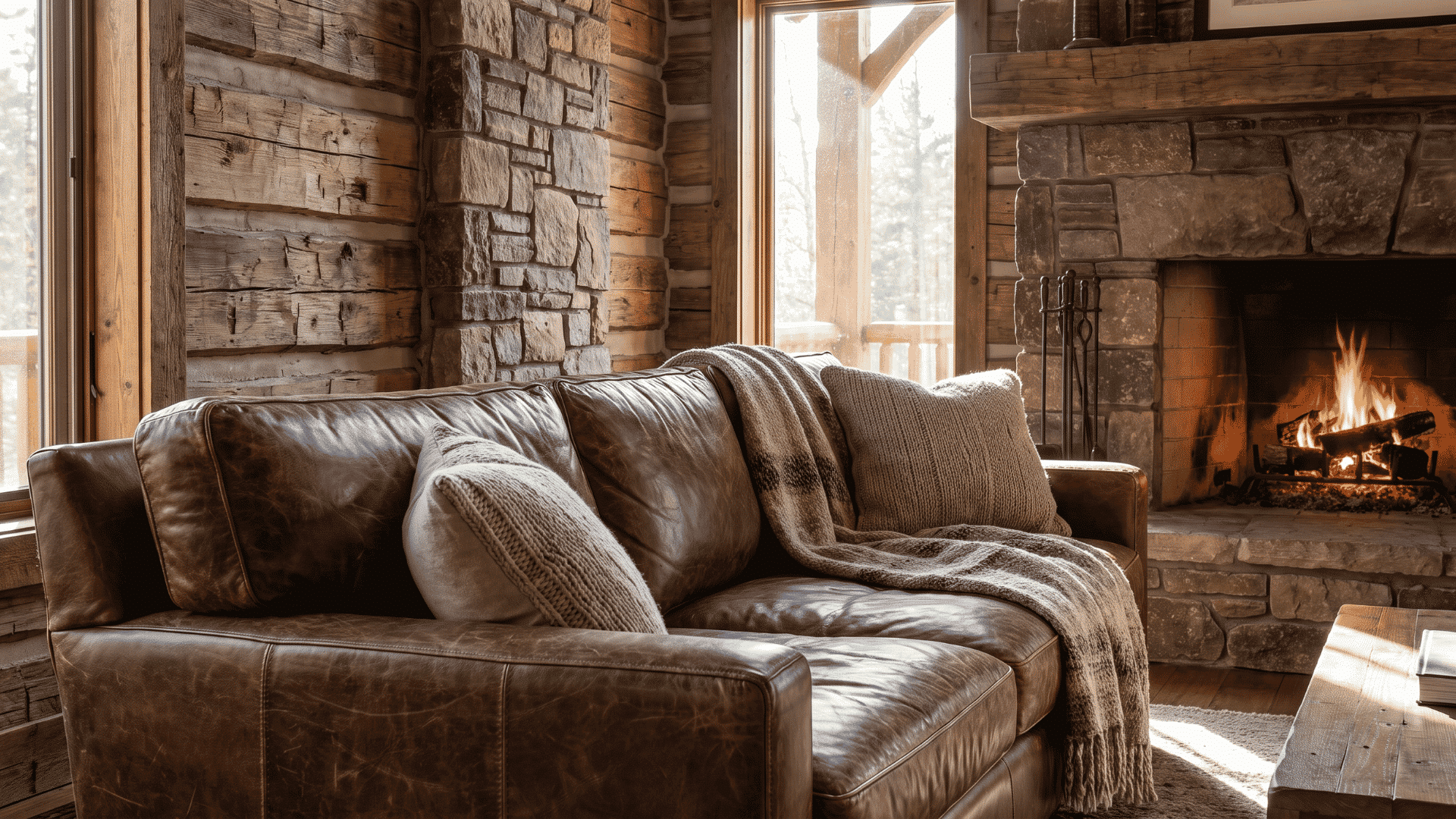
Leather sofas add strong texture and long-lasting durability to rustic interiors. Leather seating brings contrast against wood and stone, helping balance soft and hard surfaces in the room.
Some people think leather feels too heavy for cabin spaces. In practice, it blends well with natural materials and softens over time, fitting comfortably into rustic settings.
6. Earth-Tone Color Palette
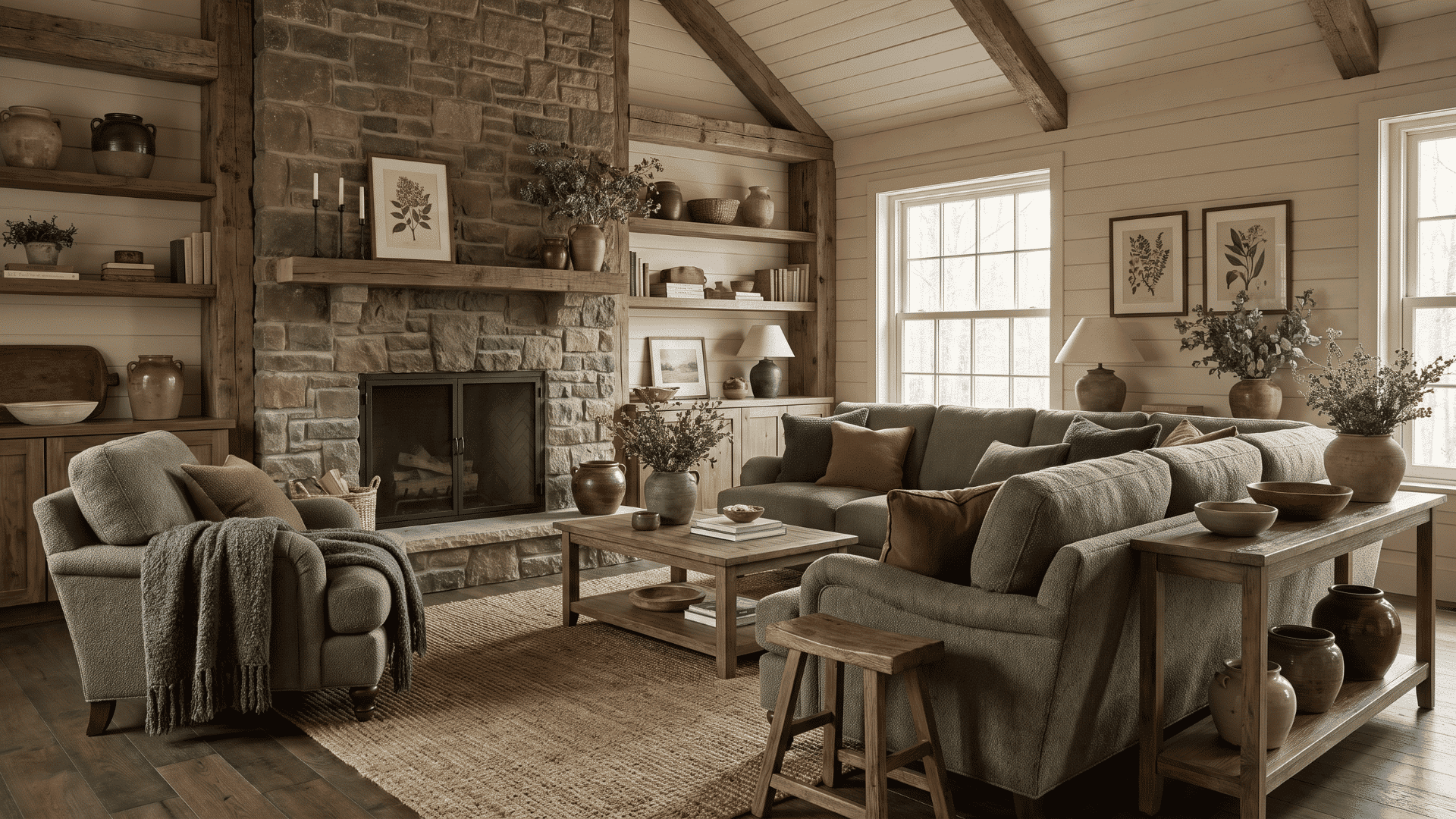
An earth-tone color palette keeps the space visually balanced and grounded. Browns, greens, beige, and greys work together to create a calm and steady interior base.
Dark tones are often thought to make rooms feel smaller. In reality, when used with natural light and lighter accents, they can add depth without reducing openness.
7. Built-In Wooden Storage
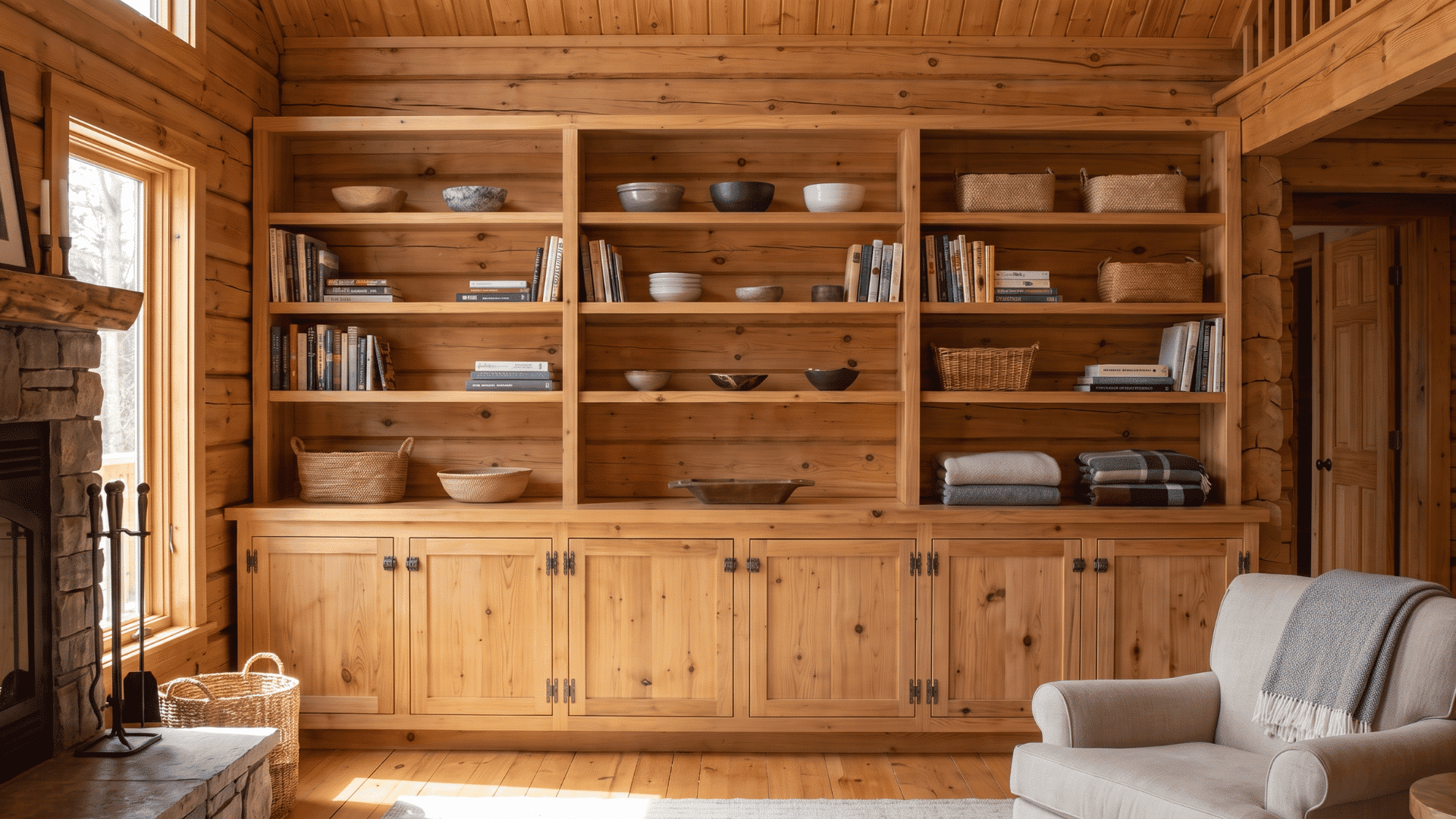
Built-in wooden storage helps keep interiors organized and clutter-free. Built-in shelves and cabinetry use space efficiently while maintaining a clean and natural look.
Storage is often thought to be best when fully hidden. In reality, visible built-ins can also add character while keeping everyday items easy to access and neatly arranged.
8. Indoor Plants for Natural Softness
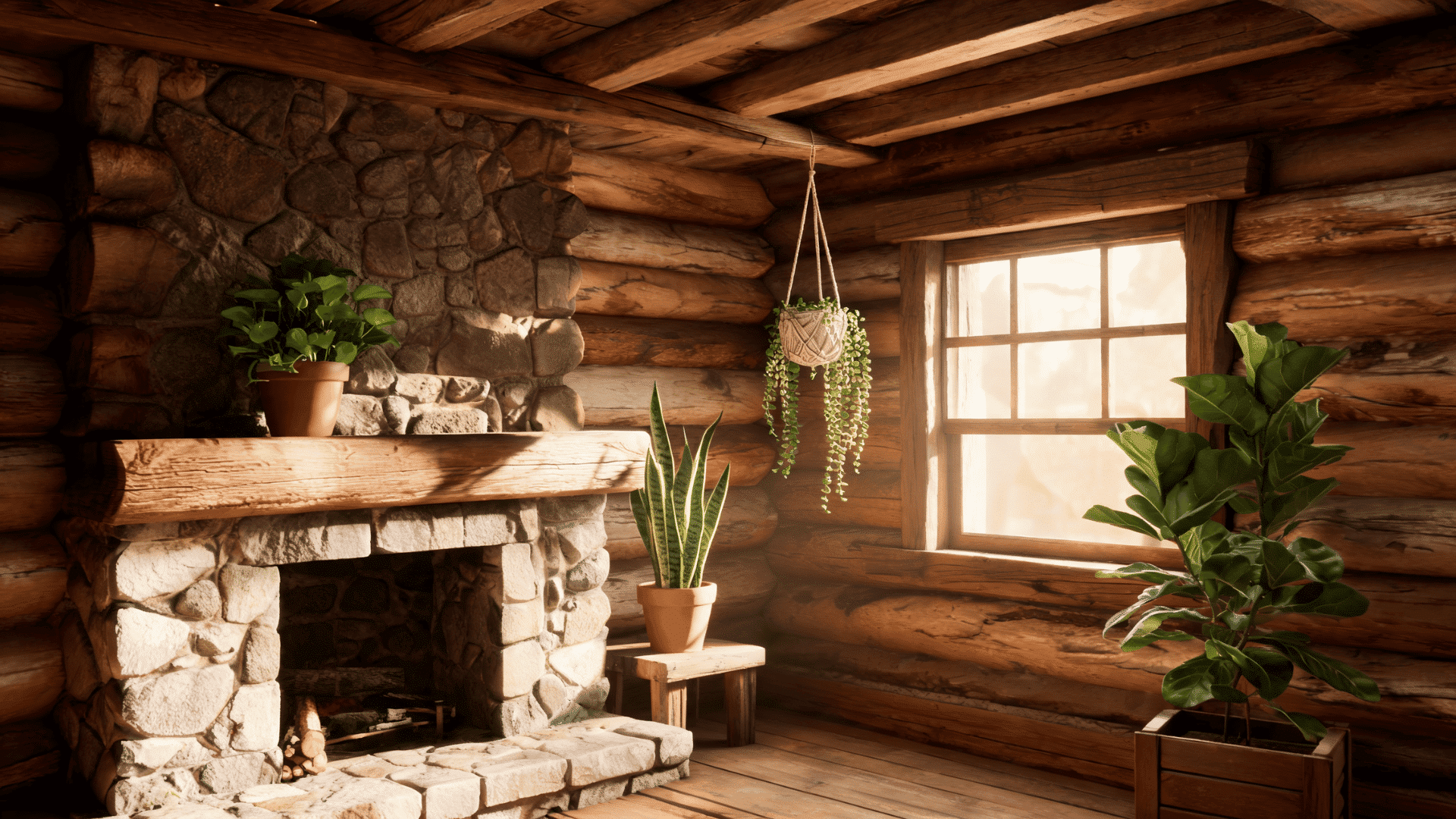
Indoor plants add living contrast to rustic interiors. Biophilic elements soften strong materials like wood and stone while bringing a fresh, natural presence into the space.
Plants are sometimes seen as a mismatch in rustic settings. In reality, they blend well with earthy tones and enhance the natural feel already present in the design.
9. Mixed Wood Tones for Depth
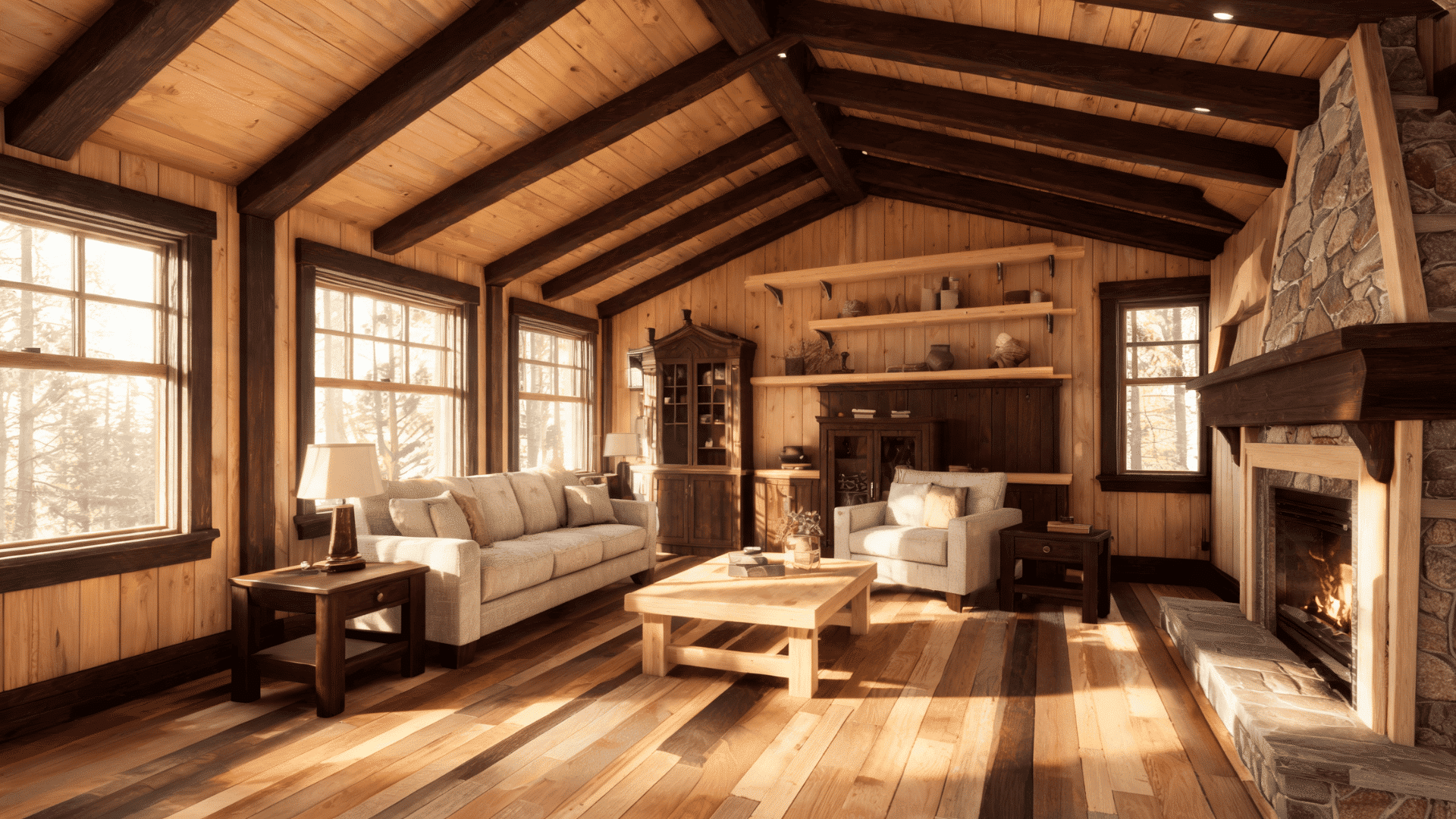
Mixed wood tones add depth and visual variety to rustic interiors. Light and dark wood combinations create layers that prevent the space from feeling flat or repetitive.
It is often assumed that all wood should match for consistency. In reality, blending different tones brings more character and a natural, lived-in feel to the design.
10. Soft Rugs for Zoning Spaces
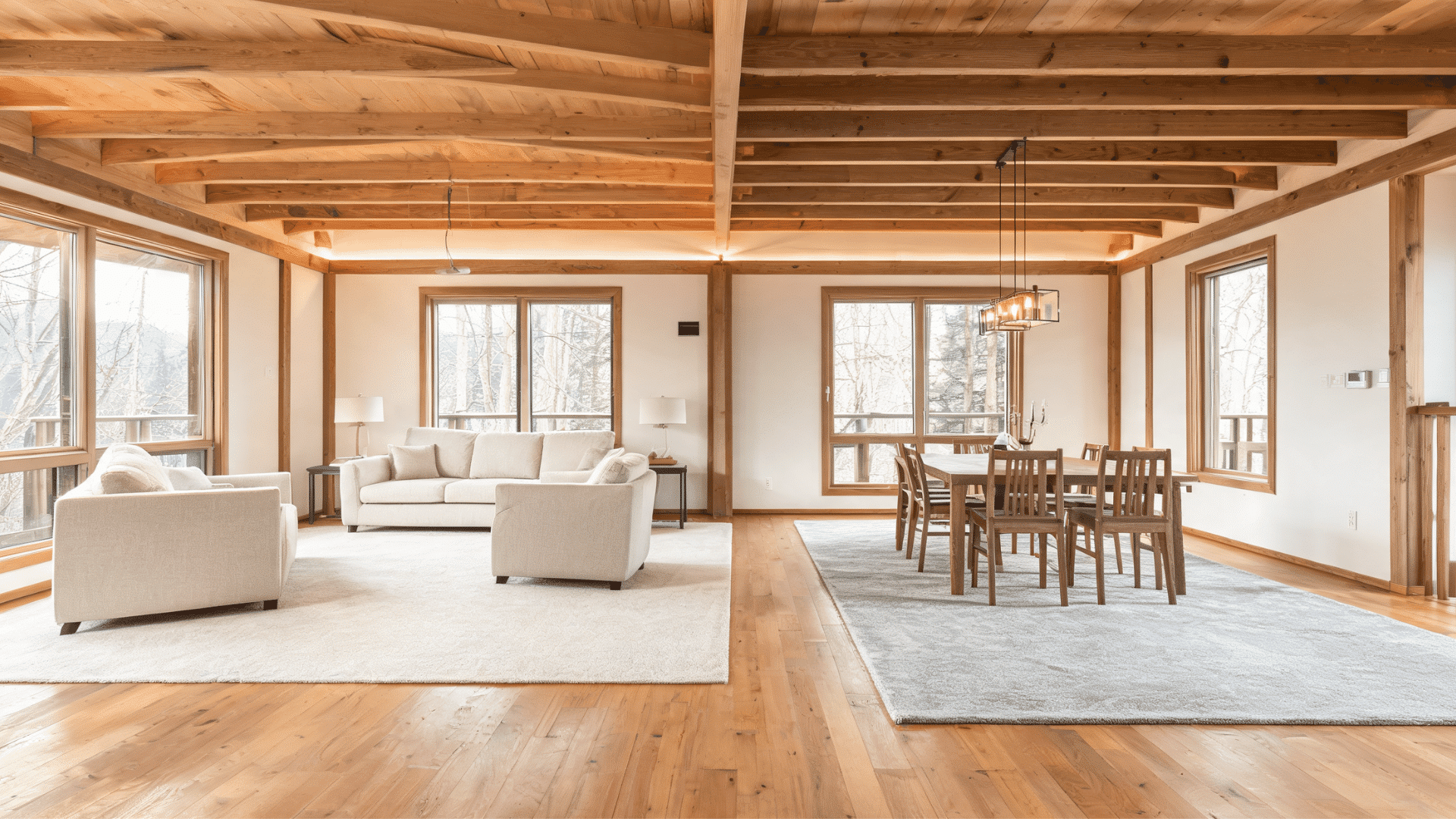
Soft rugs help define separate areas within open interiors. Textured rugs create visual boundaries for seating, dining, or walking zones without the need for walls or partitions.
Rugs are often seen as purely decorative items. In reality, they play a functional role by organizing space and improving comfort underfoot in different areas.
11. High Ceilings for A Spacious Feel
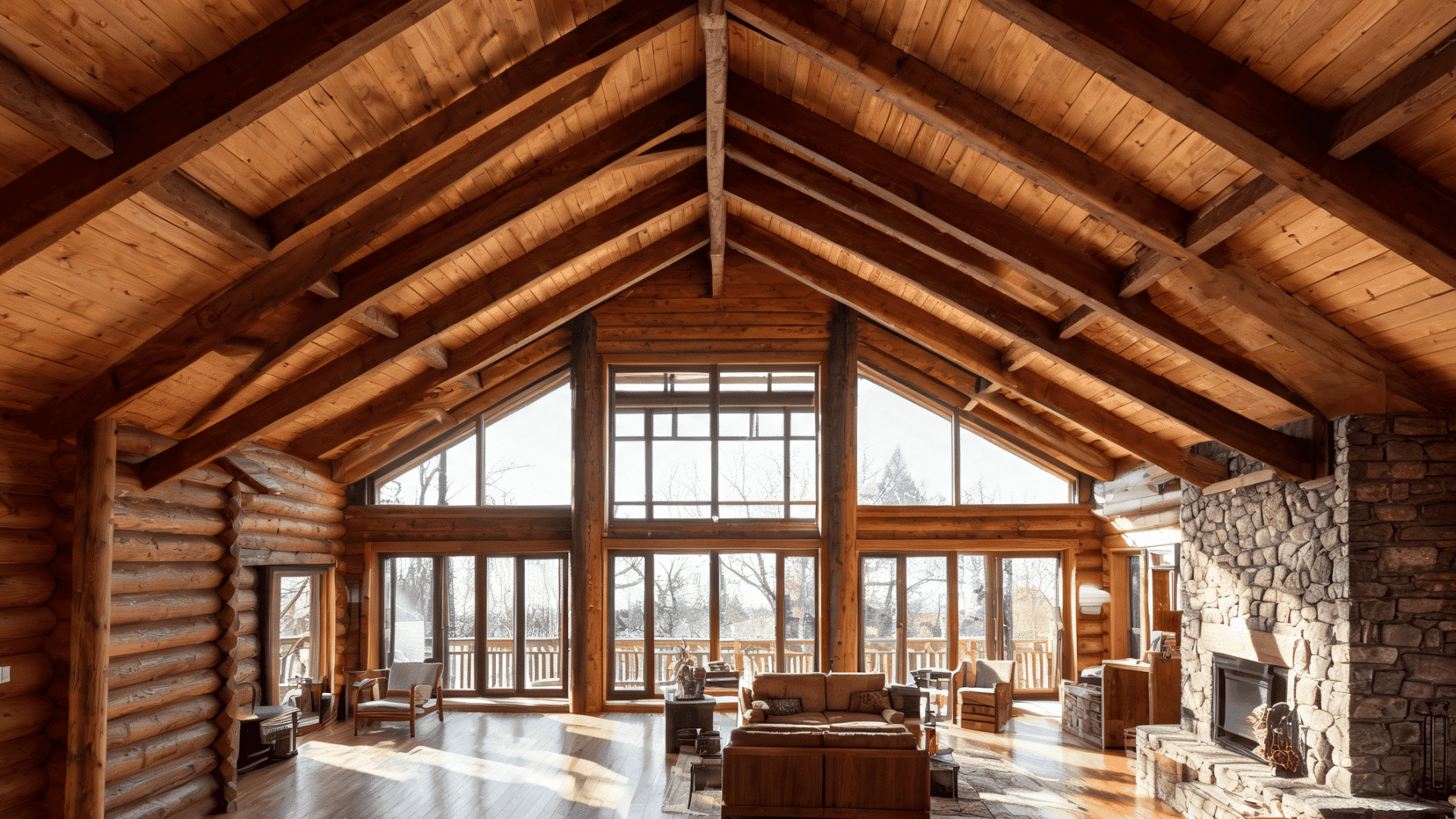
High ceilings increase the sense of openness in cabin interiors. Vaulted cabin ceilings allow more air and light, making the room feel larger and more balanced.
Low ceilings are often thought to feel more cozy. In reality, height can also create a sense of comfort when paired with warm materials and well-placed lighting.
12. Rustic-Modern Furniture Mix
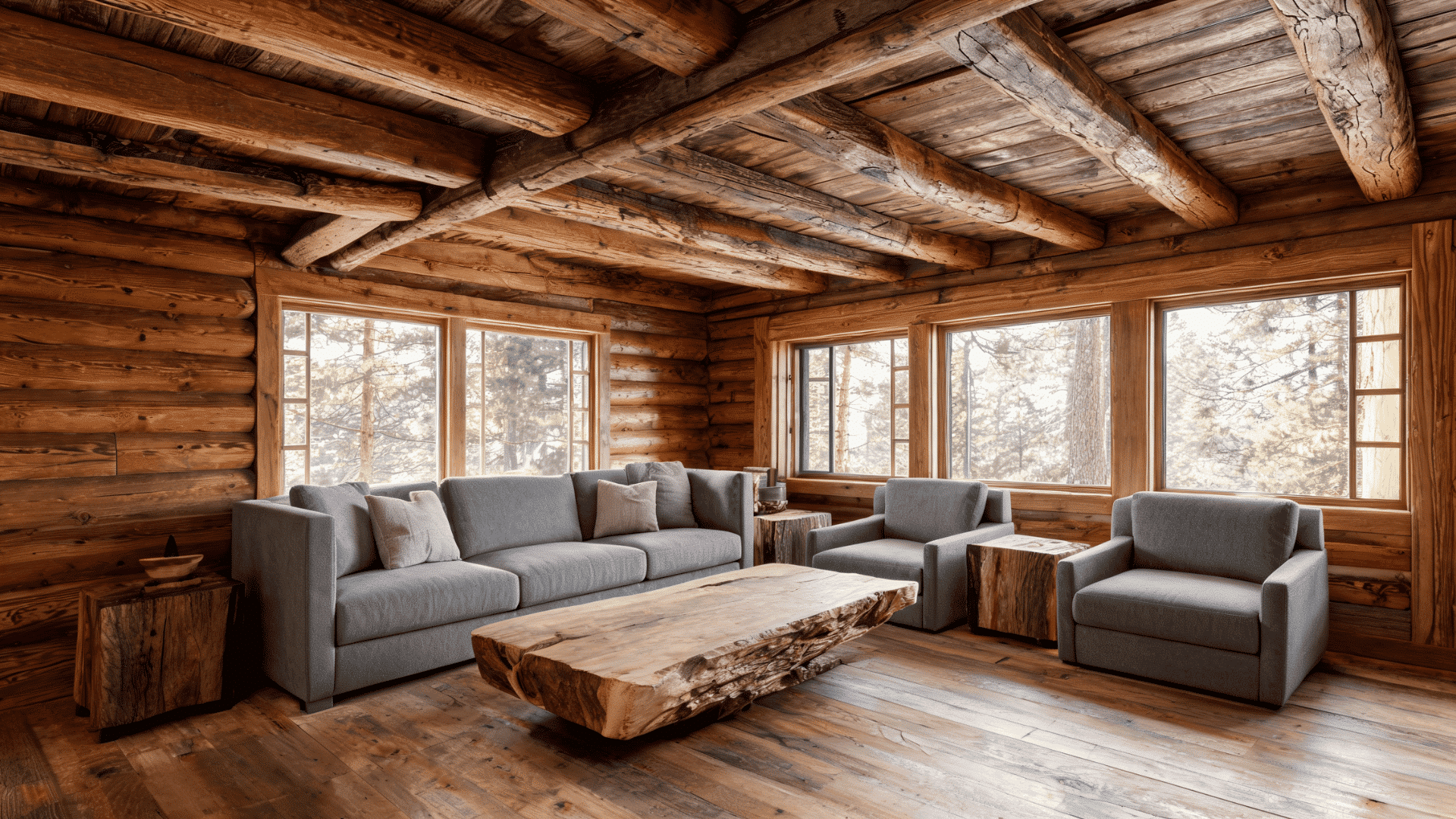
A rustic-modern furniture mix balances traditional and contemporary elements. Modern seating paired with rustic wood creates contrast while keeping the space visually steady and grounded.
It is often assumed that styles must stay uniform for harmony. In reality, combining different styles can add depth and make interiors feel more dynamic and lived-in.
13. Accent Wall in Natural Wood
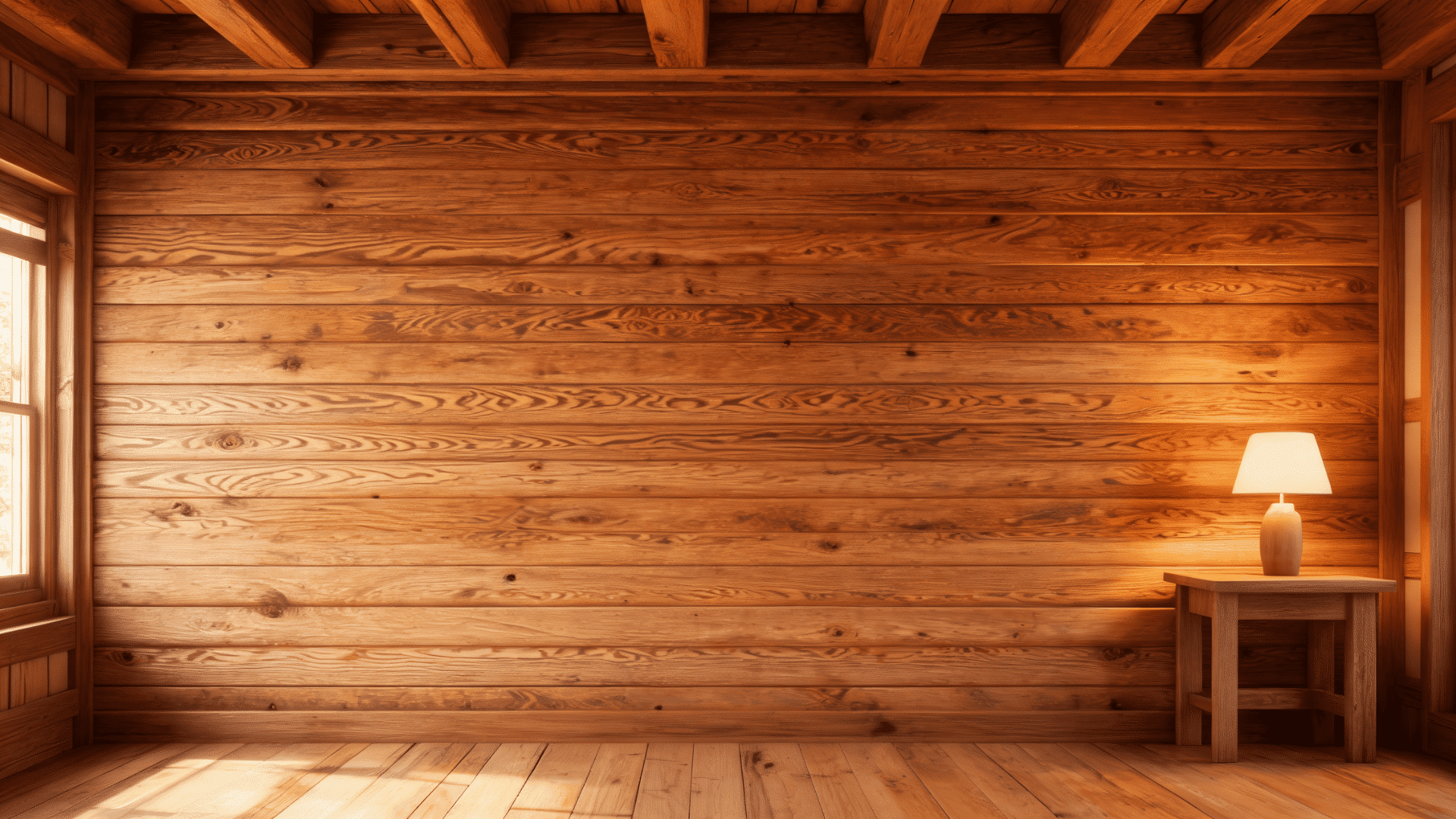
An accent wall in natural wood creates a strong visual focus in the room. A feature wood wall highlights texture and grain, making it a natural centerpiece without overpowering the space.
Accent walls are often thought to be outdated. In reality, when done with natural materials like wood, they still add depth and structure to modern rustic interiors.
14. Built-In Window Seating for Natural Viewing Corners
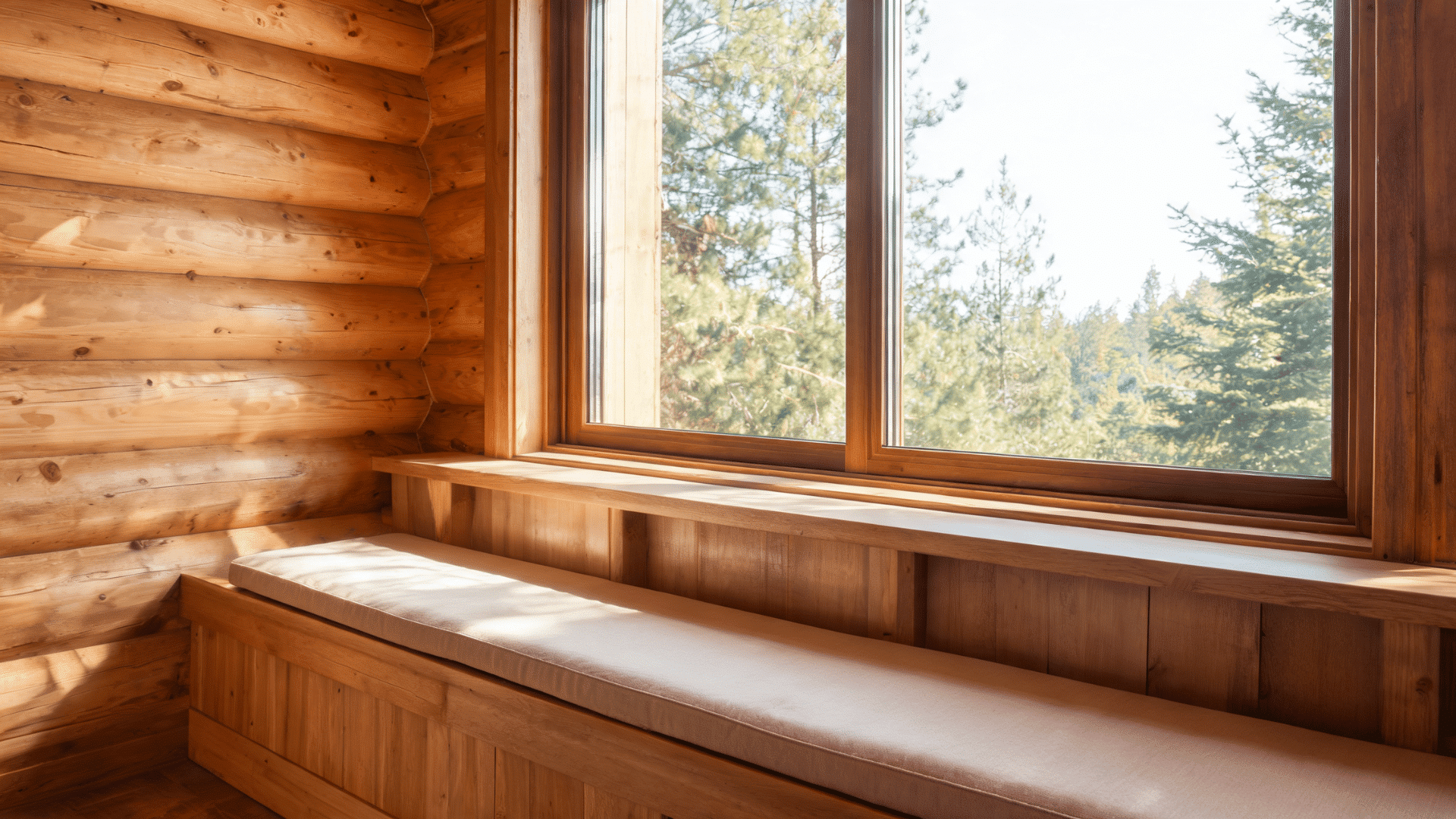
Built-in window seating adds fixed, comfortable spots for natural viewing. Cabin window seats and wooden benches turn unused space into calm reading corners filled with light and outdoor views.
These seats improve function and space use. Fixed benches can work better than movable furniture in compact cabin layouts.
15. Warm-Toned Kitchen Integration
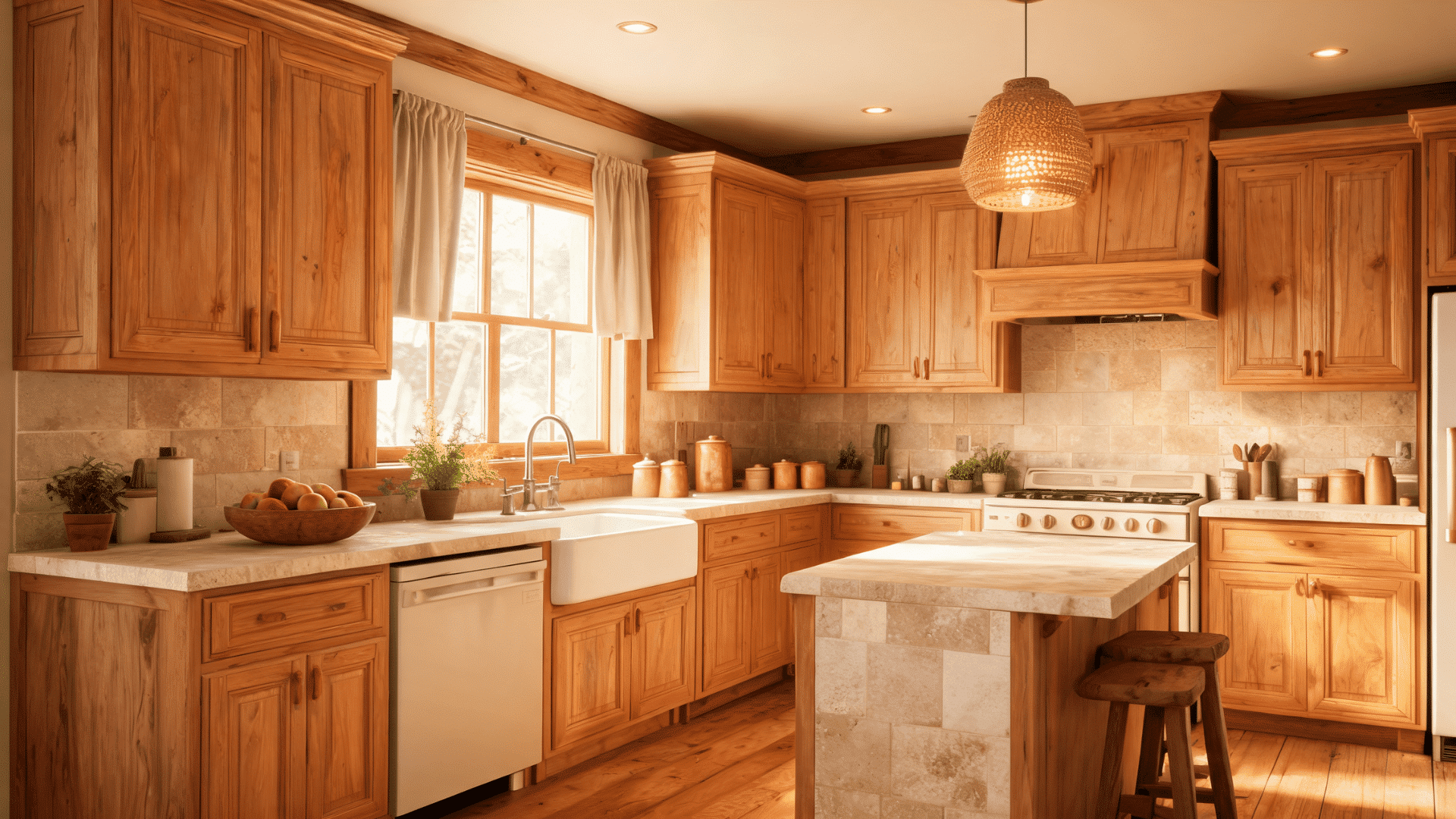
Warm-toned kitchen integration extends the cabin style into the cooking area. Wooden cabinetry and stone counters maintain the same natural material flow as the rest of the space.
The kitchen is often seen as separate from the cabin theme. In reality, aligning its materials and tones with the main interior creates a more unified and balanced design.
Final Thoughts
Cabin interior design brings together materials, light, and layout to create spaces that feel steady and grounded. It is shaped by how each element supports daily living, from furniture placement to the use of natural light.
The focus remains on comfort through structure, where every detail works together rather than standing alone. Instead of following fixed rules, it adapts to lifestyle needs while staying close to natural living principles.
Overall, cabin interior works best when simplicity guides decisions and every element supports ease of use.
Share your thoughts in the comments on your favorite cabin interior idea.
Frequently Asked Questions
Is Cabin Interior Design Expensive to Achieve?
Cabin interior design can be expensive depending on materials and finishes, but budget-friendly rustic styles can also achieve a cozy look affordably.
Can Cabin Interior Design Work in Small Apartments?
Yes, It Works Well in Small Spaces. the Focus on Simple Layouts, Soft Lighting, and Natural Materials Can Actually Make Compact Homes Feel More Open and Comfortable.
How Do You Maintain a Cabin-Style Interior?
Maintenance is simple. Regular cleaning of wood surfaces, protecting natural materials, and avoiding heavy clutter helps keep the space balanced and fresh.