
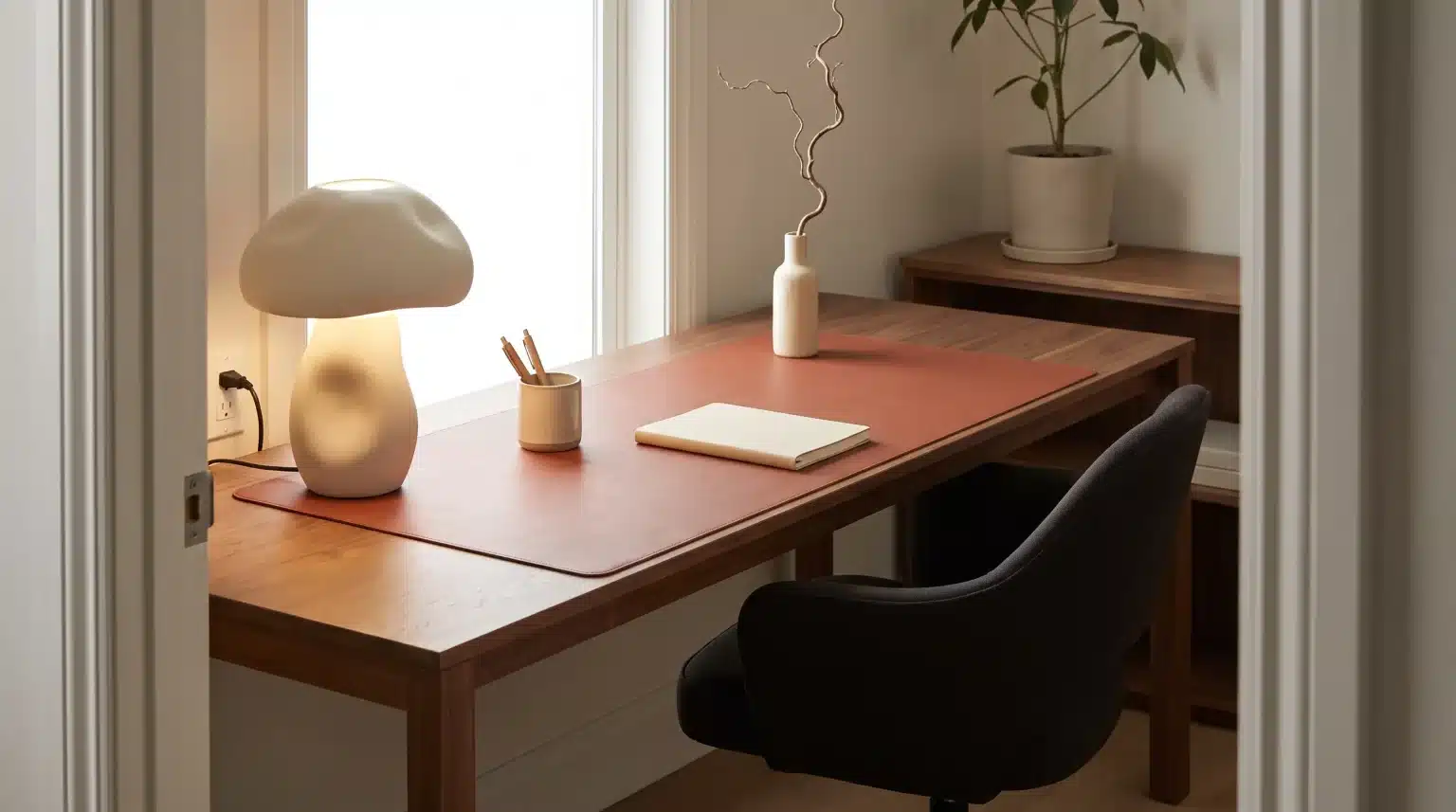
Stand in the doorway of your home office and let your eyes go slightly out of focus. The pens disappear. So do the charging cable, paper clips and yesterday’s coffee cup. What remains is the outline: desk, chair, screen, lamp and the blocks of color between them.
That blurred view tells you more about the room than a close inspection of its accessories. A strong outfit reads from across the street before anyone notices the stitching. A well-styled desk behaves in much the same way. Its shape looks deliberate first; the smaller details reward a closer look.
Fashion offers a useful system for designing that scene. Begin with the silhouette, add a base layer, give the practical pieces somewhere to live, then choose a single point of emphasis. The process brings order to a home office without sanding away its personality.
Find the Silhouette Before Shopping
Clear the desktop and look at its bare geometry. A long rectangular desk already creates a firm horizontal line. A round-edged chair softens it. Shelves add vertical rhythm, while a monitor can become a heavy dark square if it sits too high or too close to the wall.
Arrange those large shapes before bringing back the small objects. Centering everything can leave the desk stiff and showroom-like. Try shifting the screen slightly toward the side used for focused computer work, then balance it with a lamp or a short stack of books at the opposite end. Leave a visible stretch of empty surface between the two. That gap gives the composition room to breathe and provides somewhere to open a notebook.
Check the outline from the doorway again. If the chair, screen and shelving appear to be competing for height, lower one element. A screen riser, wall shelf and tall lamp need separate levels, much like a jacket, shirt and necklace need separate lines.
Choose the Base Layer
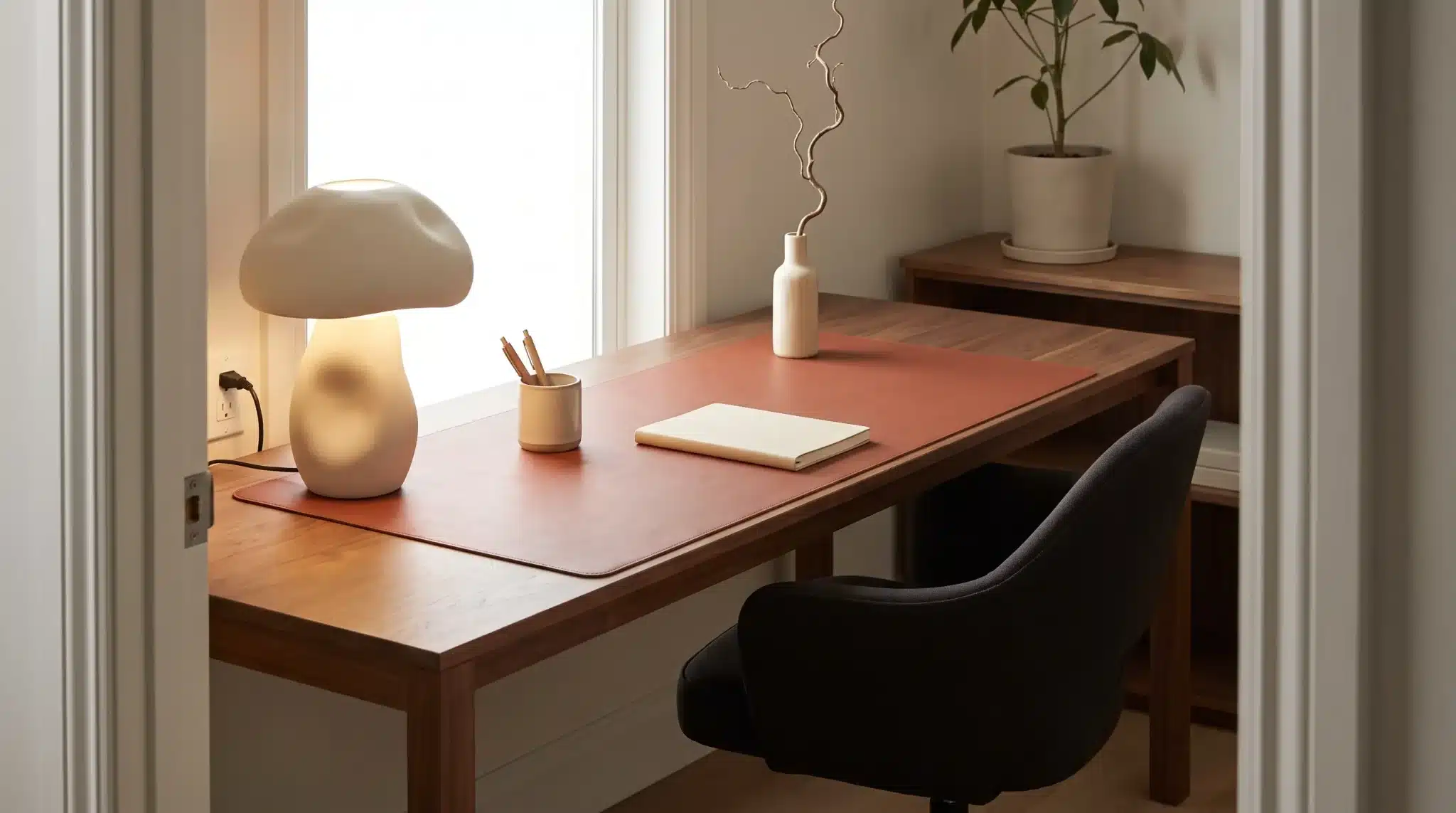
On a desk, desk mats act as the base layer. They create a field around the keyboard, mouse and notebook, turning several loose objects into one visual unit. The edge of the mat also gives the eye a clear boundary between active work and the decorative parts of the desk.
Size changes the effect. A broad mat produces a calm, architectural block of color. A smaller one feels more like a sharp accessory. Let the keyboard and mouse sit fully inside the chosen area, with enough depth for comfortable movement. A mat that catches the mouse or stops halfway beneath the keyboard will look accidental and feel irritating by the afternoon.
Color can connect the desk to the room. Pick up a tone from the chair, rug or artwork, or use a controlled contrast against the desktop. Black screens and white paper already count toward the palette. Including them in the decision prevents an attractive sample from becoming one color too many once the desk is in use.
Give the Working Tools Pockets
Good tailoring hides a surprising amount of engineering in seams, linings and pockets. The desktop needs the same quiet support. A pen cup, shallow tray and small divided caddy can hold the working equipment without scattering it across the composition.
Choose desk organisers according to the sequence of your day. One section can hold the pen and highlighter used while planning. Another can take clips, sticky notes or earbuds during calls. A longer compartment can keep a ruler or charging lead from cutting diagonally across the surface. Grouping by task is easier to maintain than arranging every item by color or size.
Keep the containers lower than the bottom edge of the screen where possible. The screen then retains a clean outline, and the tools remain visible from the chair. Reserve the tallest holder for a few pieces that genuinely need vertical storage. Twelve pens create a thicket; two reliable pens and a pencil create a choice.
Name Three Tones
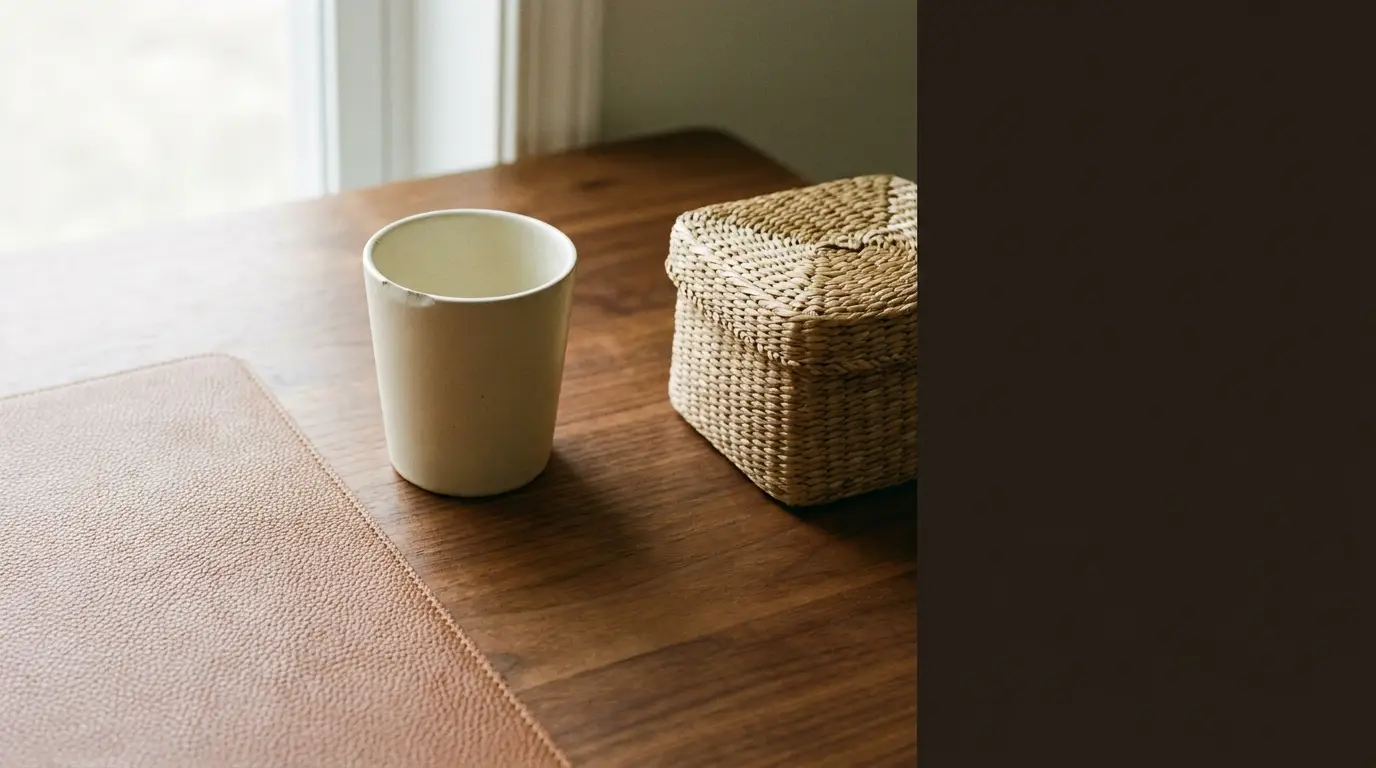
Say the palette aloud in three words: walnut, black, rust; white, chrome, cobalt; oak, cream, green. Naming the tones exposes any object that has wandered in from another visual story. It also makes future purchases easier because the room already has an answer.
Texture keeps a limited palette from feeling flat. Pair a smooth desk surface with a grained mat, a matte ceramic cup or a woven box on the shelf. Repeating a material once is usually enough. A brass lamp might find its echo in a small clip or picture frame, while timber can reappear in the chair arms.
Paper deserves attention here. Bright folders, branded notebooks and packaging can break the palette within minutes. Keep the current project visible and give the rest a closed file, drawer or magazine holder. The desk remains recognizably yours, without resembling the stationery aisle at the end of a busy day.
Choose One Statement Piece
Every outfit benefits from a focal point. At the desk, that role might belong to a sculptural lamp, a framed print leaning against the wall, a vintage clock or an unusually shaped vase. Select the piece with the strongest form and let nearby objects support it.
Give the focal point some air. A photograph pressed against a lamp, plant and stack of notebooks loses its authority. Move the supporting pieces several inches away and the object begins to look intentional. The empty surface around it is part of the styling.
Personal items work especially well when they connect to a story. A postcard from a favorite city, a small object from a grandparent’s desk or a print by a local artist adds character that cannot be ordered as a matching set.
Style the View From the Chair
The doorway view establishes the silhouette; the seated view decides whether it can survive a working day. Sit down, open a notebook and move the mouse through its full range. Check that the mat lies flat, the pen is reachable and the caddy does not crowd the screen or block a charging port.
Place something pleasing where your eyes naturally pause between tasks. A small artwork beyond the monitor, a branch in a narrow vase or a view toward the window can provide that resting point. Keep it outside the area used for papers and devices, so the decorative detail stays present without joining every task.
Then take a quick phone photo and switch it to black and white. Color can disguise visual noise; grayscale reveals it as patches of light and dark. If every corner carries the same weight, remove two objects to reduce visual distractions, then take the photograph again.
The quieter frame usually makes the chosen statement piece stronger.
Finish the Fitting
Live with the arrangement for three working days. Notice what travels onto the mat, what gets pushed aside and what never leaves its container. Those movements are the fitting-room pins. Shift the storage, widen the active area or retire a decorative piece in response.
A styled desk should still welcome a cup of coffee, a rushed note and a complicated project. Its polish comes from a clear silhouette, a defined work surface and tools that return to sensible places. Dress those elements first, add one memorable detail, and the wider home office will begin to look composed around them.